
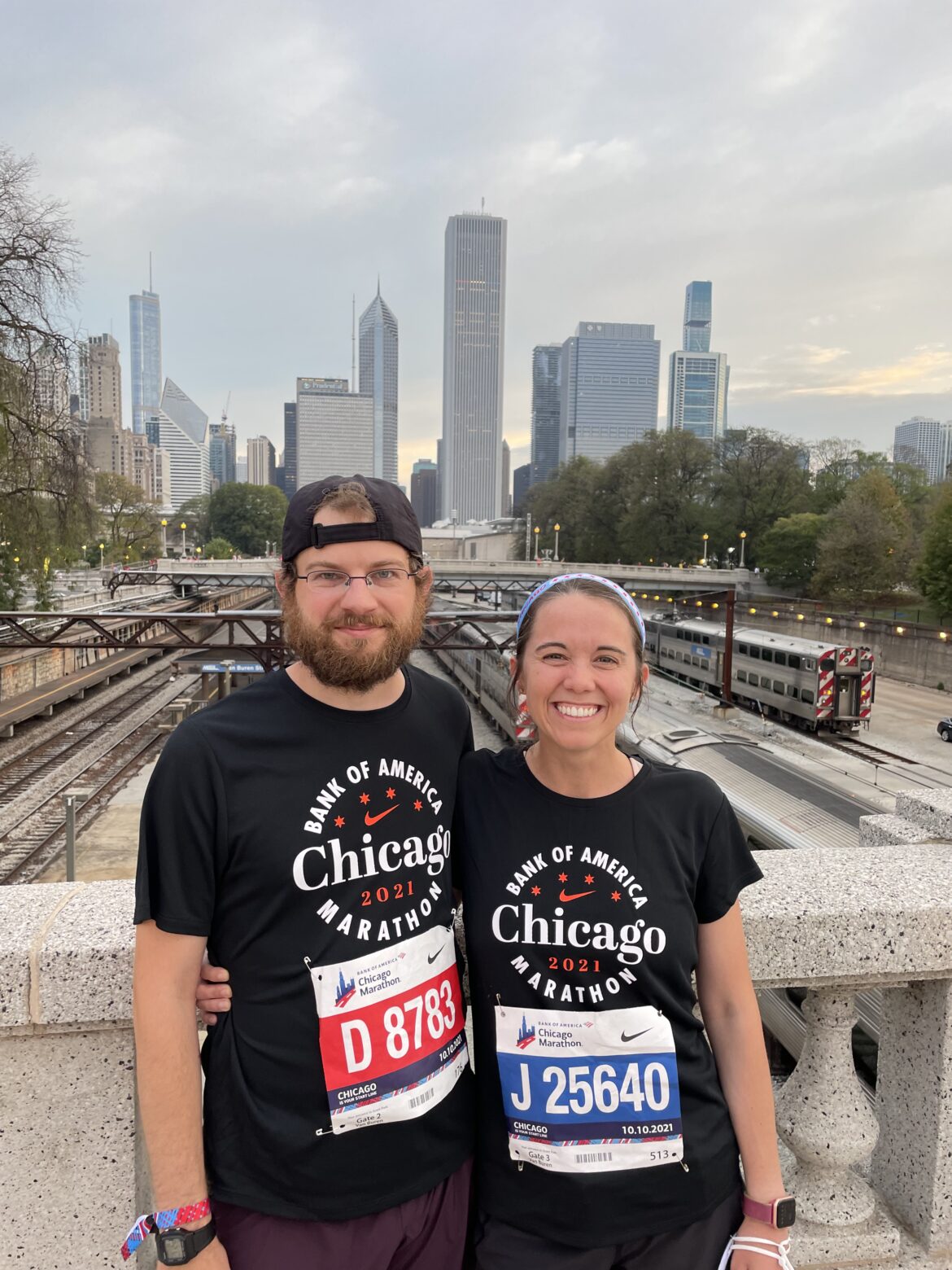
Every October, thousands of runners flock to the Midwest for the Bank of America Chicago Marathon. They’ll wind through the city’s diverse neighborhoods and enjoy a famously flat course. After 26.2 miles, they’ll drink a 312 and proudly wear their finish medal around town (maybe to Giordano’s for thin crust pizza if they know what’s good for them). Will you be one of them?
I have personally climbed “Mount Roosevelt” (the only hill on the course) and crossed that finish line seven times since my first marathon in 2015. I might not be the fastest runner, but I’ve run the Chicago Marathon enough times to consider myself somewhat of an expert on the topic.
So allow me to be your personal escort through the entire Chicago Marathon experience. Join me as we learn about the race itself, the not-so-simple-or-cheap registration options and the race weekend logistics. Then, I’ll share a few of my best Chicago Marathon tips. And while this post will be helpful to any participants, I tried to tailor it to non-locals who are traveling to Chicago from somewhere else.
Let’s get you ready for that starting line.
NOTE: This post should not replace the official Chicago Marathon participant guide or direct runner communications from race organizers for up-to-the-minute race day information.
In this post
- Get Amped: About the Chicago Marathon (History, course, energy/vibes, weather, field)
- How to Register for the Chicago Marathon (Guaranteed & non-Guaranteed entry, charity program)
- Plan Your Trip (How long to stay, where to stay, things to do, getting around)
- Chicago Marathon Expo (How to get there, what to expect, pack pick-up experience)
- Chicago Marathon Race Day (Start Line, Gear Check, On-Course Ammenities, Finish Line)
- 10 tips for your best Chicago Marathon
About the Chicago Marathon
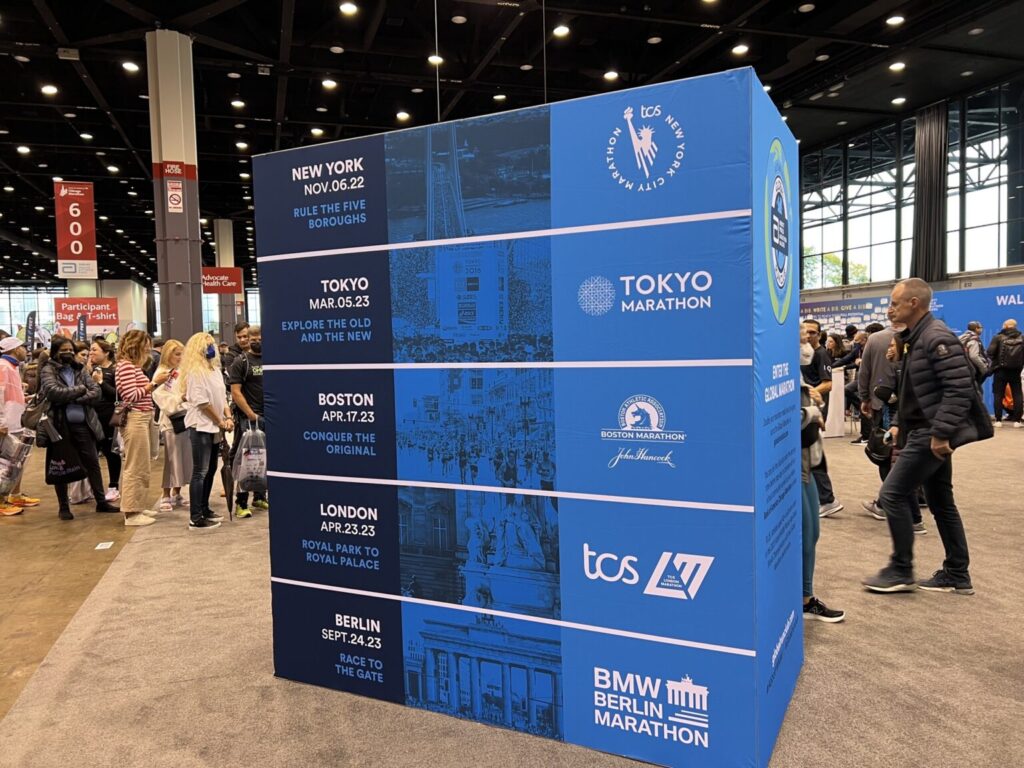
With a participant cap of 50,000-ish runners, the Chicago Marathon is one of the largest marathons in the world. It is also one of the six World Marathon Majors, joining other prestigious marathons in New York, Boston, London, Berlin and Tokyo.
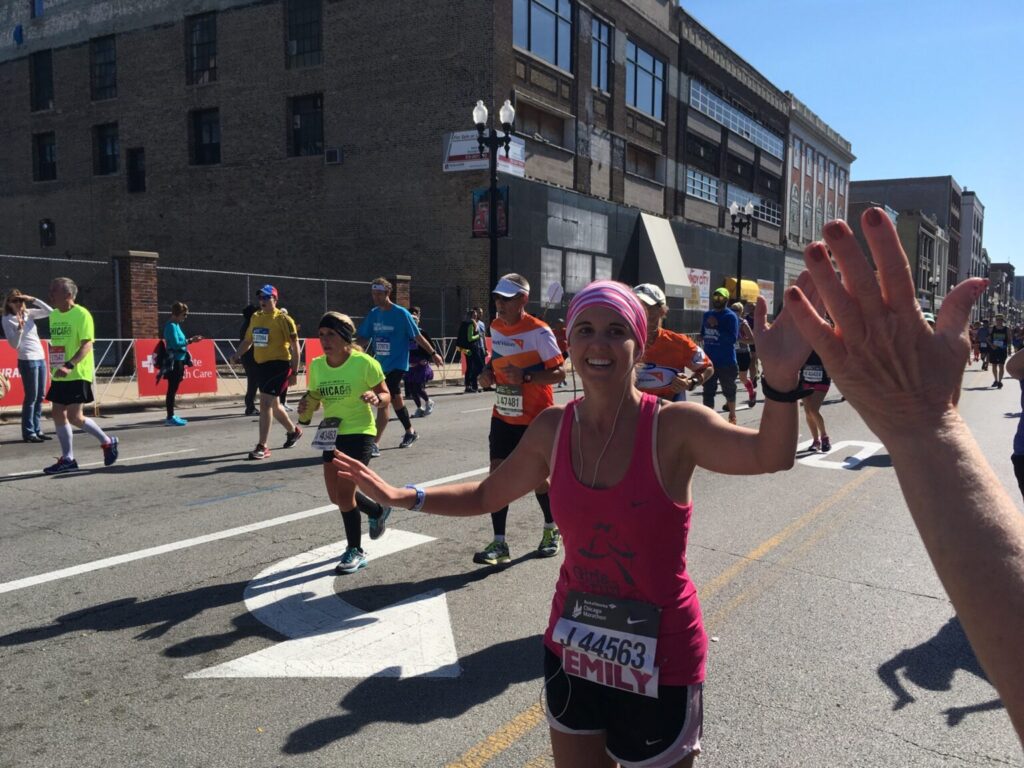
The 26.2 mile course is notoriously flat, but the energy along it is anything but. The route cuts through 29 different Chicago neighborhoods and residents from each one line the streets, filling the course with unmatched energy. From the packed streets in the Loop to cheers from bar patios in Lincoln Park to the music blasting through Pilsen, there is truly something new at every turn.
It’s an open race, meaning there is no qualifying time required to enter the race. That makes the Chicago Marathon a popular race for amateur runners, and it’s especially good for first time marathon runners. It’s also a popular course for runners trying to get qualifying times for other speed-restricted races like the Boston Marathon.
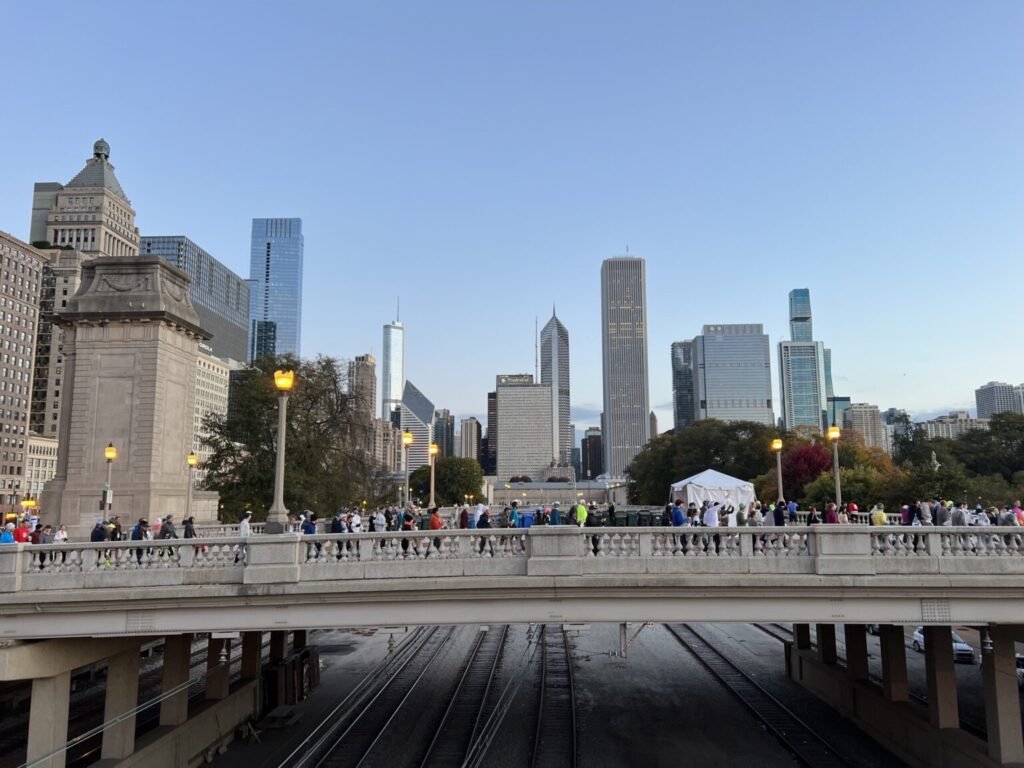
Chicago Marathon History
The Chicago Marathon was first run in 1905. The race began in Evanston with about a dozen runners and ended at the Washington Park Race Track where only seven people crossed the finish line. Long distance running wasn’t nearly as popular back then. Maybe because they weren’t running in the comforts of the latest Nike Flyknit sneakers or because they were taking shots of whiskey for fuel. We’ll never know.
The Chicago Marathon was run annually through the 1920s and continued to gain popularity and prestige. Unfortunately, the global and economic events of the 1920s brought the race to a hault. It wasn’t until 1977 that the Chicago Marathon became the annual race we know today.
The Chicago Marathon quickly became one of the most important and prestigious races in the world. In 2006, it was named one of the World Marathon Majors, sealing its reputation as one of the world’s premier races.
The marathon received varying levels of support from the city and sponsors along the way. Sponsorships are important for many reasons, but Chicago needed them to help fund the prize money to attract the elite athletes. They saw a few sponsors come and go before LaSalle Bank became the main sponsor in 1993. LaSalle bank was acquired by Bank of America in 2007, and the race has since been named the Bank of America Chicago Marathon.
The flat course consistently attracts a premier elite field. Numerous world records have been set on the Chicago Marathon course, including the current men’s and women’s marathon world records.
Today, the Chicago Marathon is the second largest marathon in the United States, after the New York City Marathon, and is one of the largest running events in the world.
What’s the Chicago Marathon course like?
The Chicago Marathon course changes a little bit each year, but usually follows the same rough path. It’s a 26.2-mile (42.195-km) loop course that starts and ends at Grant Park.
The race starts downtown, goes north to Wrigleyville, comes back to the Loop around the half. The course then cuts west toward the United Center, then heads south and east through Pilsen and Chinatown to roughly 35th Street before finally heading north on Michigan, up the hill on Roosevelt and finishing back in Grant park.
You can find the current course map here.
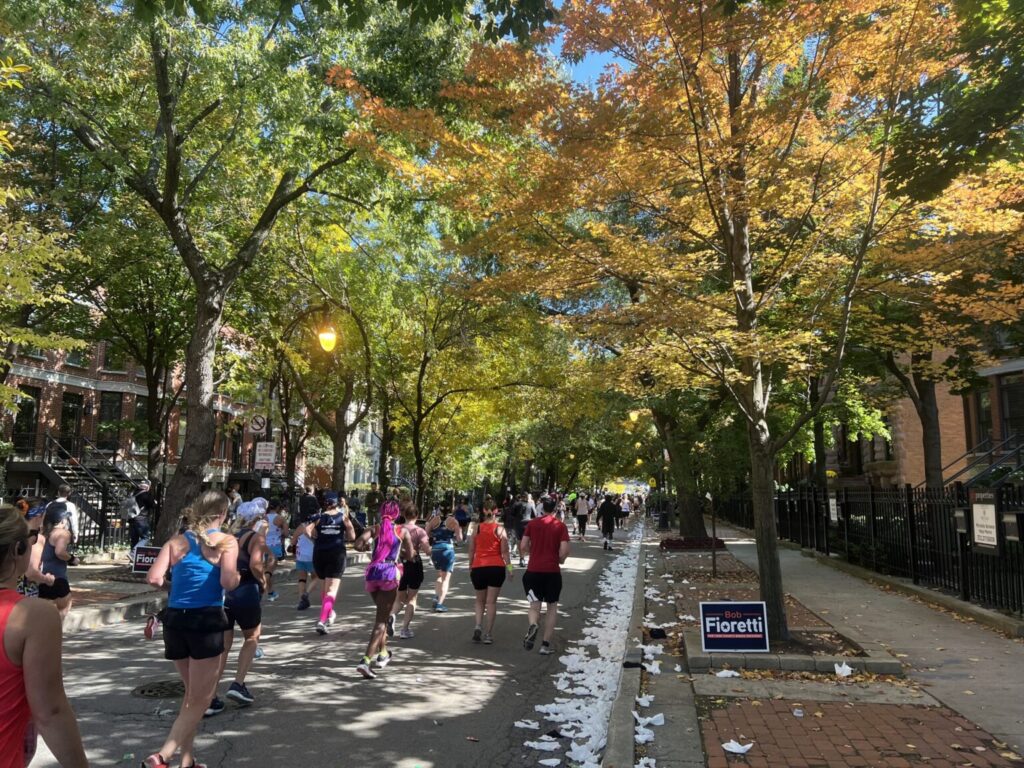
The course is nearly entirely on paved roads, the only exception being a few short bridges with metal grates. In these instances, the grates are covered with a thin carpet material that makes it more comfortable to run over.
The course is also almost completely flat. There is one notable hill (on Roosevelt near the finish line) and a few small inclines (mostly just at the handful of bridges and overpasses), but otherwise the course is very flat. The total elevation change over the course is less than 250 feet.
There are 20 aid stations along the course, each offering water and Gatorade Endurance (lemon lime). Medical support, toilettes and runner transport back to Grant Park are also available at each aid station. A few aid stations later in the course have additional offerings like Biofreeze, bananas and Gatorade Endurance Energy Gels (with caffeine and without).
What is the Chicago Marathon energy like?
The Chicago Marathon course is fun. If you’ve never participated in a big city running event, I think you’re really in for a treat. If you’ve run any of the World Marathon Majors, I would say you can expect similar energy levels and spectators. I’ve run four others (Berlin, Tokyo, London and Chicago), and I would say every one of those races had great spectators. What sets Chicago apart though is that the energy changes as you weave through each neighborhood.
It’s estimated that around 1.7 million spectators line the streets of Chicago to cheer on the runners. At every turn, spectators are holding clever signs, shaking noisemakers and offering words of encouragement. They offer bowls of candy, tissues and — my personal favorite — beers to runners as they pass. There’s constantly excited reactions as runners spot their friends and family among the crowds.
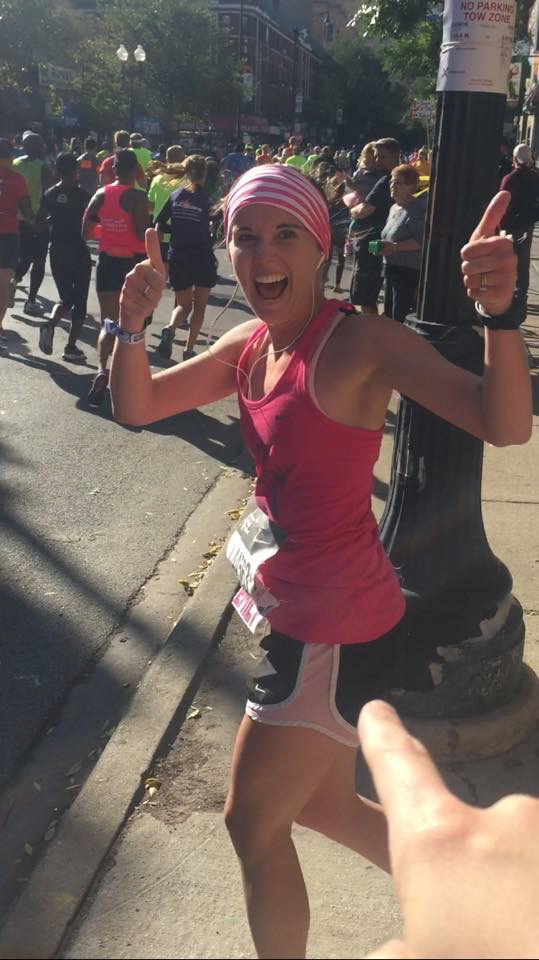
The best crowds are usually consolidated around aid stations, train stops and neighborhood centers. Some of my personal favorite areas to run though are downtown in the Loop, the Moody Bible Institute in Lincoln Park, Boystown, Charity Row on the west side, Chinatown, the one guy who plays Gangnam Style on repeat for the entire race (every year!) somewhere on the south side, and Michigan Ave after mile 25.
The absolute best neighborhood, though, is Pilsen. The spectators throughout this neighborhood are fire. They are non-stop high energy. There is always music blasting, people dancing and playing instruments, and it’s just non-stop cheering for a good mile through the neighborhood. It’s the highlight of my race every year.
Most of the course is pretty well spectated, but the energy is definitely highest during the first half of the race and near the finish. Other than a few hot spots, the later half of the course is a bit light on spectators. This is hard because it’s always when I need it most.
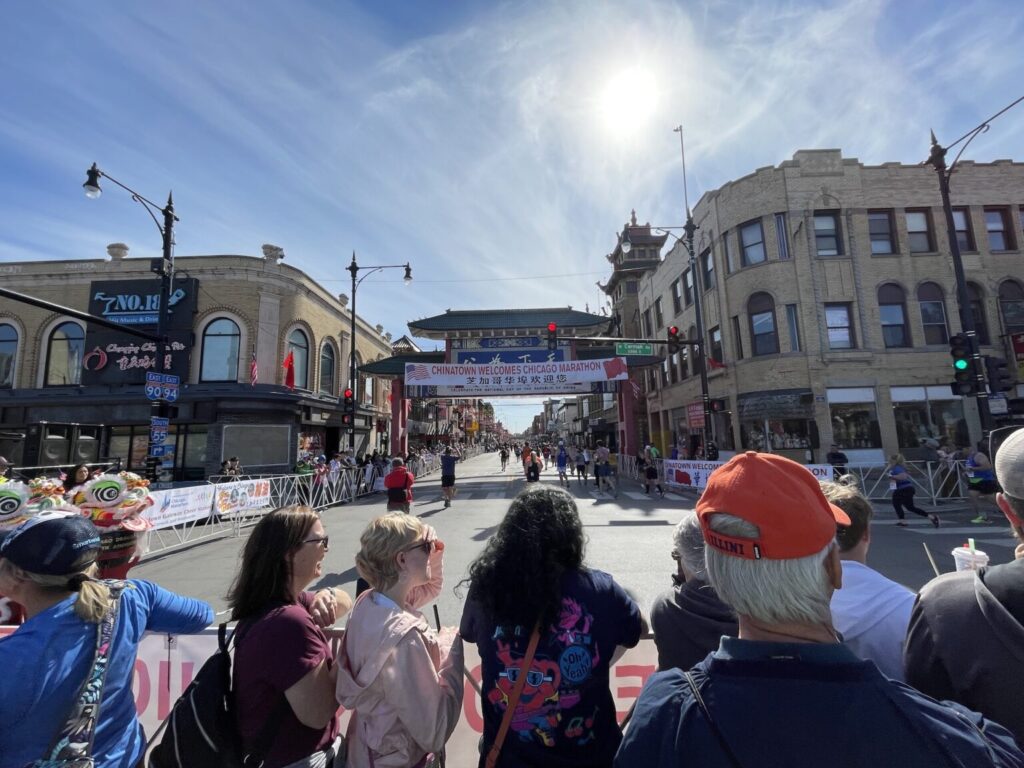
However, the spectators on this portion of the course, particularly between miles 20-24, are the best and most authentic on the entire course. There’s always a handful of people who grab your attention, look you in the eye, and convince you that you can do it. They’re the ones I remember most.
As a slow runner, I usually start later and run well into the afternoon. In some cases, this can mean that fans are heading home, aid stations are starting to consolidate and the energy can sometimes feel like it’s fading. During my first marathon in 2015, I was pretty crushed that there was hardly anyone near the finish by the time I got there. I’m happy to report this issue has not repeated itself. I’m always amazed how many people remain out to cheer on all the runners.
Chicago Marathon Weather
The weather in Chicago in October is usually pretty good for the Chicago Marathon. According to the website Find My Marathon, since 2003 the average high for the Chicago Marathon has been 66°F and the average low 50°F.
Staying true to its Midwest charm, weather in Chicago can always be a bit unpredictable. I’ve run the in rain, I’ve run in a tank and shorts, and I’ve run in full long sleeves. The race has had some hot years, including 2007 when it was cancelled after 3.5 hours when temps hit 88°F. This is not typical for Chicago though and is generally considered an outlier.
More likely than not, you’ll be chilly at the start and comfortable during your run.
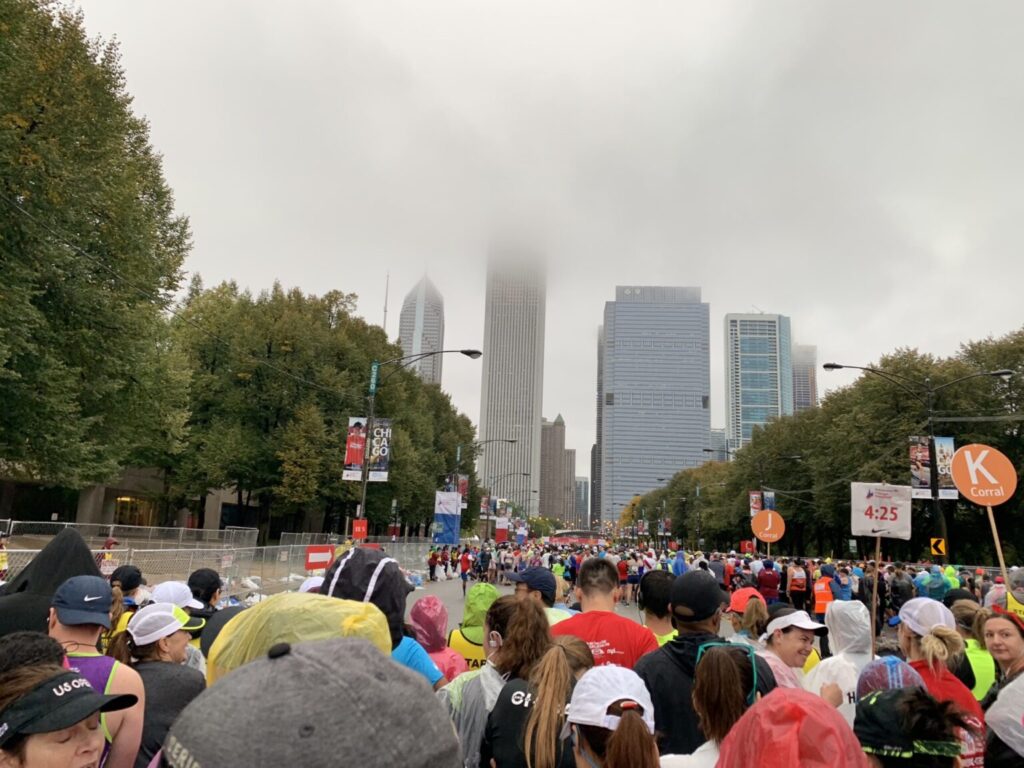
How many people run the Chicago Marathon?
The Chicago Marathon field size varies, but it’s currently in the 50,000 mark. has seen an average of 39,000 finishers a year over the past 10 years. The largest Chicago Marathon on record was in 2025 when over 54,000 runners finished the race.
Elite Field at the Chicago Marathon
Between its World Marathon Major status, the $900,000+ purse in prize money, and the flat course (have I mentioned that yet?), the Chicago Marathon attracts some of the best runners in the world.
The current Chicago Marathon course records for both men’s and women’s are also the two current world records. The men’s record was set by Kelvin Kiptum (RIP) in 2023 with a time of 2:00:35. The women’s record was set by Ruth Chepngetich in 2024 with a time of 2:09:56.
How to Register for the Chicago Marathon
The Chicago Marathon is an open race, meaning that you don’t need a qualifying time to participate. However, the number of participants is capped around 50,0000 (the exact number varies by year), and the demand is always much higher than that. That means that everyone who wants to run the Chicago Marathon cannot simply sign up and do so.
If you want to sign up for Chicago Marathon and simply pay the entry free, you will need to either earn a guaranteed entry slot or luck into a slot via the lottery system. If you’re willing to fundraise or “buy your way in,” there are options for that too.
Here are the ways to get into the Chicago Marathon.
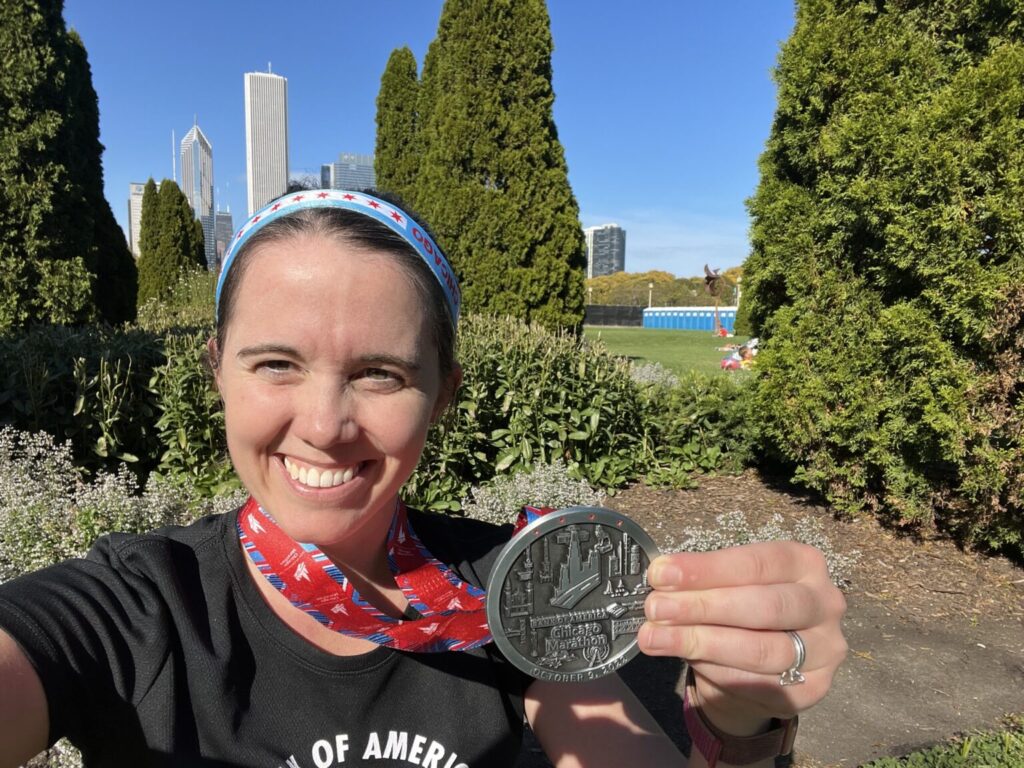
Guaranteed Entry for the Chicago Marathon
There are a few different ways to guarantee entry for the Chicago Marathon. None of them are particularly cheap or easy. Guaranteed entry just means that you have the right to register for the Chicago Marathon. You still need to pay for your registration and meet all rules and requirements associated with your guaranteed entry category.
Here is how you can get guaranteed entry to the Chicago Marathon.
- Time Qualifier or American Development Program: Athletes who can provide a proof of time in qualifying races that meet a strict set of speed requirements by age and gender may earn guaranteed entry. These times rival that of BQ times.
- Legacy Finisher: Athletes who have finished at least five Chicago Marathons in the past ten years may earn guaranteed entry.
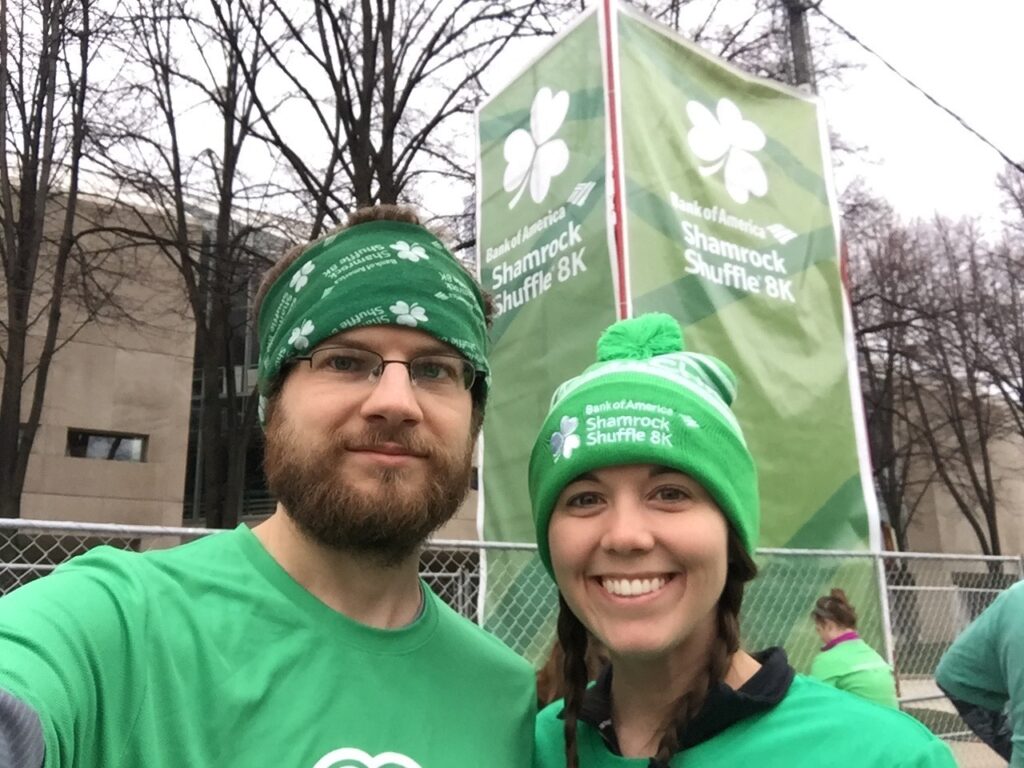
- Bank of America Distance Series: This one has changed a bit over the years, but currently athletes who run the Shamrock Shuffle 8K Run, Chicago 13.1 and Chicago Marathon in a given year, can receive guaranteed entry for the Chicago Marathon the following year.
- Charity Program: Athletes who partner with an approved charity and fulfill their fundraising goal may earn guaranteed entry.
- International Tour Groups: Athletes who purchase a travel package through partner tour providers may earn guaranteed entry.
- Deferred or cancelled entry: In the event of cancellation, either by the athlete or the organization, athletes may be eligible for guaranteed entry for a future race.
If you meet the requirements for guaranteed entry, you will be able to register. The guaranteed entry window is typically from mid-October to mid-November for the following year’s race. You will be required to provide any necessary documentation for your guaranteed entry category. Applications will be reviewed and applicants will be notified of their registration status within 10 days. If for any reason you are not approved, your entry will automatically be added to the lottery for non-guaranteed entry.
If you miss the registration deadline for guaranteed entry, you will not be able to register for the race even if you meet the guaranteed entry criteria. Once the deadline passes, the only way to enter the race is with the Charity Program or an international travel group.
Non-Guaranteed Entry for the Chicago Marathon — AKA Drawing/Lottery Entry
If you don’t qualify for guaranteed entry, you can register for the Chicago Marathon lottery. The lottery works like this.
- Interested participants register for the lottery. The lottery for the Chicago Marathon is open from mid-October to mid-November. Anyone can join the lottery, and there is no proof of time or qualifying time required to registered. Credit card information is required to join the lottery.
- Participants are randomly selected. After the lottery closes, a set number of applications will be randomly selected to participate in the race.
- Applicants are notified and charged if selected. In December, all applicants will receive an email update with their race status. If you are selected, you will automatically be charged the registration fee and will be officially registered. If you are not selected, you will not be charged anything for trying.
The odds of getting into the Chicago Marathon vary each year. They don’t release the exact number of lottery slots given out (usually just the total field size), but several sources put the Chicago Marathon lottery odds at around 30%. Chicago is known to be one of the easier WMM draws to win, but it gets harder every year.
Charity Program Entry for the Chicago Marathon
The Chicago Marathon Charity Program is great for a lot of reasons. Not only is it a great way to give back to the community (in Chicago and beyond), but it’s also just an amazing experience. Running for a cause can help motivate you during your training and inspire you on race day, plus you often get some fun perks too. It’s also the only way to guarantee entry after registration has closed.
The Chicago Marathon Charity Program works like this.
First, sign up for a charity team. You can view the full list of partner charities here. Different teams have different perks, benefits and fundraising goals. When picking your charity team, be sure to select a charity that includes guaranteed marathon entry. (Not all do!) Most charities that include guaranteed entry will cover the registration cost as well if you meet your fundraising goals, but not all. Read all the details about the charity team before you register.
Next, fundraise for your charity. Each charity team has different fundraising goals, but at minimum, all charity runners need to raise $2,200 USD. Sometimes, the fundraising minimum will go up after the lottery draw is announced.
Typically you’ll be provided a fundraising page through a platform like Crowdrise where people can make online donations. All funds raised through your page will be counted toward your goal and will be automatically routed to your charity. If you don’t meet your fundraising goal, you are usually charged the difference to your credit card.
Last, you run the marathon. As long as you hit your fundraising goal and meet any other requirements as set forth by the charity team, you will be eligible to run the Chicago Marathon. Many charity teams offer race day perks like private bathrooms, complimentary food and drinks, shirts for your supporters and more.
The Chicago Marathon Charity Program began in 2002 and has since raised over $405 million for charity partners. (That is DOUBLE the amount I had in the original draft of this post which I wrote in 2022!) In 2025 alone, runners raised a record $47.1 million dollars for charity. (Again, almost double the record from 2019 which I quoted in a previous draft. Wild.)
I’ve personally run on a charity team once (for Girls on the Run Solemates) and my husband twice (for Big Brothers Big Sisters). It really is something special. You are running for something bigger than yourself, and that’s an incredible feeling.
How much does it cost to run the Chicago Marathon?
The Chicago Marathon costs $250 USD for US residents and $260 for non-residents.
There are two ways to get the registration fee waved.
- Be really fast. Elite athletes who have a verified half or marathon time below the Chicago Marathon’s “high performance standards” are eligible for complimentary entry. The bar here is high and requires a verified sub 2:25:00 marathon time for men and sub 2:45:00 marathon time for women and non-binary athletes.
- Run for (the right) charity. The Chicago Marathon partners with a variety of local and global charities to raise money for important causes. Many, though not all, of these charities will cover the registration fee if you meet the required fundraising goal.
How old do you have to be to register for the Chicago Marathon?
You have to be at least 16 years on race day to run the Chicago Marathon. Runners under age 18 will need to have parent or guardian approval during the registration process.
Plan Your Trip
The next Chicago Marathon will be held on Sunday, October 11, 2026 in Chicago, Illinois, USA. Marathon weekend is an exciting time in the city, but with street closures and a massive influx of tourists, it can also be a bit chaotic.
In this section, we’ll explore some important details about race weekend. The goal here is to make you feel comfortable about what to expect. If you’re visiting Chicago from out of town, this section is the most important.
How long should you stay in Chicago for the marathon?
If you’re coming from out of town, you might be wondering how long you need to plan to be in Chicago for marathon weekend. There are a lot of factors involved, but here are a few recommendations based on some common factors.
- Stay in Chicago for 2 days (Saturday through Sunday) if you’re local to the Midwest, have been to Chicago before and this is not your first marathon.
- Stay in Chicago for 3 days (Saturday through Monday) if you are local to the Midwest, but want to have a more relaxing stay and enjoy some of the city, too.
- Stay in Chicago for 4 days (Friday through Monday) if you are traveling domestic by air. With flight delays so common, you don’t want to risk missing the expo (and therefore the race). Be sure to have at least one buffer day between your arrival and race day.
- Stay in Chicago for 5-7 days (Wednesday/Thursday – Monday/Tuesday) if you are traveling internationally. Chicago is a fantastic city, so spend two days on race things and then a few more exploring the city. Depending on nerves and fitness level, you may prefer to do that before or after the race.
Where to stay for the Chicago Marathon
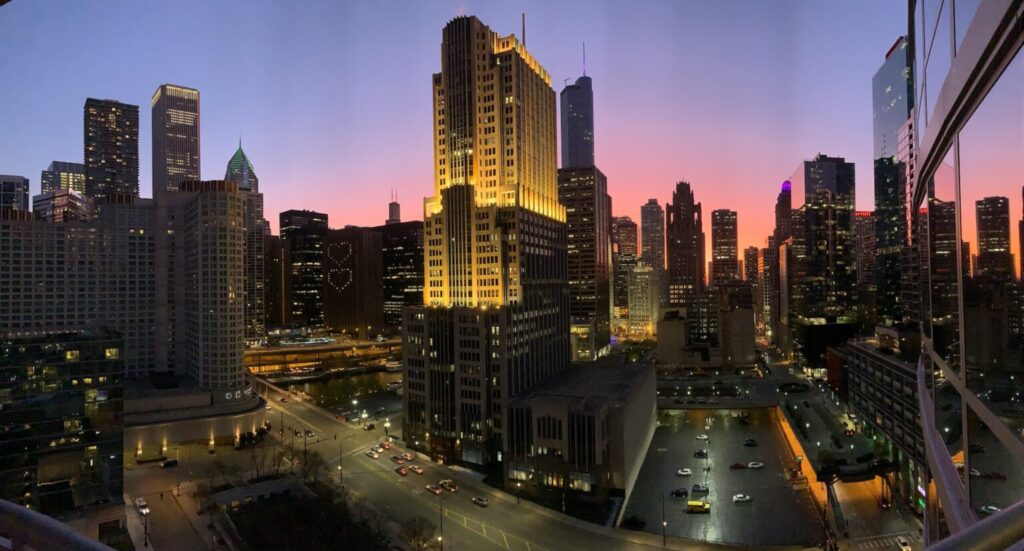
Marathon weekend is a popular (read: expensive) time to stay downtown Chicago. Hotels often book up well in advance and prices are high.
The race starts and ends downtown (the Loop neighborhood), but you don’t have to stay downtown. In fact, it might even be faster to get to the race from a hotel a bit outside of downtown. The most important thing to consider when choosing a hotel for the Chicago Marathon is access to a CTA train. You want to stay close to a train that connects to the Loop — probably the Red or Blue Line.
Here are a few neighborhoods and hotels I would recommend for the Chicago Marathon.
- The Loop: If you want to be as close as possible to the start and finish lines, stay in the Loop. Ideally on Michigan Ave. The Congress Plaza Hotel, The Blackstone (Marriott) and the Chicago Athletic Association (Hyatt) are all nice options.
- River North / Streeterville: Just north of the Loop, there are tons of hotels (as well as restaurants, bars and shopping). This is probably the area most people will stay. You can easily walk to the start from here, but it will probably take around 20-30 minutes. You can also take the Red Line one or two stops. Consider Loews Chicago Hotel, Hampton Inn Downtown/Magnificent Mile or SpringHill Suites Downtown/River North.
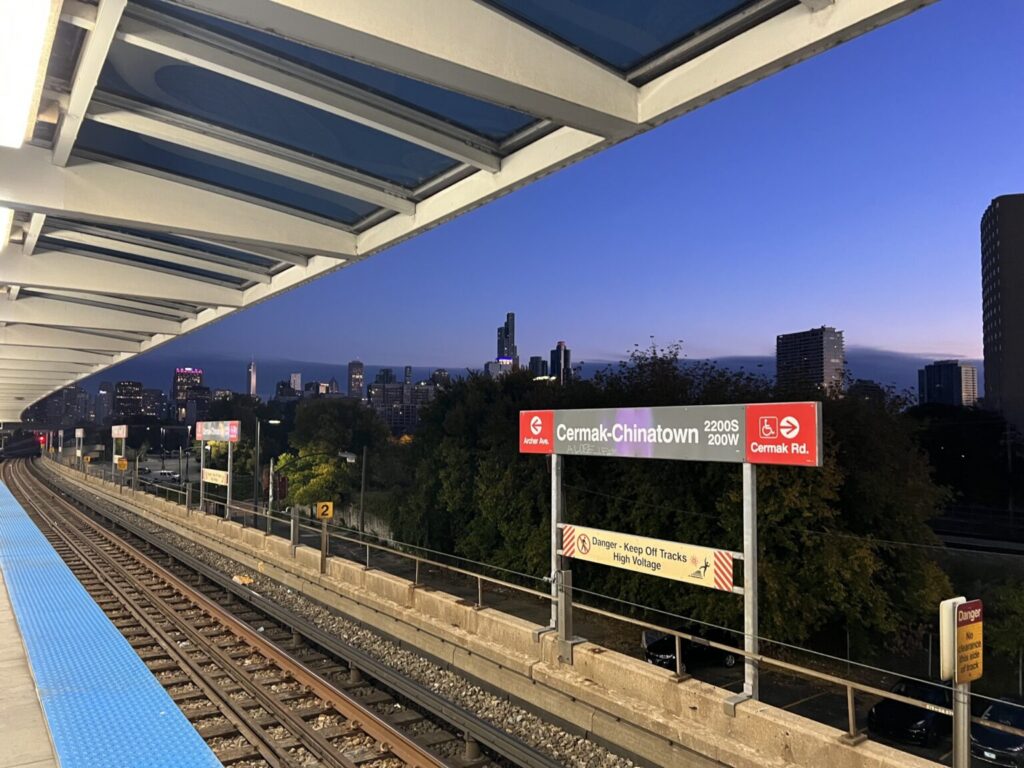
- Chinatown: This neighborhood just south of the Loop is actually perfect for the Chicago Marathon. The start is just 2-3 stops away on the Red Line (depending on your wave), so you can get there in about 15 minutes. Plus, it’s only about a mile walk from the Expo, which can otherwise be a pain to get to. There aren’t a ton of options, but the SpringHill Suites Chinatown was perfect for my most recent Chicago Marathon.
- Wicker Park: If you’re planning to stay a while and are interested in a neighborhood with some character, consider this trendy neighborhood northwest of the Loop. The Damen and Division Blue Line stops will get you downtown for the start in about 25 minutes. Again, there aren’t a ton of hotel options, but Hyatt Place Wicker Park and The Robey are good picks.
- Wrigleyville: While there aren’t a ton of hotels in Wrigleyville, Hotel Zachary is a good option for a unique Chicago experience. It’s only a few blocks from the Red Line which will get you to the starting line in about 30 minutes. Plus, it is right across from Wrigley Field.
Tip! If you are staying with friends/family who are going to spectate the race, choose a hotel that is convenient for them, too. All of the locations above except Wicker Park are along the course. For the best energy, I would recommend Wrigleyville or Chinatown. For the best location to spectate multiple times, pick the Loop or River North.
Personal Recommendation
If a friend asked (and we’re friends by now, right?), I’d recommend the Lowes in Streeterville or SpringHill Suites Chinatown.
I used to live right next door to the Loews and have walked to Grant Park from that location plenty of times. It’s a nice walk, but it takes longer than you think to get to the starting line. Plan for about 30 minutes.
I ended up at the SpringHill Suites Chinatown for the 2022 marathon. I had booked a different downtown Marriott, but they were oversold and had to send me to Chinatown. At the time I was livid, but it was really a blessing in disguise. I got from my room to the race entrance in 20 minutes flat (and that included an 8 minute wait for the train, which is about as long as you can get). That was less time than it ever took me to walk.
Things to do in Chicago while you’re here for the Marathon
Marathon weekend is a great time to be in Chicago! The weather is usually incredible, and you should just catch the start of fall colors if you’re lucky. There’s a ton of things to see and do, but here’s a short list of my favorites.
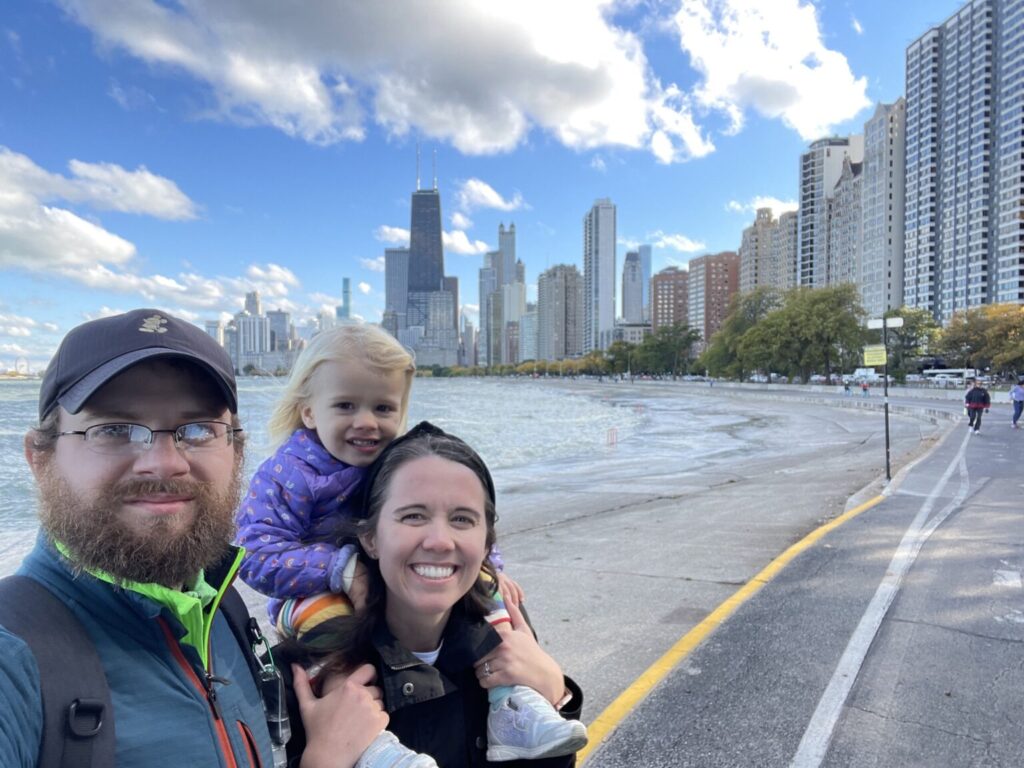
- Go for a run or walk on the Lakefront Trail. If you need to go for a shake out run, you absolutely must do it on the Lakefront Trail. The stretch between Ohio Street Beach and Fullerton is a stunning 3-mile stretch. If you can only go one direction, run from north to south for the best views.
- Take an architecture cruise. There’s no better way to see the city than from the Chicago River. It’s also great because you can see a lot without doing much walking, which is important before or after the marathon. My favorite hack is to ride the water taxi instead, but it’s usually done running for the season by marathon time. (Pro tip! If you don’t care about architecture, take the water taxi to Chinatown and back. It’s way cheaper and just as lovely.)
- Eat all the Chicago things. After running a marathon, it’s time to treat yourself. Deep dish pizza from Lou Malnati’s. Thin crust pizza from Giordano’s. Hot dogs from Portillo’s (or one of the better hot dog stands if you can). Italian beef from Buona. (They even have a vegetarian option, now!) Garrett Mix from Garrett Popcorn Shops. Pumpkin Old Fashion donuts from Stan’s Donuts. Tacos from Velvet Taco (Ok fine, not a Chicago thing, but Velvet Taco isn’t everywhere and they’re amazing, so get them.)
- Stroll along the Riverwalk. Pick up a coffee from the Goddess and the Baker Then walk south on Michigan, cross the river, and take the stairs down to the Riverwalk. Head west (away from the lake.) It’s a beautiful walk lined with cafes, bars and outdoor seating space. It’s a great place to sit or walk, reflect and prepare yourself mentally for the challenge ahead. (Tip! Don’t run here unless it’s really early. Too many pedestrians.)
- Get a good view. Chicago is a beautiful city and there are several places to get an epic view from above. The Hancock Building and Willis Tower (formerly the Sears Tower) both have great observation decks. The Ferris Wheel at Navy Pier is another great option.
- Explore a neighborhood or two. Chicago is a city of neighborhoods. Before or after your race, take some time to explore one or two. Bonus points if you pick one that the course runs through. Find a hot, trendy restaurant in the West Loop. Go to the zoo in Lincoln Park. Get bubble tea in Chinatown. Go to the Museum of Science & Industry in Hyde Park. Or my personal favorite thing to do in the fall … walk up and down the streets in Gold Coast (Dearborn or State between Division and North), admiring the houses, colorful trees and festive halloween decorations.
Getting Around Chicago
Chicago is fairly easy to navigate and has decent public transit. (I would have said great public transit when I lived there, but now I live in New York and I find the transit here much better. I’m sorry! Chicago is still very good though.)
The good thing is that you definitely do not need a car if you’re visiting Chicago for the race. The CTA (city trains and buses) and Metra (regional trains) will get you everywhere you need to be for race weekend and beyond.
To map your route, the best option is Google Maps. It will tell you which train or bus to take and what time it’s coming. You can also see posted signs at each station or stop. If you’re new to city trains, just be sure to get on the train going in the correct direction. Pay attention to platform signs and make sure the terminus matches the one noted in the directions.
The CTA operates the city trains (the colored lines: Red, Blue, Orange, etc) and the city buses. All CTA busses and trains have tap-to-pay, so you can simply tap a credit card at the turn style or when you board a bus. There’s no need to buy a ticket in advance.
Metra operates the regional trains. Depending where you’re coming from, Metra can be the best way to get to the Expo. You might also take the Metra if you’re staying further from the city or in certain neighborhoods. You can buy Metra tickets in the Ventra app. There is special pricing for weekend tickets, so those are usually the best value. You don’t need to tap to board the train, but will instead show your ticket to a conductor who will pass through the train.
Abbott Health & Fitness Expo
The Abbott Health & Fitness Expo takes place the Thursday, Friday and Saturday before the marathon on Sunday. It’s a huge race expo held at McCormick Place. All runners must attend to pick up their bibs, but it’s also open to the public and non-runners.
The expo features official race merchandise, a variety of health and fitness vendors, entertainment and speakers, tons of photo ops and a handful of food and beverage options. There’s usually a station to make banners, lots of free samples and other tchotchkes and prizes.
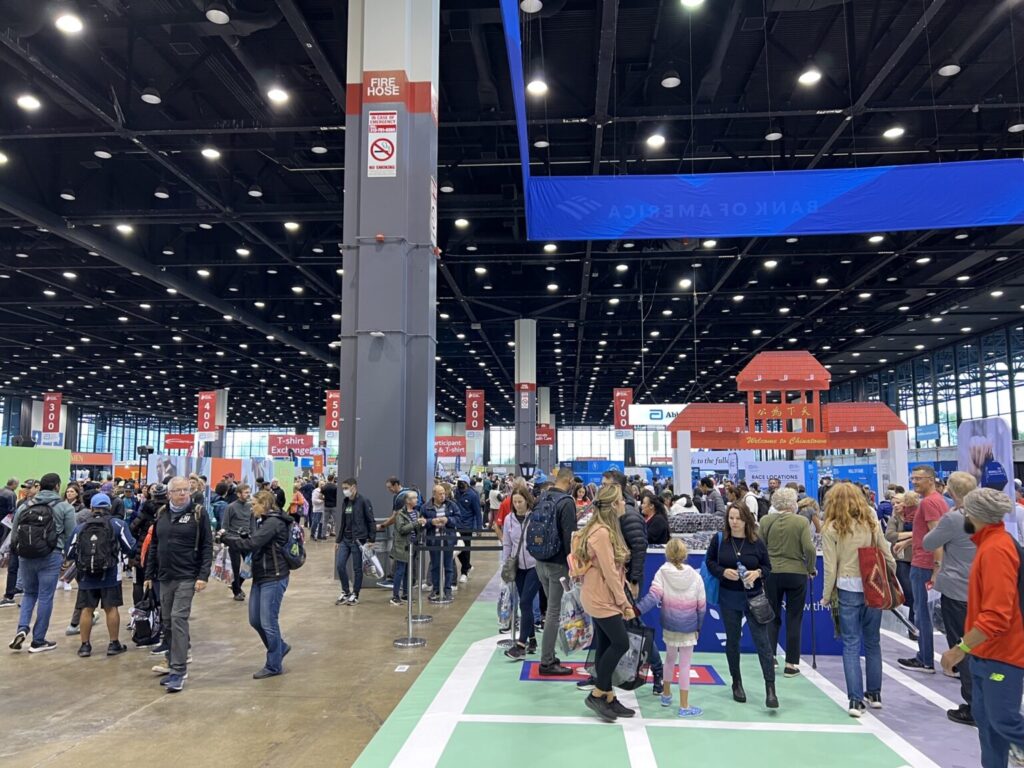
The Expo always takes place at McCormick Place, but the specific room location in the massive convention center varies by year. Be sure to check the address listed on the official website for the exact location. There will also be signs and lots of people around to get you where you need to go.
The Chicago Marathon Expo will most likely take about 3 hours. The commute can easily take an hour in each direction, and then you’ll need at least an hour to navigate the massive complex to packet pick-up, go through security and get your bib. If you want to visit the vendors, do some shopping and watch any of the speakers, budget some extra time.
How to get to the Chicago Marathon Expo
McCormick place is a bit of a hike from downtown. The Chicago Marathon organizers used to offer a shuttle from downtown to the Expo, but they stopped offering that service in 2019. But don’t worry, there are plenty of easy ways to get to McCormick Place from downtown.
- CTA Train: Take the Green Line train to Cermak-McCormick Place and walk 0.5 mile or the Red Line train to Cermak-Chinatown and walk 0.8 miles.
- CTA Bus: Take the 3 or 21 bus to McCormick Place, right outside the main entrance.
- Metra Train: Take the ME (Metra Electric) line to McCormick Place station, which exits inside McCormick Place itself.
- Car: If you choose to drive, the closest place to park is Lot A. There is also a single pick-up point near the main entrance for taxis and rideshare drivers.
- Walk: Depending on where you’re starting from (like if you stayed in Chinatown), you may be able to walk. It’s about 1.6 miles from the south end of Grant Park and accessible via Michigan Ave. (Note: McCormick place is also adjacent to the Lakefront Trail, but it’s not an easy entrance to navigate.)

Chicago Marathon Packet Pick-up
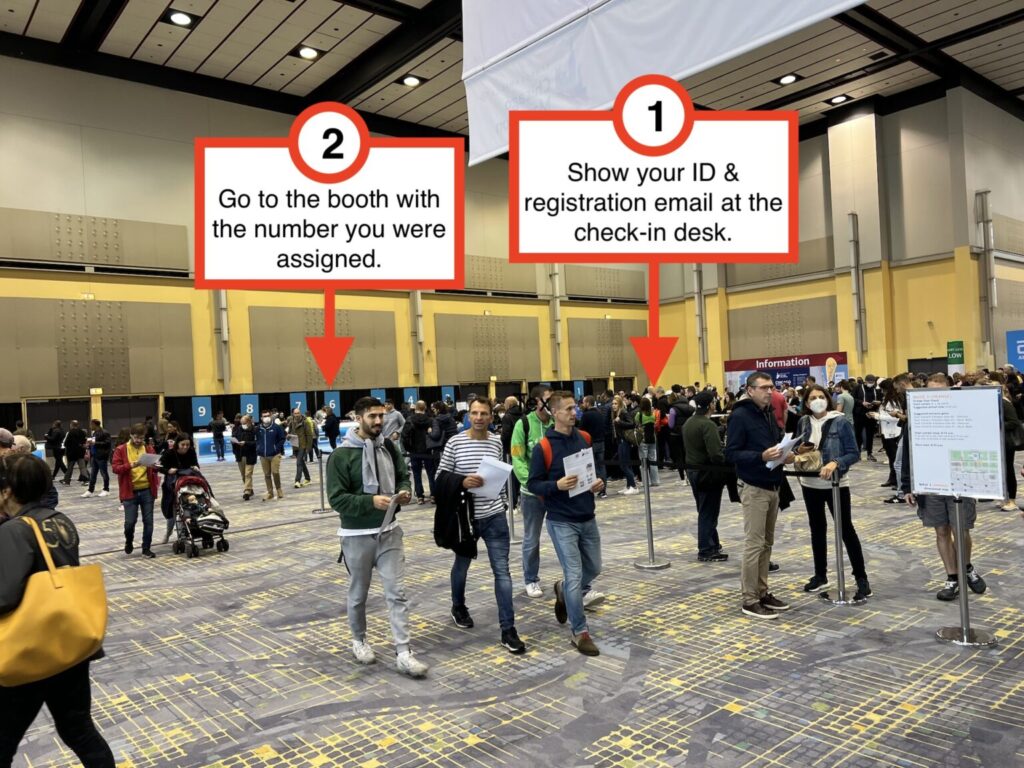
Packet pick-up for the Chicago Marathon is at the Abbott Health & Fitness Expo. The actual process is a bit different than many other races and often causes some confusion, especially for first-time runners. Here’s how it works.
- First, you’ll go to a booth where someone will scan your registration code (which you will receive via email prior to the event) and verify your ID.
- Then, you will be assigned a number that corresponds with a booth in the next area. At that booth, you will receive your race packet, which includes your bib.
- Lastly, you will need to take that race packet to the t-shirt distribution booths to receive your shirt.
Despite being a multi step process, packet pick-up is generally pretty smooth.
Chicago Marathon Apparel
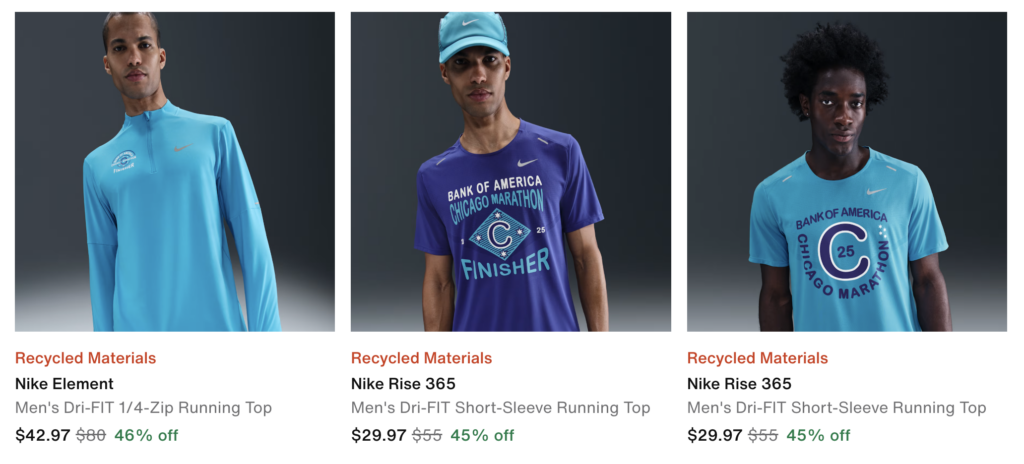
Nike is the official sponsor of Chicago Marathon apparel. The race t-shirts, which are included with registration, are made by Nike. They also create a line-up of Chicago Marathon clothing items including running shirts, outwear and bottoms, which are available for purchase.
Some years, the merch is incredible, other years it’s just so-so. (The 2025 merch was comically bad and the People of Instagram had a field day with it.)
Nike Chicago Marathon merchandise is available at the Chicago Marathon Expo, the Nike store on Michigan Avenue, and select Fleet Feet, Heart Break Hill and Dick’s Sporting Goods locations around the city.
There is also a line of finisher apparel which is only released at the Nike store on Michigan Ave. Finisher gear is not usually released until the Saturday before the race (sometimes you can find it a places a day or two early by mistake.)
Chicago Marathon gear is also sold online on the Nike website. It is usually available a few weeks prior to the race and is available until it sells out. After the race, if there is any remaining finisher apparel available, that will be listed online as well. Sometimes you can even get discounted merchandise if you wait long enough, but you can never count on that.
Chicago Marathon Race Day
In these next sections, we’ll talk about the details you should expect on race day. This portion is meant to provide context for the race day experience, to hopefully relieve some nerves and get you ready to go.
What time does the Chicago Marathon start and end?
Be sure to check the official Chicago Marathon website for official times.
The Chicago Marathon usually begins at 7:20 AM with wheelchair athletes and then the elite field at 7:30 AM. There are then rolling starts by corral roughly every 10 minutes until about 9 AM.
Note: This is one of the earliest starts of all the World Marathon Majors. The early start is most notable for mid and late corrals, which at races like New York and London have starts as late as 11:30.
The Chicago Marathon course time limit is 6 hours and 30 minutes, which is a 15 minute per mile pace. The course is cleared and roads will reopen on a rolling basis from the last start. The final runners are crossing the finish line around 3:30 and all roads are generally back open by 4 PM.
The Chicago Marathon post-race party also ends at 4 PM.
How early do you need to get to the Chicago Marathon?
You need to get to Grant Park well before your scheduled wave start time.
The first hurdle is security check. There is a security check point at every entrance, and those lines can be long. If you don’t have a gear check bag or a filled running belt though, there is sometimes an expedited line.
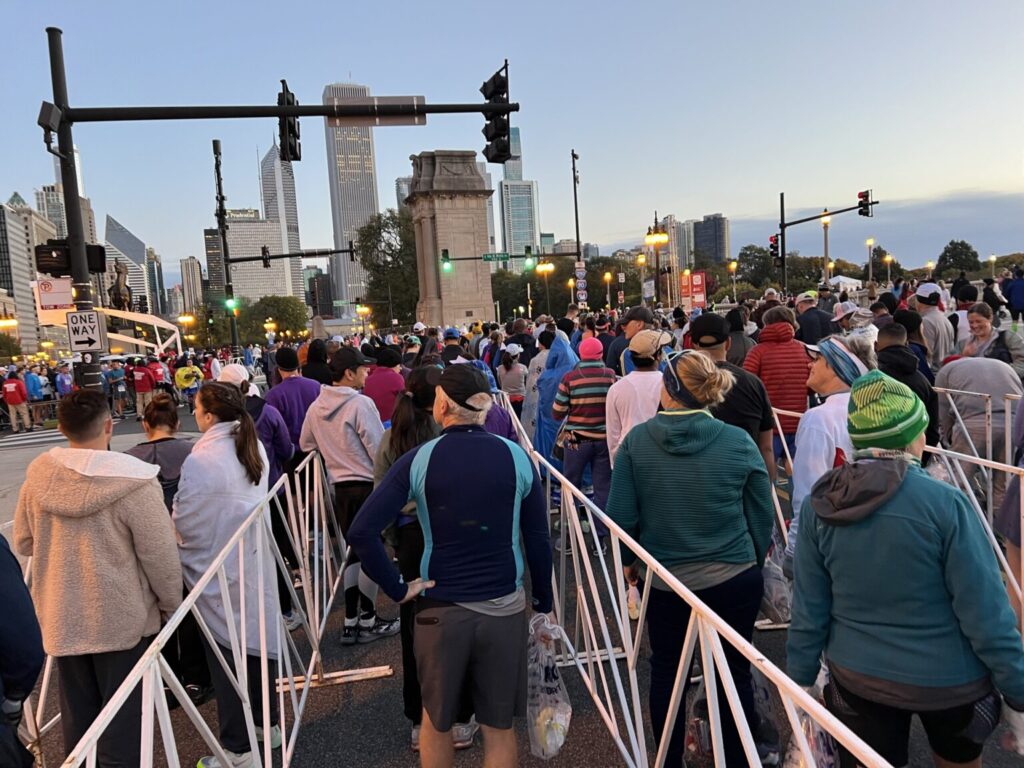
Then there’s gear check. If you have to check a bag, you will need to navigate to the gear check area for your wave. This may involve a bit of walking between the entrance, to gear check, and then to your corral. There may also be lines at gear check.
If you have to go to the bathroom, that will be another line. There’s tons of toilettes, but also tons of runners and there are always long lines, especially the closer you get to race start time.

Finally, the corrals for each wave close 15 minutes before the start of that wave. If your corral closes, you will have to start at the back of that wave.
The official participant guide has a recommended arrival time for each wave, which is usually 2 hours prior to the wave’s schedule start. If you want to play it safe, of course follow the official suggestions. But if you’re looking for a personal recommendation, I’d say that’s a bit aggressive. Personally, if you aren’t gear-checking and you have no bags, arriving 30 minutes before your corral closes should (usually!) be just fine.
Getting to the Chicago Marathon Start
If you take away one thing from this post, please let it be this: take public transportation (or walk) to the starting area. Between road closures (sometimes earlier than posted), traffic and a high volume of people trying to get to the same place, do not attempt to drive or take any kind of car service.
The easiest way to get to the Chicago Marathon starting area is usually by train, because they are not impacted by street closures. Nearly all CTA train lines stop just blocks away from the entrance on Michigan Ave.
Here are the stops that are closest to the Chicago Marathon start for each CTA train line.
- Blue Line: Jackson
- Red Line: Jackson (Wave 1) or Harrison (Wave 2 or 3)
- Brown, Orange, Pink & Purple Lines: Harold Washington Library (State and Van Buren)
- Green Line: Adams and Wabash
Note: There are several difference entrances along Michigan Ave. You will be assigned a recommended entrance based on your wave, but you can enter from any entrance. If you see a short line at a different entrance, jump in that.
Gear Check at the Chicago Marathon
The Chicago Marathon offers gear check, and it’s really easy and efficient. (Thank you looped course that starts and ends in the same place.)
When you pick up your shirt at the Expo, it will come in a clear plastic draw-string bag. This is your gear check bag. No other bags will be accepted. Attached to each bib is a gear check tag and claim ticket, each which have your bib number on it.
To check your gear on race day, put all your things in the clear plastic bag. Attach the gear check tag to the bag by looping it through the strings. Follow the signs to the gear check area for your wave, and then find the booth number that corresponds to your bib number.
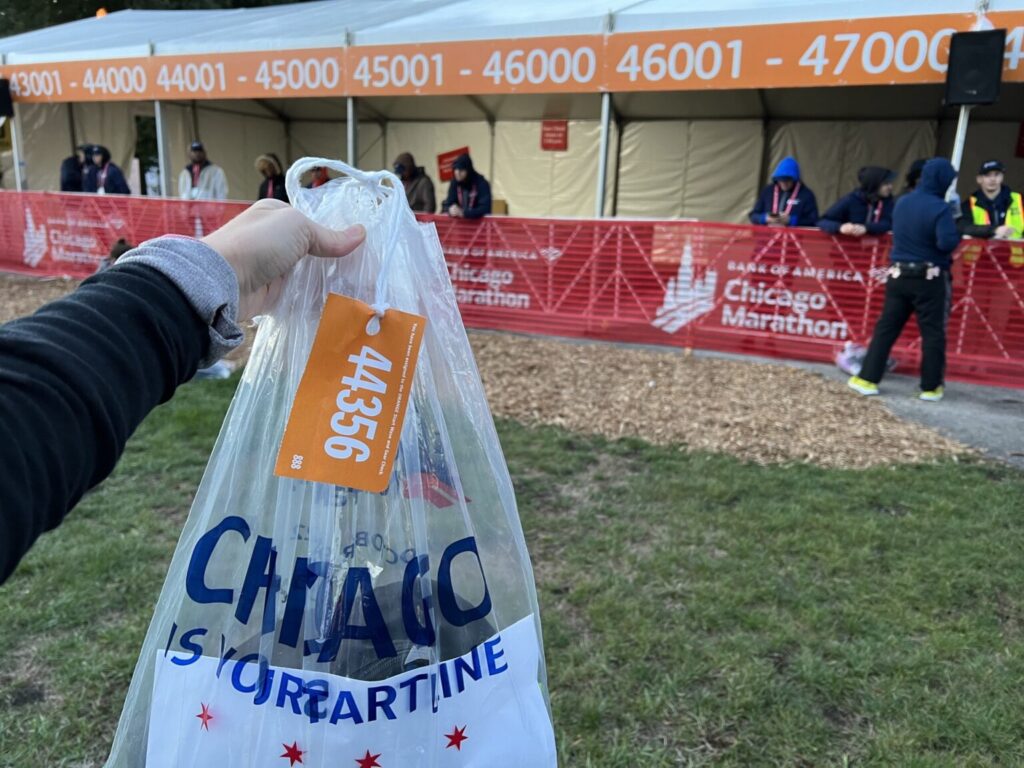
The Chicago Marathon course is a loop, so you’ll pick your bag up after the race at the same place that you dropped it off. Simply show them your claim ticket (or your bib) and they’ll retrieve your bag for you.
I’ve always avoided gear check because I never wanted to waste time on it. However, I did it this year and it was a breeze! If you have things you want to bring, there’s no reason not to gear check. It’s really well staffed and really quick.
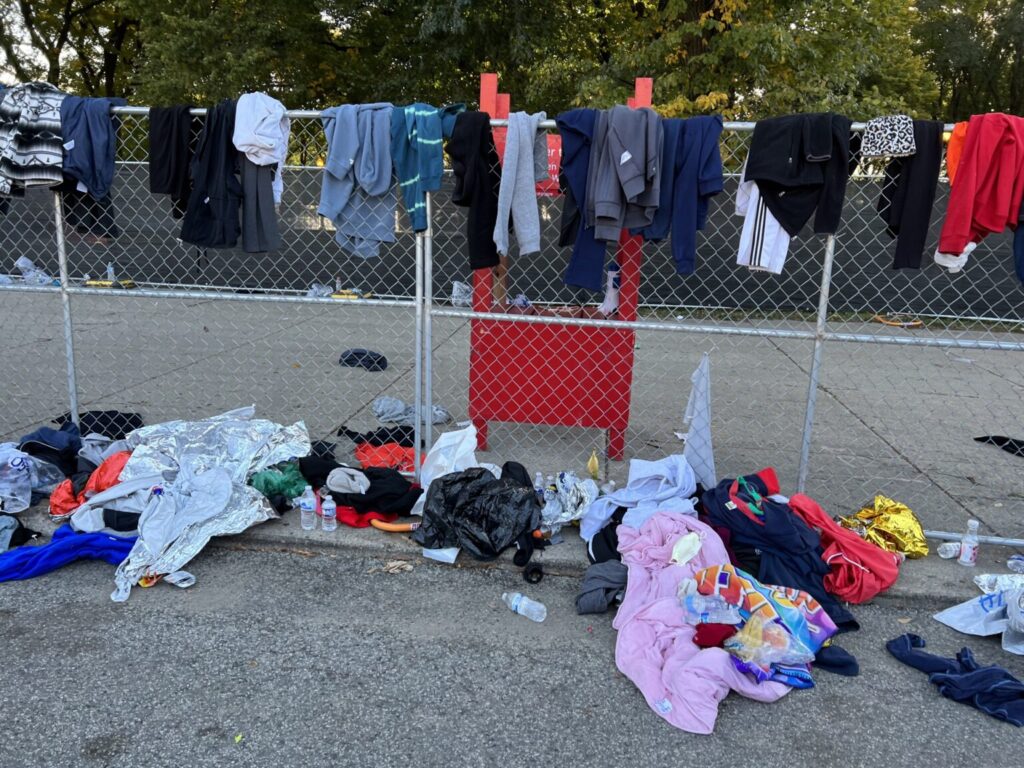
Another thing to note here is that the Chicago Marathon donates all clothing and attire left in the starting area. If it’s cold, don’t plan to check your outer layers. You’ll have to shed and check them too early. Instead, bundle up in old clothes and ditch them right before you start. You’ll stay warm longer, and your clothes will go to a good cause.
Aid stations & on-course amenities
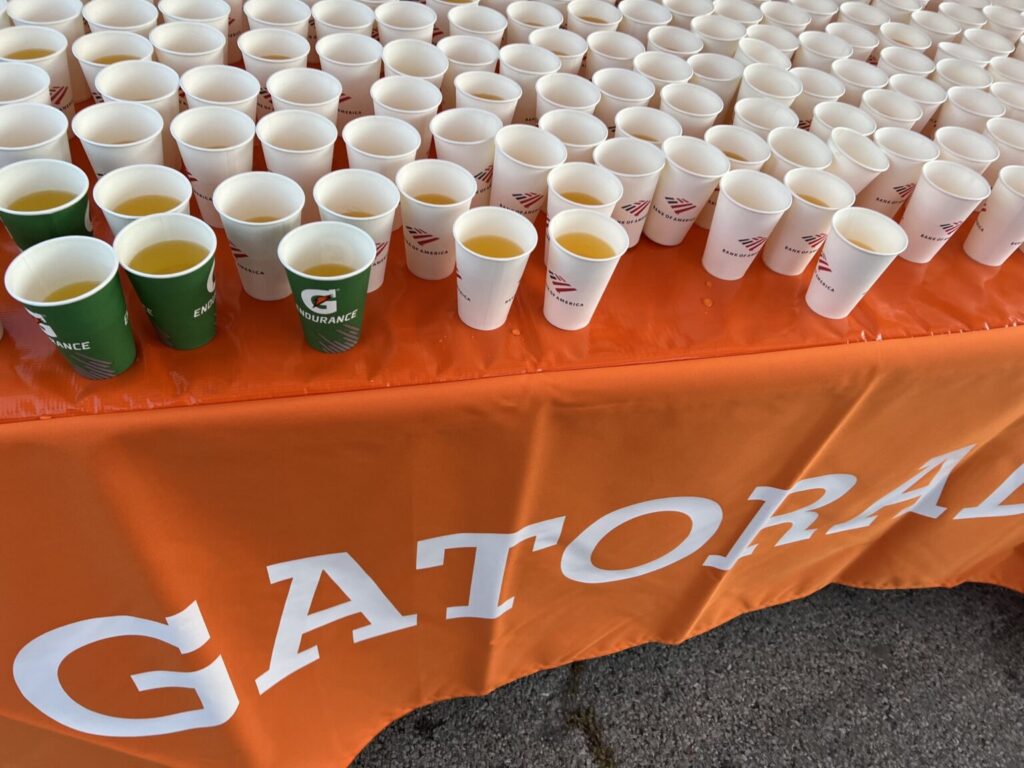
The Chicago Marathon is an extremely well run race and the aid stations are a prime example of that. There are 20 aid stations on the 26-mile course, each one is fully stocked and manned by a slew of volunteers.
Each aid station has cups of Gatorade Endurance (lemon lime) and water. There are also bananas and PowerGel Energy Gel at select stations along the course between miles 15-20.
Each aid station also has toilettes, medical support and runner transport back to Grant Park available.
Finish Line Experience
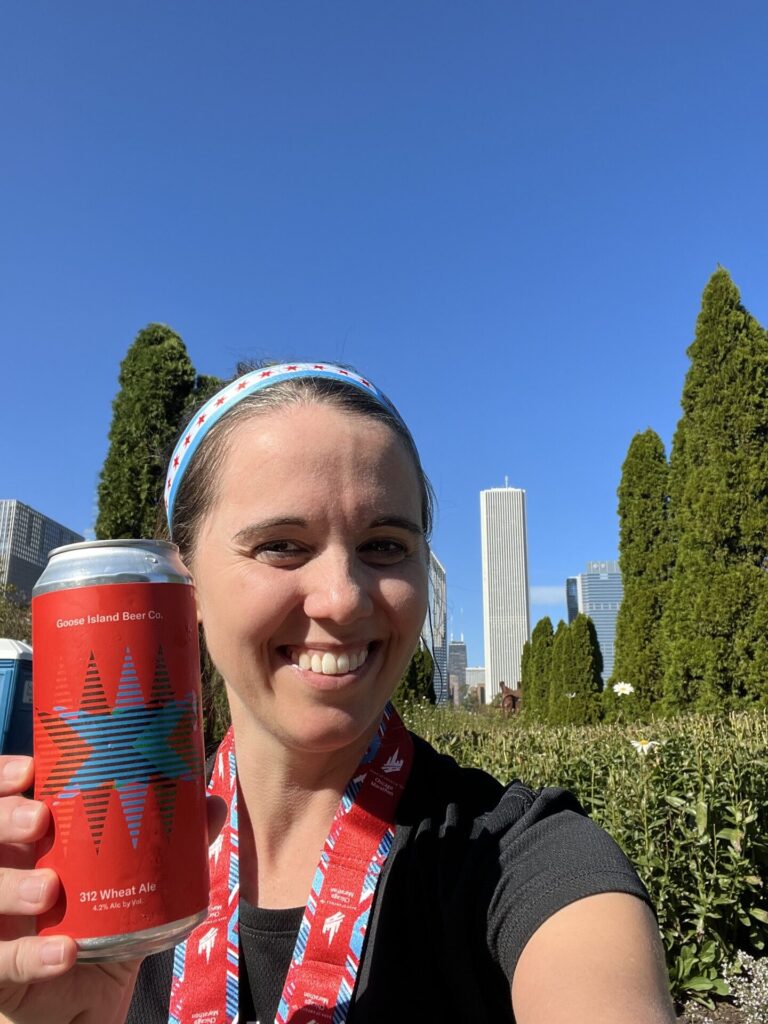
My favorite thing about finishing the Chicago Marathon is that I am immediately handed a 312 beer. I’m not talking at the post-race party, I am talking steps past the line while you’re still in the finisher shoot collecting your mylar and gatorade. You don’t even have to use your beer ticket for it. I look forward to it every year.
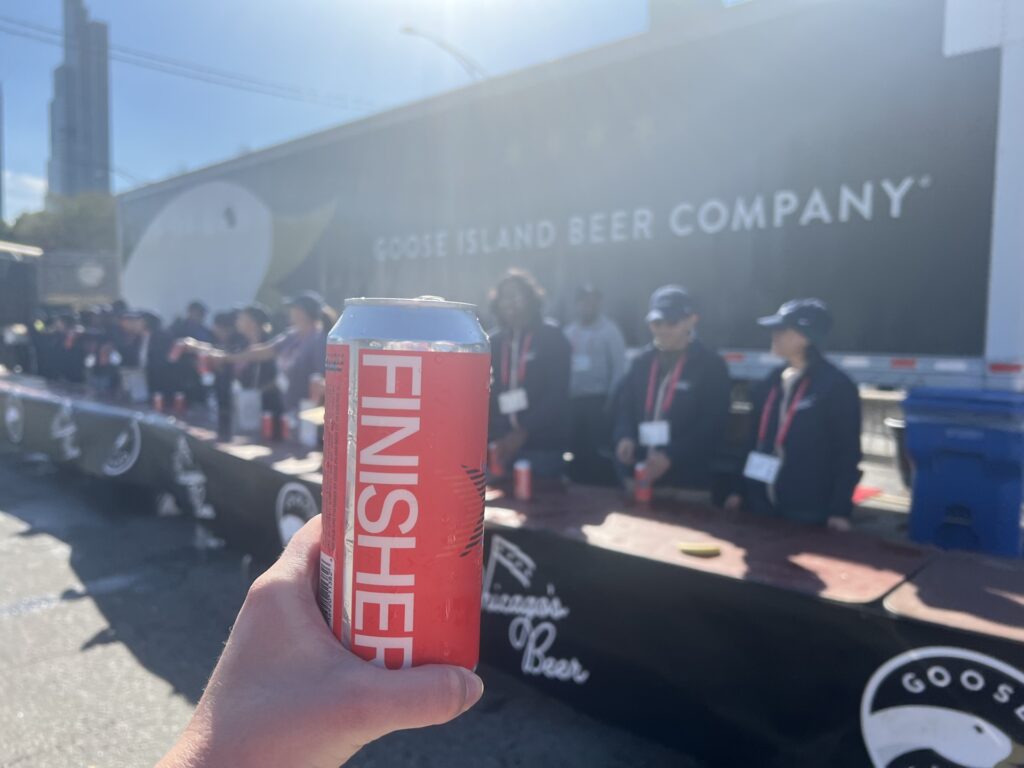
Other than that, the finish line experience is pretty straight forward. It’s a fairly short finisher shoot (unlike NYC’s famous 26th mile to get out of the finish area).
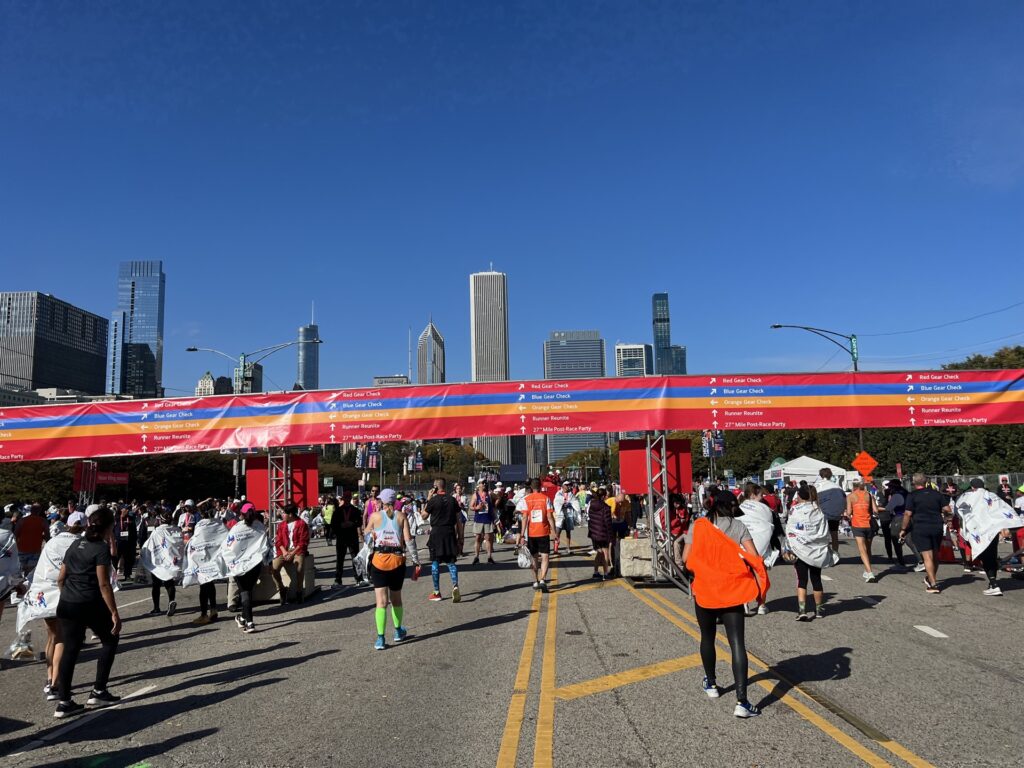
The finisher area is the same as the start area. The roads around here are a grid system, and there are clear directional signs posted. After you exit the shoot, you can proceed to the post-race party or find a place to sit and relax inside the finisher’s area of the park. If you checked a bag, you can pick it up at the same place where you dropped it.
The post-race party is open to the public, and that’s where the official runner reunite section is located. Spectators can you meet there at a designated red lettered poles. This is also where you can redeem the beer ticket on your bib if you choose.
When you’re ready to leave, follow signs to the exit (west.) You’ll exit the finisher area along Michigan Ave, at the same gates you entered from earlier.
Course cutoff
We already mentioned that the Chicago Marathon is an open race, meaning that there is no specific speed required to enter the race. Runners of all speeds and abilities are able to register and participate in the Chicago Marathon as long as they finish under the course time limit of 6.5 hours.
Runners who take more than 6.5 hours to finish will not be considered official finishers. The course is cleared are roads will reopen at a 15 minute pace from the last runner’s start time. Runners who cannot maintain this pace will be swept from the course. They can either utilize runner transport back to Grant Park or continue to run on sidewalks, but they will not receive on-course support or amenities and will be unable to officially finish.
Note: There are reports that the Chicago Marathon finish line may stay open for slower finishers who choose to finish the race on sidewalks after the official closure. However, it is not like the NYC Marathon which is a celebrated, attended event well into the evening.
10 Tips for the Chicago Marathon
I’ve said a lot about the Chicago Marathon, but I simply cannot write this post without sharing some of my best Chicago Marathon tips. These are a few things I’ve learned about the Chicago Marathon over my seven times running the race.
I’d love to hear your tips, too! I lived in Chicago for a while and am usually in the back of the pack, so I’m sure I have a lot of blind spots. If you have any tips that our readers should know, please share in the comments.
1. Take public transit.
Traffic downtown, especially on race day when streets are closed, can be chaotic. Parking is expensive and can be hard to find. The fastest and cheapest way to get to the Expo and the starting line is on public transportation, specifically the train.
You can tap-to-pay with any contactless credit card at the train turnstile or as you board any CTA bus.
2. Active spectators should get a 1-Day CTA pass.
If you have spectators who plan to hop around the course to cheer for you, encourage them to buy a 1-Day CTA pass. For $5, they can ride the train and bus as much as they want for 24 hours. Otherwise, each train ride costs $2.50, with up to two free transfers during a 2-hour time period.
You can buy a day pass from the Ventra kiosks inside any CTA train station or in the Ventra mobile app.
3. Follow a training plan.
I watched a documentary about a guy who ran seven marathons on seven continents in seven days. When asked if he trained for it, he said something along the lines of, “Anyone can do it if you train.” In 2021, I ran the Chicago Marathon without training and that quote was the wind behind in my sails.
I’m sure I’m not the only one who has tried to run a marathon with zero training, but I can say I definitely don’t recommend it. Do some sort of training. There are plans out there that can accommodate runners of all speeds and abilities. Find one that works for you and stick to it.
My first year, I followed the Nike marathon training plan pretty religiously. Other runners — my good friend included — swear by the Jeff Galloway run-walk method. This year I’m training for a PR using Runna, which is intense but great if you have a speed goal. You can even create your own training plan. As long as you follow some sort of training plan, which includes some long runs, you can run the marathon.
4. Take the Metra from the Expo (and download the Ventra app!)
After the Chicago Marathon Expo, there’s a good chance you’ll want to head downtown to do some city things. Maybe to check out Cloud Gate (“the bean”) in Grant Park or for a stroll up Michigan to the Nike store for some finisher gear.
No matter your plans, if you’re heading toward the Loop, the Metra is the fastest and easiest way to get there, as long as you buy your tickets in the app.
The station is accessible from inside McCormick Place, and there are signs directing you there. The ME (Metra Electric) line then makes stops at Van Buren Street Station in the heart of Grant Park, and Millennium Station on the north end of Millennium Park.
If you take the Metra, be sure to download the Ventra app in advance. You can use the app to track train times and time your exit from the Expo. But most importantly, you can buy your Metra ticket in the app and avoid waiting in long lines at the kiosk.
5. Send spectators to the back half of the race.
The first half of the Chicago Marathon is the easiest to spectate. The course passes through similar areas multiple times and there are a lot more train stops to quickly get to a variety of view points. The back half is tougher to get to and as a result and the crowds are lighter. But that’s also when you need support the most.
If you can, try to get spectators to cheer for you somewhere along the back half of the race. One easy way for them to do that is to take the Red Line to Chinatown. They can watch you there around mile 21. Then have them walk east about half a mile and they can catch you on Michigan near mile 25. From there, they can walk a mile north to meet you at Grant Park after you exit the race area.
6. Check your corral as soon as it’s assigned and submit a change request if needed.
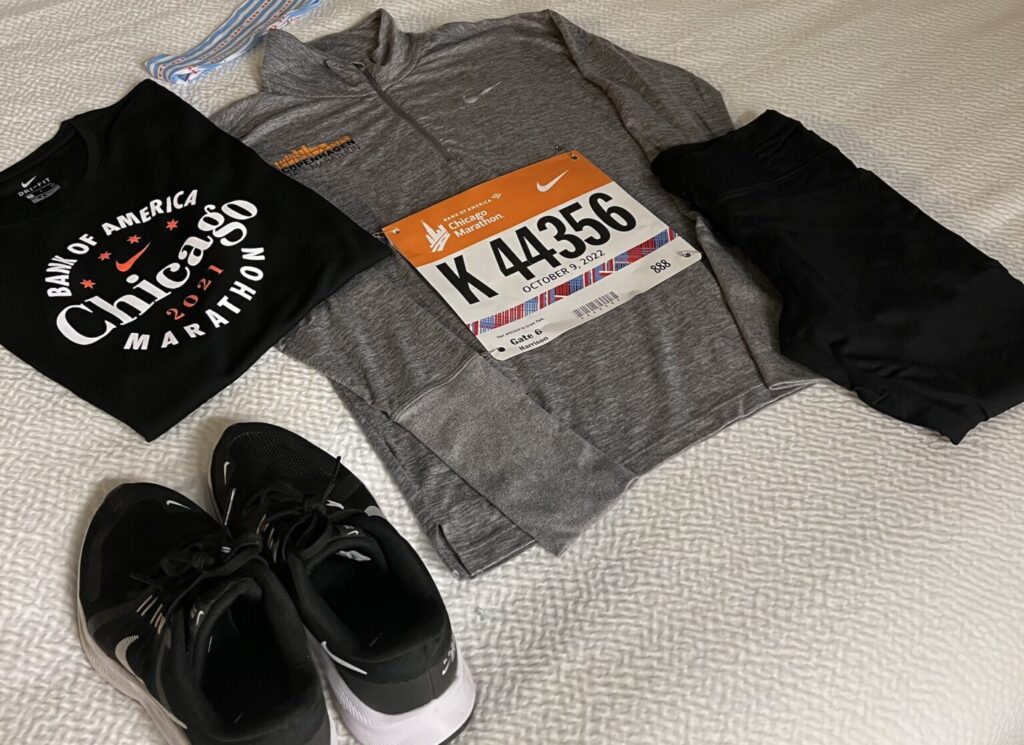
One year, I submitted an estimated finish time of 4:45. According to the posted qualifying standards that year, that time would have put me in Corral K. However, when my corral was assigned, I was put in M. Starting in a later corral isn’t the worst thing, but the sooner you start the sooner you finish.
I followed the steps provided in the email to request a corral change. My request was approved and I was moved to K. Corrals aren’t guaranteed and they can fill up, but it’s worth a shot. If you feel like your corral is wrong or your estimated finish time changed, be sure to submit a change request during the window.
7. Stop by the Nike store on Michigan Ave.
The Nike store on Michigan Ave sells the full line of Chicago Marathon apparel, including everything that’s available at the Expo (while supplies last). More importantly, the Nike Store on Michigan Ave is the main (sometimes only) place to find finisher gear. It’s usually released on Saturday and Sunday of race weekend.
The lines are usually longer at the Nike store than at the Expo, but it’s got a fun energy.
Also keep in mind that the Nike store accepts returns on Chicago Marathon apparel. If you buy too much at the Expo or if you find a finisher shirt you like better, you can return unwanted items at the store.
8. Book your hotel in advance and check in early.
Hotels in Chicago over marathon weekend sell out quickly and can be very pricy. Be sure to book as soon as possible to get the best deal and the best location.
Booking is only half the battle, though. Be sure to check in to your hotel as soon as you can. I had a really bad experience a few years ago. My hotel was oversold and they had no room for me, even though I had a reservation. They had to send me to a different hotel two miles away at 8 PM the night before the marathon. Checking in earlier could have prevented this problem.
Having status at your hotel chain also helps. They told me that they do not move people who have status with the hotel. Unfortunately, our platinum status was under my husband’s name and he wasn’t with me, so that didn’t help me this time.
9. Train with what’s on the course.
I didn’t learn this lesson until I ran the London Marathon. I didn’t even look at what was on the course — which turned out to be basically nothing — and I had no fuel the entire time. Don’t make my mistake.
More specifically though, pay attention to the type of fuel on the course. The Chicago Marathon offers Gatorade Endurance at every aide station plus PowerGel Energy Gel at select aid stations.
The common rule is train with what’s on the course or bring your own. If you can, I recommend training with what’s on the course. That way, you don’t have to remember to pack/buy fuel or deal with carry extra fuel with you.
10. Enjoy the race!
When race day comes, sometimes you have it and sometimes you don’t. Sometimes that pick-me-up song will hit at just the right time and will power you to a PR. Other times your IT band will seize at mile 17 and every step will make you want to cry. Sometimes you’ll have GI issues and have to stop at a Walgreens on the course for adult diapers. (All three of these things have in fact happened to me.) No matter how much you train or how prepared you are, race day can surprise you.
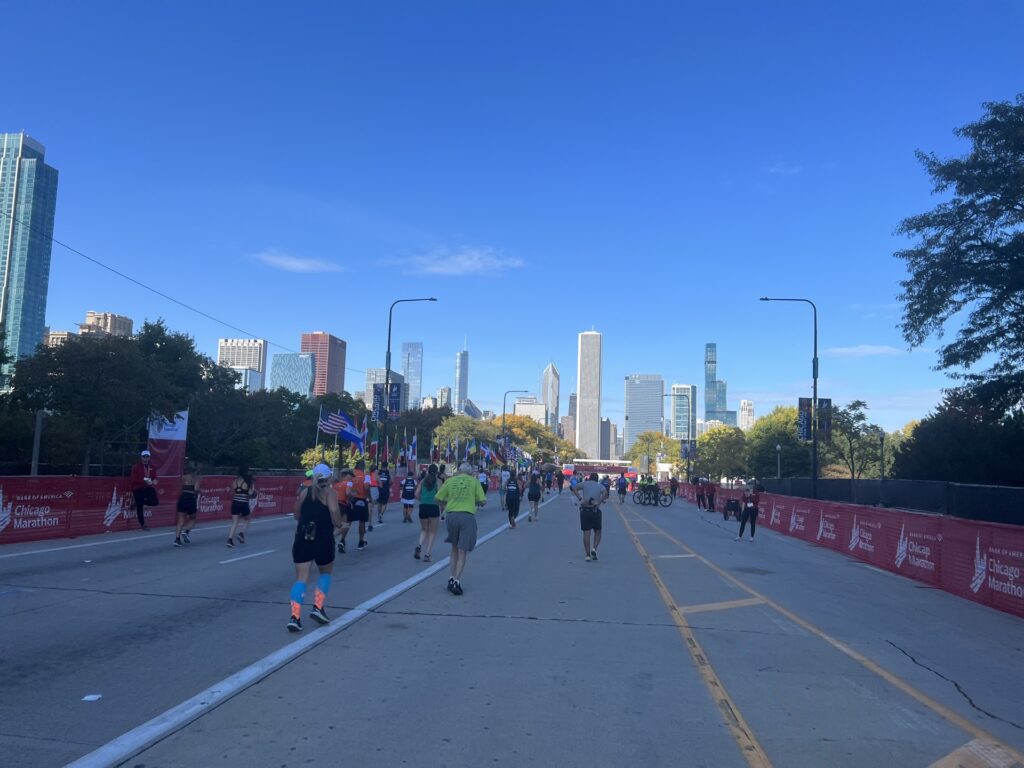
So my wish for you is that you find a way to enjoy the race for whatever it is for you. I hope you see a sign that makes you laugh so hard you pee a little. I hope someone cheers for you by name when you need it most. Tap every power up sign and high-five every little kid. Drink the beer in Pilsen and try to honor each charity you see on Charity row. Take out your headphones when you run that last mile down Michigan and turn onto Roosevelt. Soak it all in.
Regardless of your time or how many marathons you’ve run before, I hope you cross the finish line and are consumed with an overwhelming sense of accomplishment. The Chicago Marathon is special to me, and I hope you feel that, too.
Leave a Reply