
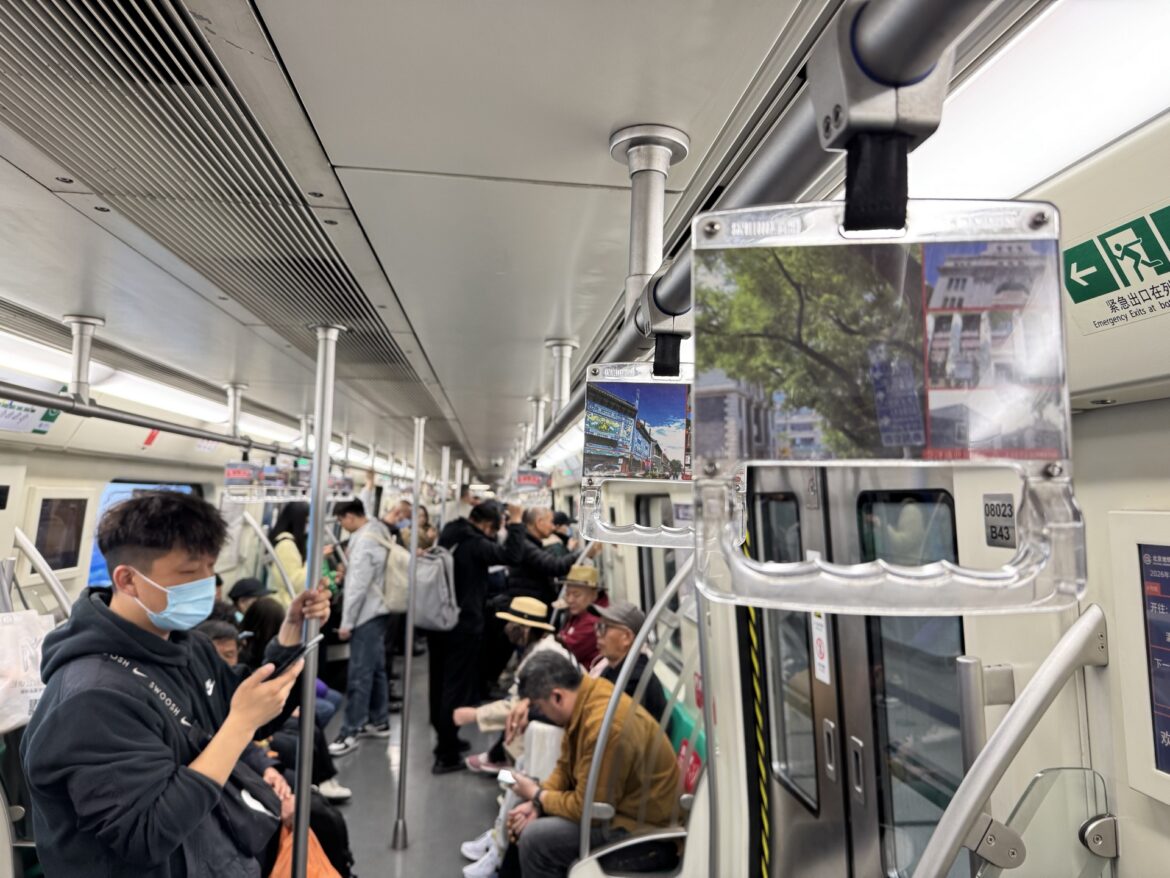
The Beijing Subway is one of the most impressive metro systems in the world. The complex system of 27 lines forms a lose grid over the city, making it easy to get just about anywhere with 1 or 2 trains. As a tourist, the Beijing Subway is an effective way to reach the city’s top attractions quickly and affordably. In this post, we’re going to explain how to ride the Beijing Subway.
Specifically, this post will cover things like which app to use to plan your trip, how to buy and use your ticket, and helpful tips for navigating the often massive stations. This post will be particular helpful for American tourists, as we’ll highlight some key differences between the subway in Beijing and domestic subway processes.
If you want to quickly learn how to ride the Beijing Subway like a pro, keep reading.
How to Plan your Trip on the Beijing Subway
If you are planning a trip to Beijing (or anywhere in China), download the Amap app right now. This app will help you find accurate locations in China and plan routes using public transportation, which is something you cannot do using Google Maps. (No really. I accidentally opened the wrong app and Google Maps led me a half mile away from the actual location.)
The process of finding your route in Amap is the same as most any other map app. Enter your starting point and ending point, and click the bus icon to get public transit directions.
Click into your preferred route to see the exact details, including the specific entrance/exit location, the train line, and the direction of the train. If your route includes a transfer — many do because of the grid route structure — the app will indicate how long it takes to reach the next train.
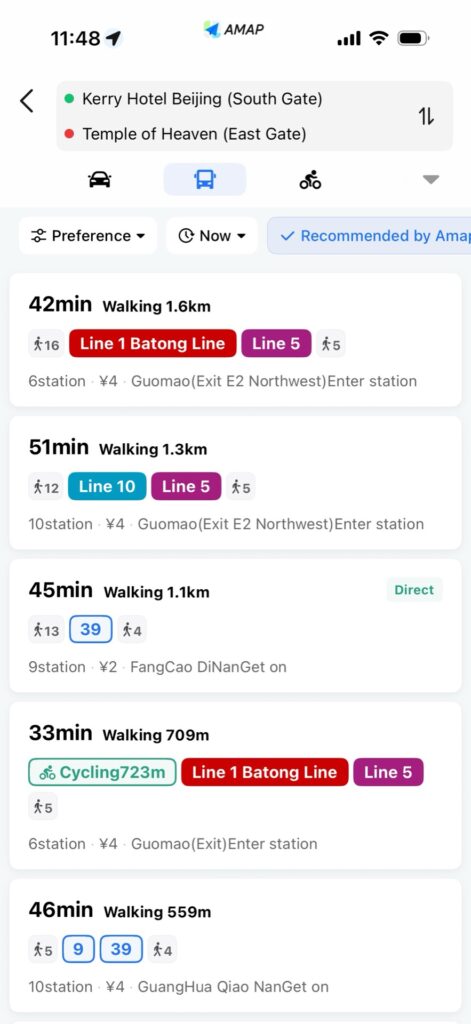
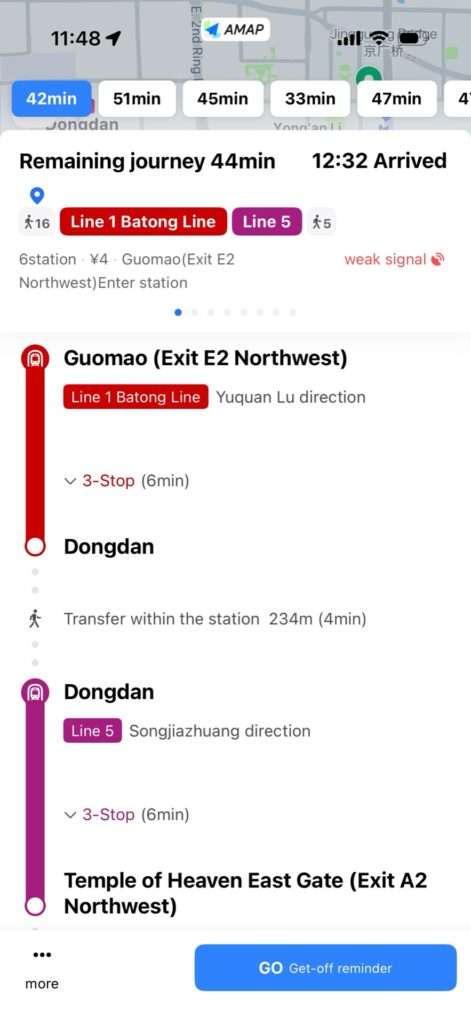
If you want, you can also change the departure or arrival time to plan your route at a specific time. However, the Beijing Subway is incredibly efficient and trains run very frequently. For most daytime trips, you won’t need to plan to catch a train at a specific time. You can simply arrive and catch the next train, which is almost always within 3 – 5 minutes.
Note: I have no affiliation with Amap. I just found the app incredibly helpful.
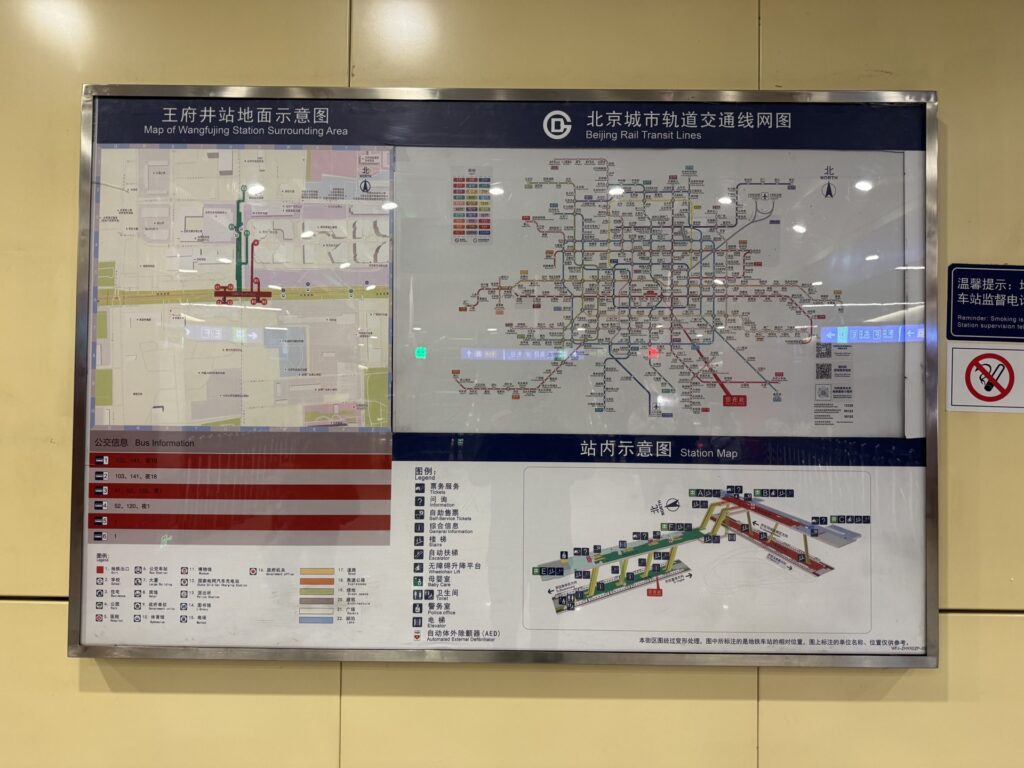
How to Ride the Beijing Subway
In these next sections, we’ll go through the steps of riding the Beijing Subway. Overall, it’s a smooth and easy process. If you’re coming from the US or a similar western country, a few things might be a bit different than your used to. These steps will prepare you for exactly what to expect.
1. Enter the Station
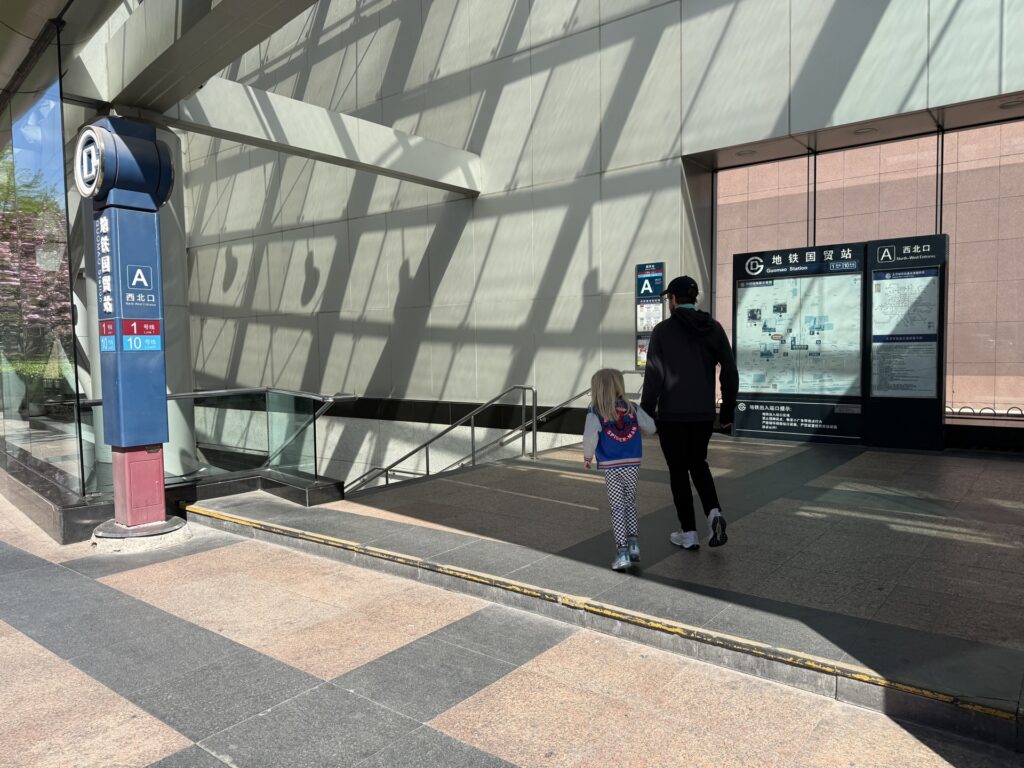
If you follow the directions in Amap, you will be directed to a specific station entrance. This is important because the roads in Beijing are often wide and impassible for pedestrians. A simple intersection reference won’t always be enough.
Subway stations are always clearly marked with the Beijing Subway logo, and in most cases, with the lines served at that station. Continue inside, following signs for your desired line until you hit either the ticket kiosk or security check point.
2. Buy Beijing Subway Tickets
Note: The location of ticket kiosks and security vary by station. Check first for a ticket kiosk before you reach security. If you don’t see it, it will be just after security.
You can buy Beijing Subway tickets from a kiosk near the entrance of every station. The kiosk is fairly intuitive and easy to use, as long as you set the language to English at the start.
Beijing Subway ticket fares are based on distance traveled. To buy your ticket, you’ll need to select the line and station for your final destination. Then, you’ll be able to select the number of tickets that you need. Children under 4’3″ do not need their own ticket if they’re traveling with a parent. (One free child per adult.)
Subway fare prices in Beijing are very reasonable. Fares for most common tourist routes will be less than ¥10.
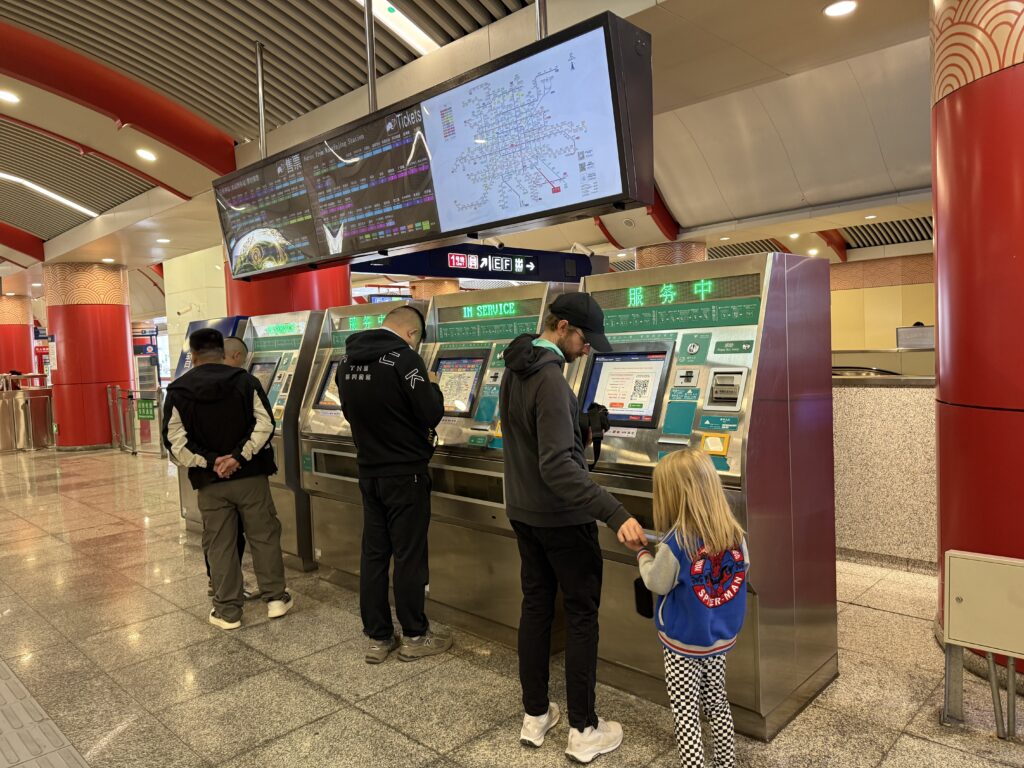
You can pay for the tickets using a contactless credit card or Alipay. We’d recommend Alipay, which is the ubiquitous payment method everywhere in Beijing. However, you will need to have cellular service to complete the transaction in Alipay.
The kiosk will dispense your ticket(s), and you’re ready to go. Be sure to keep the ticket handy, because you’ll need them to enter and exit the station.
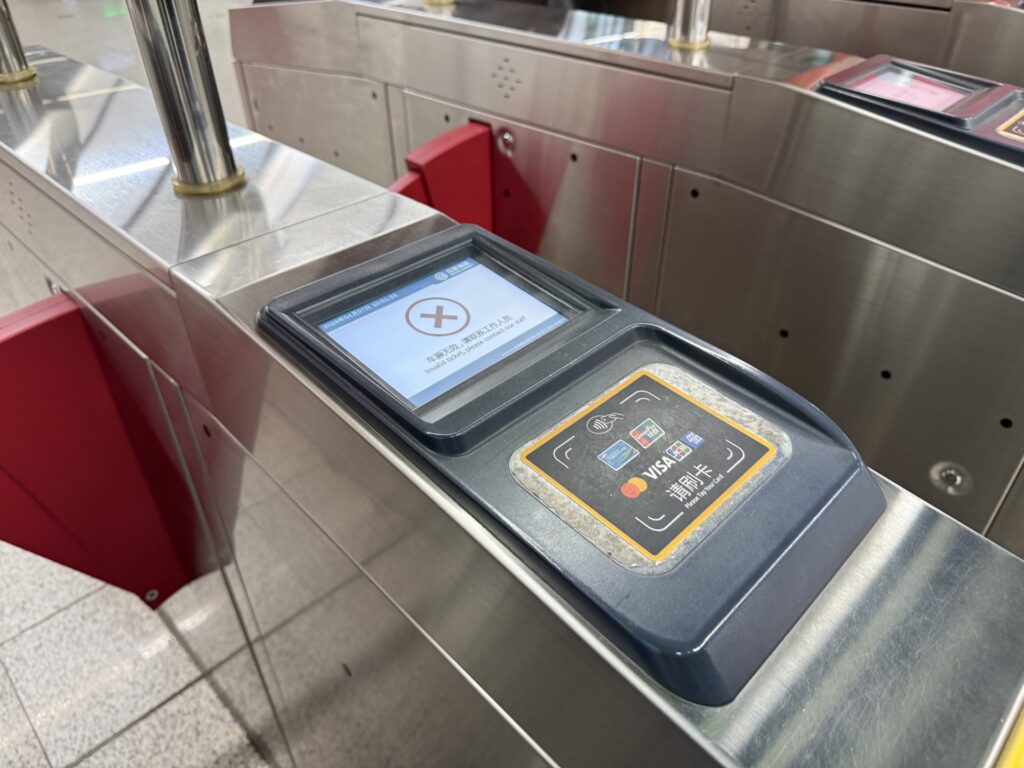
Note: Signs did indicate that you could skip this step and tap a credit card when you enter and exit the station. We did not personally try this, as we had not tested our credit cards on anything in China. (We exclusively paid with Alipay.)
3. Pass Through Security
Note: The location of ticket kiosks and security vary by station. Check first for a ticket kiosk before you reach security. If you don’t see it, it will be just after security.
All passengers on the Beijing Subway are required to pass through a security check point. Checkpoints are always clearly marked, with secure areas separated by barricades. Security is typically very quick, and we never saw a line, even during rush hour.
The exact protocols can very, so follow any instructions by the agent. In most stations though, it’s a lot like airport security. There is typically a baggage scanner, so set any bags or luggage on the belt. Next, you’ll pass through a metal detector. The agent will wand you down quickly. Collect your bags and continue on your way.
There are specific rules and a detailed list of banned items on the Beijing Subway. For a common tourist, just think basic airport policies: no weapons, no explosives, small doses of most liquids. The big difference between airport rules and subway rules is that you are allowed to bring full-size beverages into the subway.
4. Tap into the Station & Find your Train
After security, you’ll approach the gates to the station. The gate has a place to tap and insert, based on how you’re paying. If you bought a single journey ticket (like we recommended above), you will tap your ticket to enter the station.
Next, follow signs to your train line. The Beijing Subway train stations are incredible well marked, with important details in both Mandarin and English. The line will be noted by a color and number.
Once you find the platform for the line, look for the train going in the direction you need to go. The terminus for each train will be listed on overhead signs and the train-side gates. Upcoming stations in the direction of travel are also listed on the gates. If you are using Amap, the directions will tell you the train direction you need.
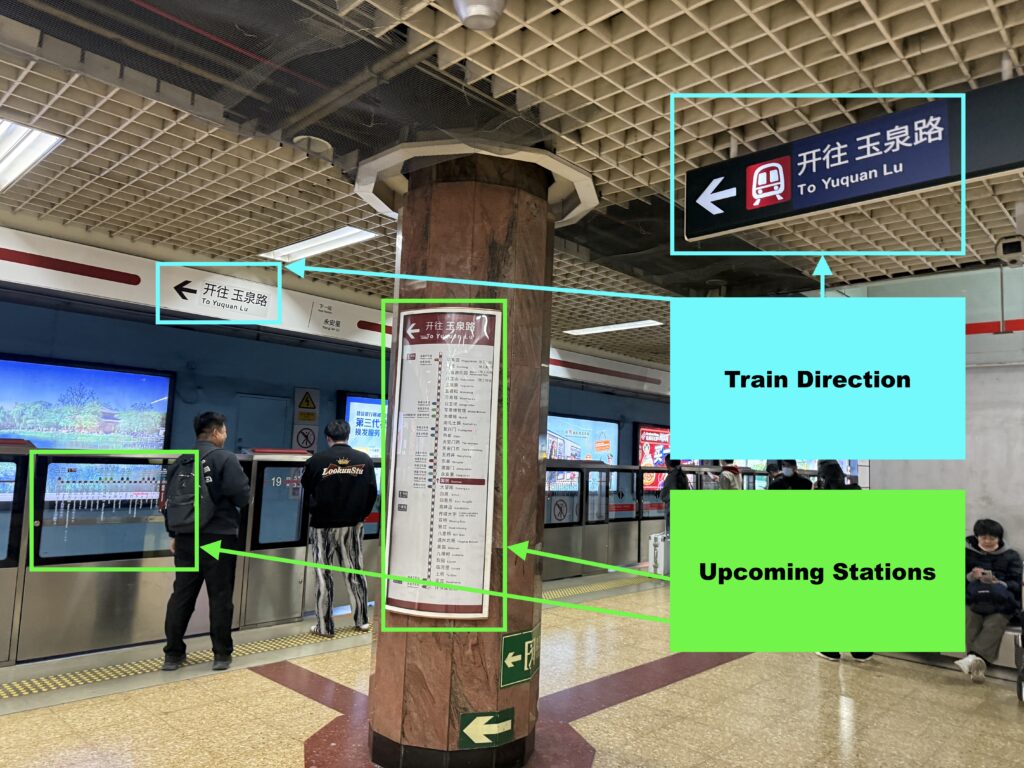
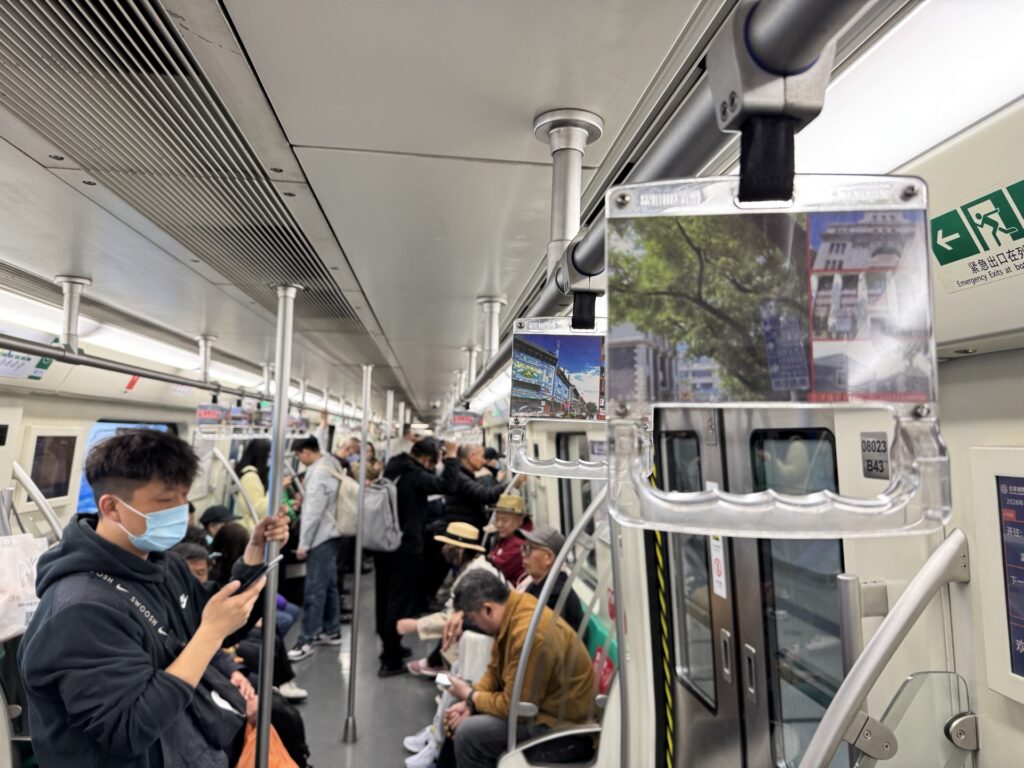
Ride the train to your destination. Onboard announcements, including upcoming station stops, are made in both Mandarin and English.
5. Exit the Train & Find your Exit
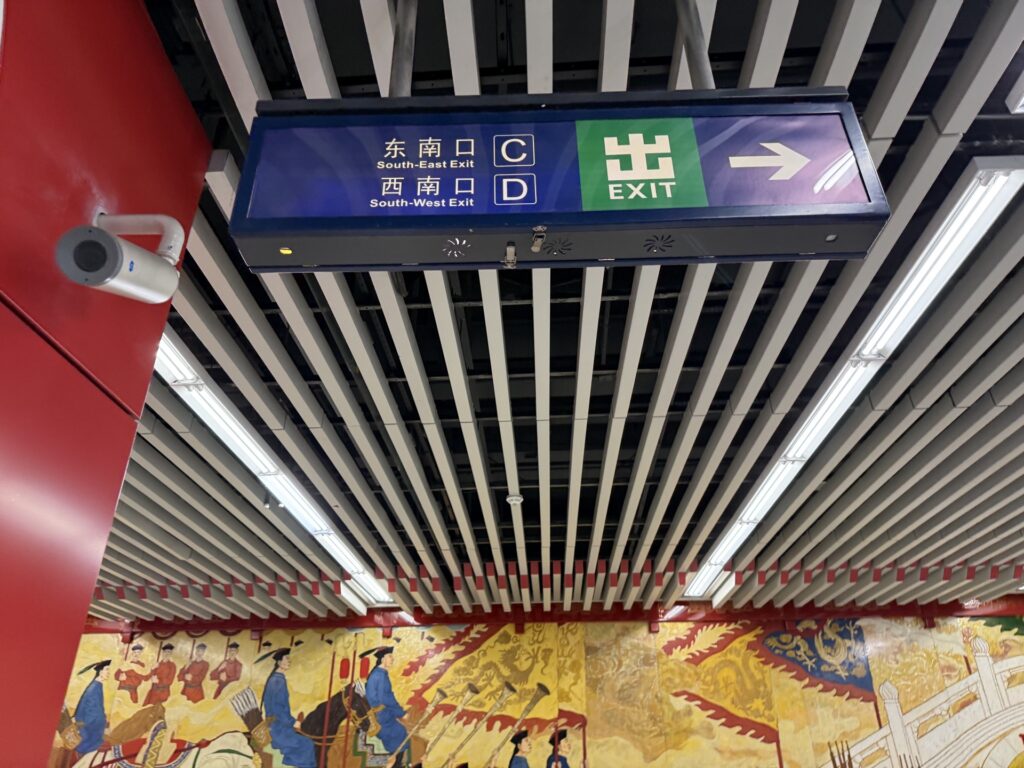
When you arrive at your station, leave the train and look for your intended station exit. Each exit is numbered, and there are directional signs around the station that point to each exit. If you are following directions in Amap, it will tell you the station exit to use. Pay attention to this.
The exit from which you leave the station matters a lot in Beijing. The stations are huge and the traffic patterns above are complex. Many of the larger streets don’t have pedestrian crossings at every intersection. Walking to a different exit may just take a few minutes inside the station, but could take 15 minutes or more at street level.
Paying attention to your exit can save a lot of time getting to your destination.
6. Insert your Ticket to Exit
Once you’ve found the general direction of your exit, you’ll soon hit the exit gates. You have to tap out on the Beijing Subway. Several other metros operate this way — including the London Underground — but it’s rare in the US, so I like to point it out for my fellow Americans.
When you leave the station, you’re going to insert your single journey ticket. The gates will open and you will not get your card back. (They reuse them, which is great!)
Exit the station and continue walking, if necessary, to your destination.
And that’s how you ride the Beijing Subway!
The Beijing Subway is incredibly efficient, impeccably clean and an immensely useful way to navigate the massive city of Beijing. For a tourist, the system might be a little different than other metros you’ve experienced, but with this guide, you should feel confident to navigate the Beijing Subway with ease.
I hope you found this useful and give the Beijing Subway a shot.
Tips for riding the Beijing Subway
Do not eat or drink on the train. The Beijing Subway trains are very clean, and that’s in large part because people respect them — also because there is a strict rule that may be enforced by the security staff. This rule technically includes water as well, so it’s best to just avoid all beverages unless medically necessary.
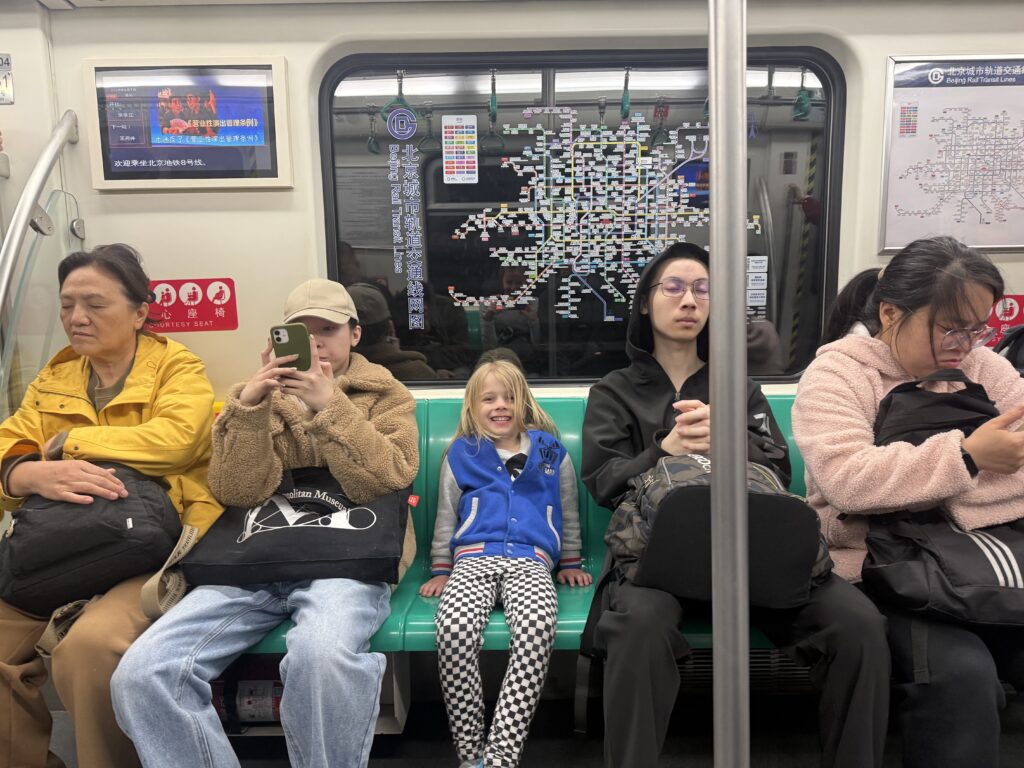
Do not sit in the priority seat if you don’t need it. There is a priority seat near each door. The signs specifically say its reserved for pregnant, injured, or elderly passengers. Even if you don’t see anyone around who looks like they need it, it’s still best to avoid sitting in these seats if you don’t meet the criteria.
Download Alipay in advance. You can pay for just about anything in China with Alipay. Whether its a ¥5 toy from a street vendor, a penny press machine or a subway ticket kiosk, you can pretty much always use Alipay. Download the app and set up your credit card before your trip so you’re ready to use it for everything when you arrive.
Enable cellular data. It’s difficult to rely on public free wifi in China, as connections typically require a texted code, which you can’t receive if you don’t have cellular data. You’ll want cell service to look up directions and complete Alipay transactions. Plus, if you use something like AT&Ts international day pass, you will bypass the Great Firewall of China.
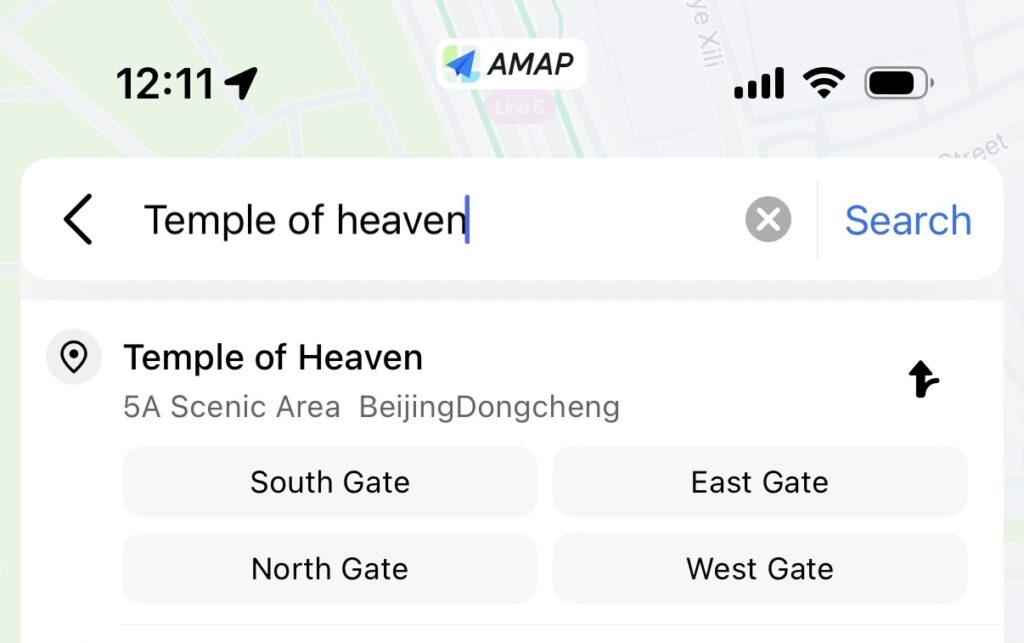
Pay attention to entry gates. Many attractions, from major sights to small parks, have specific entry gates. These gates are typically always listed in Amap. Be sure to research your preferred (or occasionally required) entry gate, and then look up the route to that specific location.
Do not hold the doors. On the Beijing Subway, the tracks are separated from the platform by a physical wall and door. These doors shut abruptly and firmly. Do not attempt to hold these doors open to catch a departing train. Fortunately in Beijing, you usually don’t need to, as the next train is typically just a few minutes away.
Xièxiè — prounounced shyeh-shyeh — means thank you. It always pays to be polite, but especially in a foreign country. Throw it out to the security guards, anyone you ask for directions, or if someone offers you their seat.
More China Tips! For more general tips, be sure to check out my post with 10 Useful Tips for Foreigners Visiting China!
Leave a Reply