
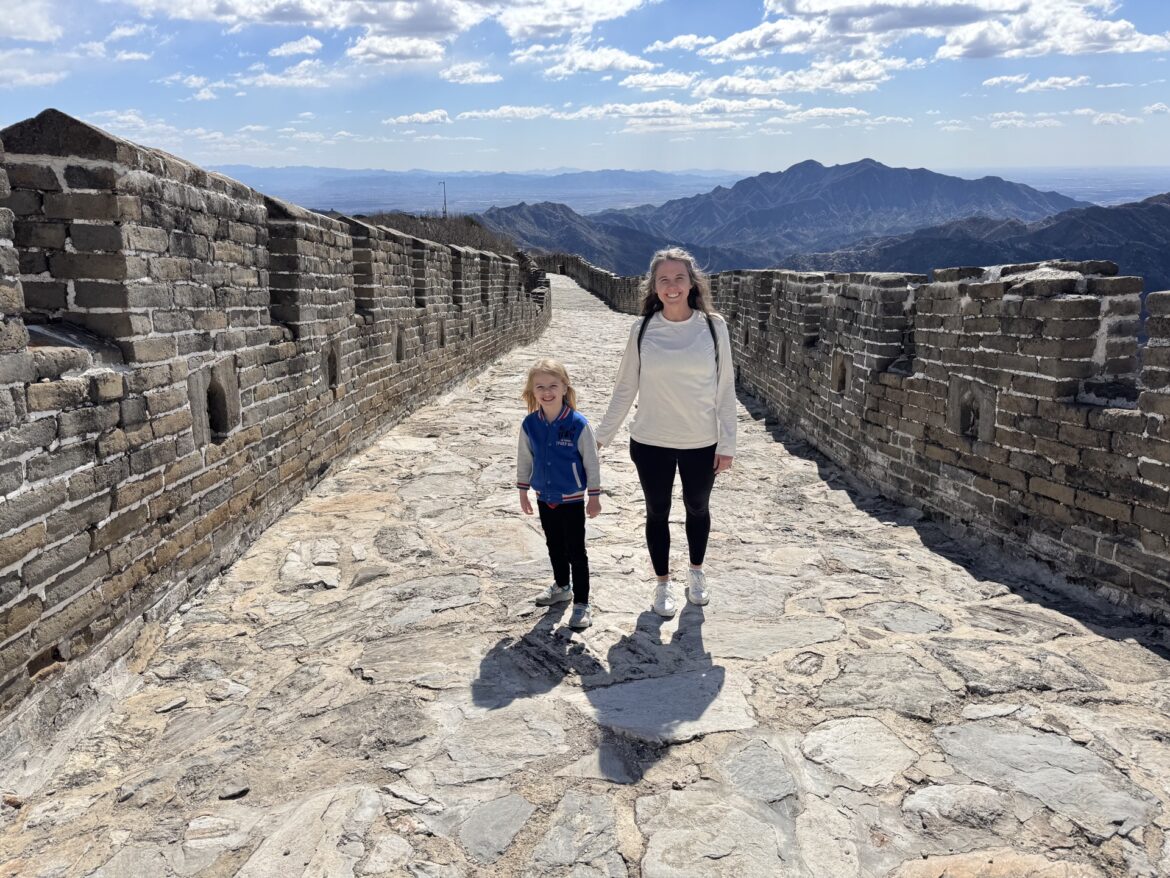
There is a reason this stone wall, built thousands of years ago, is on almost every Beijing itinerary. The Great Wall of China is an absolutely mind-boggling feat of engineering. There are so many wild facts, but the one that gets me is that the total length of the Great Wall is longer than the distance between the north and south poles. (Source.)
I’ve been to Beijing twice now and visited the Great Wall on both trips. In this post, I’m going to discuss my most recent visit to the Mutianyu section. I’ll briefly compare Mutianyu with the more popular Badaling section. Then, I’ll go into the details of getting there, how to get to the top of the wall, which route to take, and what our experience is like.
If you want to know how to spend a perfect day at the Mutianyu section of the Great Wall, keep reading!
Choosing a Great Wall Section
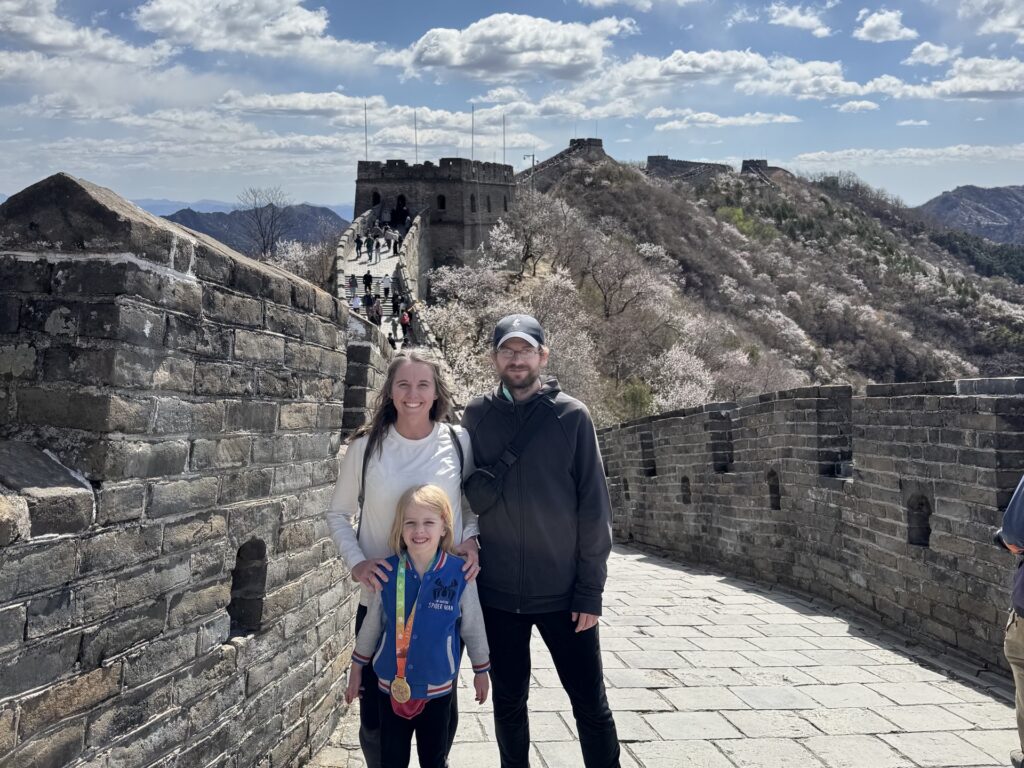
The Great Wall of China is massive and ancient. There are 8 different sections of the wall that are open to public, each restored and preserved to varying degrees. Beyond the condition of the wall itself, the sections also offer different views, architecture, difficulty, and nearby creature comforts. The sections range from tourist hotspots where you can buy Great Wall popsicles and drink Starbucks, to completely remote hikes over crumbling remains.
There are plenty of posts that will dive into the pros and cons of each of these sections. (This is a great post from someone who has visited most of them.) I’ve only visited two sections, so that’s not where my expertise lies. Fortunately, the two sections I’ve been to are by the far the most popular sections. So let’s compare those.
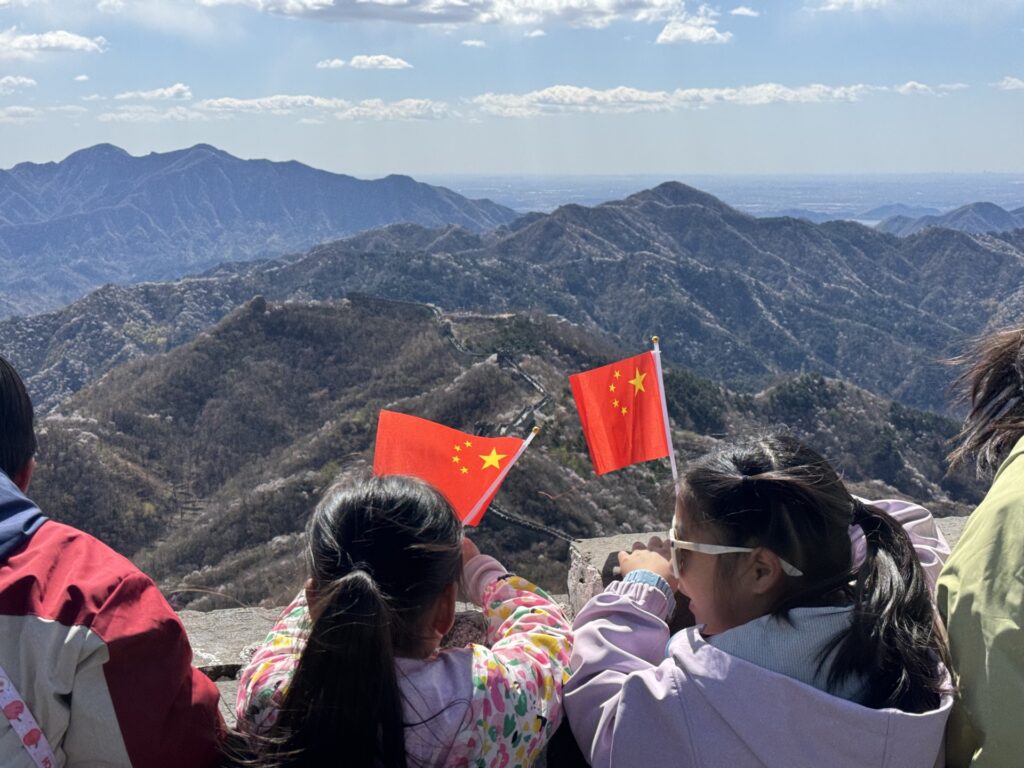
If you are looking for a more off-the-beaten path experience, you will want to research the other more remote sections of the wall. These trips will likely require a car, possibly a guide, and generally more prep. We have personally never explored these options, but they surely appeal to a specific type of traveler.
For most tourists looking to take a day trip from Beijing, though, there are two main options: Badaling and Mutianyu. These are two iconic sections, which offer a classic Great Wall experience with relative ease. Both of these sections are a few hours away from Beijing, offer beautifully preserved stretches of wall with incredible views, and have convenient amenities nearby.
Badaling or Mutianyu?
Badaling and Mutianyu have a lot in common.
Both of these sections of wall are well preserved and have similar watchtower features. They’re both located in mountainous regions, so they share similar views and both require lots of stairs. You’ll have access to nearby amenities, including bathrooms and dining, at both sections. Both of these sections also have a cable car option up to the wall, and a toboggan ride down. At each section, you can go different directions, offering an adventure as long or short as you like.
However, they each offer a unique experience, and there are some differences to consider.
Badaling is the most popular section. It accounts for as much as 70% of all Great Wall tourism. (source) It is also the only section of the Great Wall you can easily access on public transit from Beijing, via bullet train or bus. (We took the bus to Badaling a few years ago, and it was a delight.)
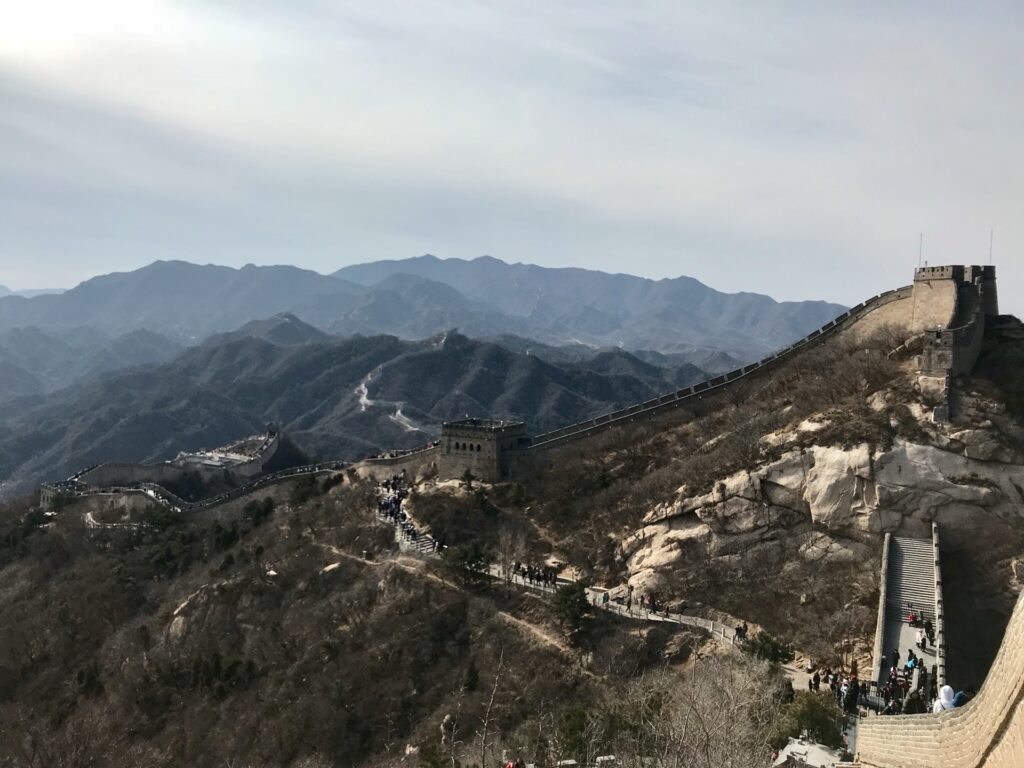
The wall itself at Badaling is more modernized, and there are bathrooms and even a cafe on top. There are concrete steps, handrails most of the way, and the path itself is mostly flat stone. It’s the most physically accessible section, but still has challenging hills.
There is an entire town below the Badaling section, with lots of shopping and dining options (including a Starbucks), plus a museum and cinema where you can learn more about the wall. This part feels a lot more touristy, even than Mutianyu. Though cheesy, it’s all very convenient and it’s an easy way to create a full experience.
Then, there is Mutianyu. This is the second most popular section of the wall, and also gets very crowed. It is slightly less touristy, but still has plenty of services at the base. There are bathrooms, restaurants (including a Subway) and shops (including a small grocery store). There are a handful of popup stands on the wall too, where you can purchase drinks, snacks and souvenirs.
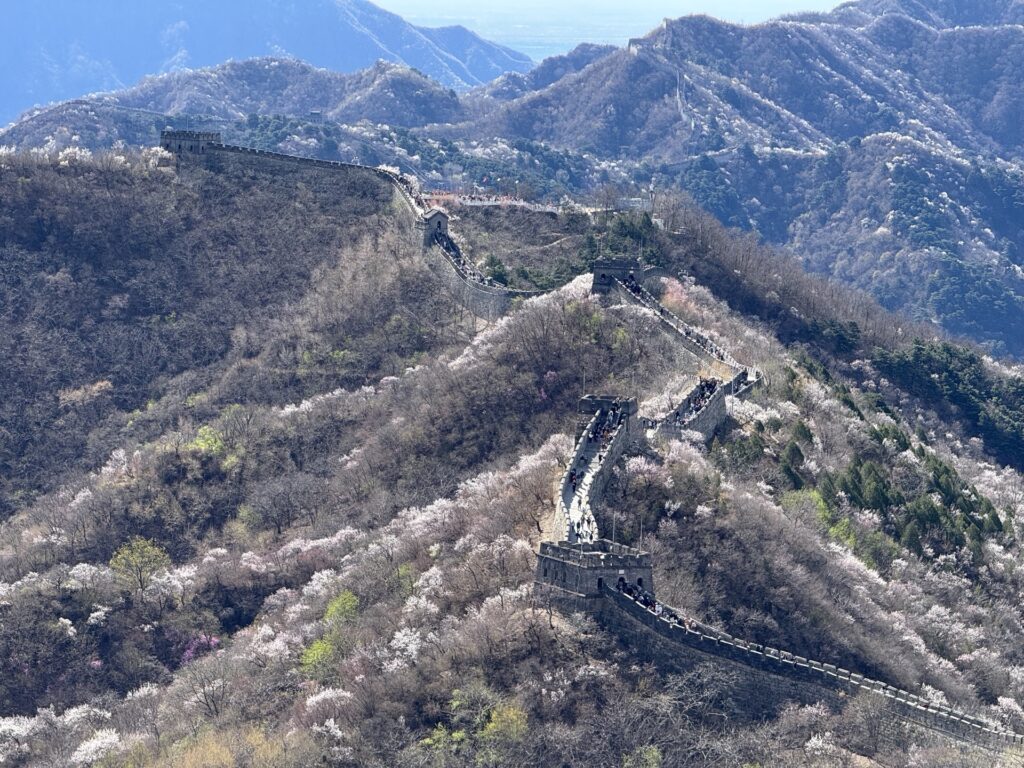
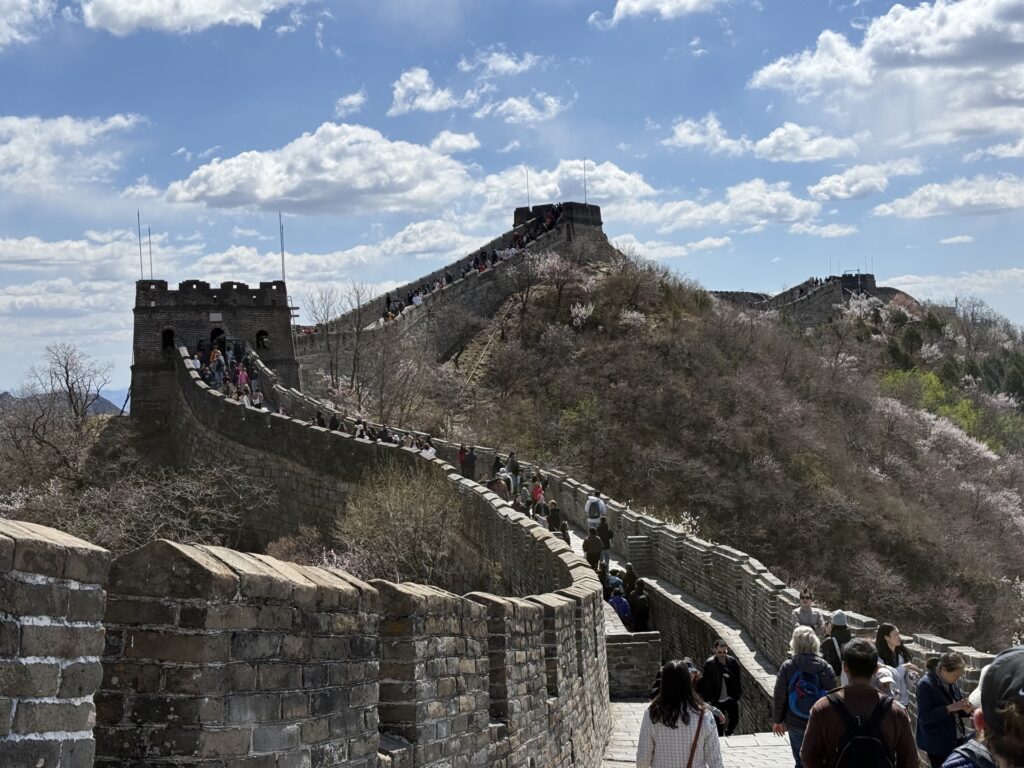
The wall is a bit more rustic too, with more stone steps, fewer handrails, and some rocky sections. There are hills in both directions, but Hero Slope is an intimidatingly steep section offering the most stunning views.
Overall, I liked Mutianyu a little bit better. It’s just a tiny amount less touristy and the wall feels a tad more authentic, but you’re still not roughing it. The biggest down side is that there is no public transit, so it’s much more expensive. If you are willing to take public transit and want to save some money, go to Badaling. If you’re going to hire a driver anyway, head to Mutianyu.
How to Get to the Mutianyu Section of the Great Wall
There is no direct public transportation from Beijing to Mutianyu. You can cobble together a bus route with a transfer, but it’s not the quickest nor the easiest option for foreigners.
The most economical option for tourists is a group tour (like this one: affiliate link), which costs around $20 per person. They run on a fixed schedule from a set meeting point in Beijing. It’s a fine option, but doesn’t offer much flexibility.
Alternatively — especially if you’re traveling with a group of 2-3 — you can hire a private driver. This costs around $100 USD, plus or minus $25 depending on party size, but is much more convenient.
I would specifically recommend just a driver — someone who will pick you up, drive you to Mutianyu, help with your tickets, and then send you off to explore the wall on your own. You could hire a guide, who would join you on the wall and teach you things along the way, but we don’t think the guide is necessary here.
We booked our driver through Get Your Guide. This is the exact listing we booked (affiliate link.) It included a private transfer from our specified location in Beijing (we chose Beijing West station where we were arriving on the overnight train) to one of five different sections of the Great Wall (we chose Mutianyu.) It cost $124 for the three of us, and at the time, that did not include entry tickets or the cost of the cable car. This tour now does include entry tickets, but not transportation up to the wall (cable car or chairlift.)
The drive from central Beijing to Mutianyu is approximately 1.5 hours. The exact time can vary greatly depending on traffic. We departed Beijing West train station (on the southwest side of the 2nd Ring Road) at 7:15 AM and arrived at 8:45 AM. It was early on a Monday holiday (Qingming Festival), so traffic was initially light. Our return trip took closer to 2 hours — our driver noted taking side roads to avoid afternoon traffic on the highway.
Read more! We travel with the Pico Portable Car Seat for our kid. It’s a packable, lightweight car seat that is easily installed for car trips like this one.
Visitor Area at Mutianyu
Our driver was able to take us right up to the visitor area at the base of the wall. This is notable, because passenger vehicles have to park a lot further away and then take a shuttle bus to the visitor area.
Before you get to the main area, there is a public bathroom on the left side (here). This bathroom was incredibly clean and not crowded at all. There are also bathrooms a little further down on the right, near the cable car entrance, and at the upper level near the three main entrances to the wall.
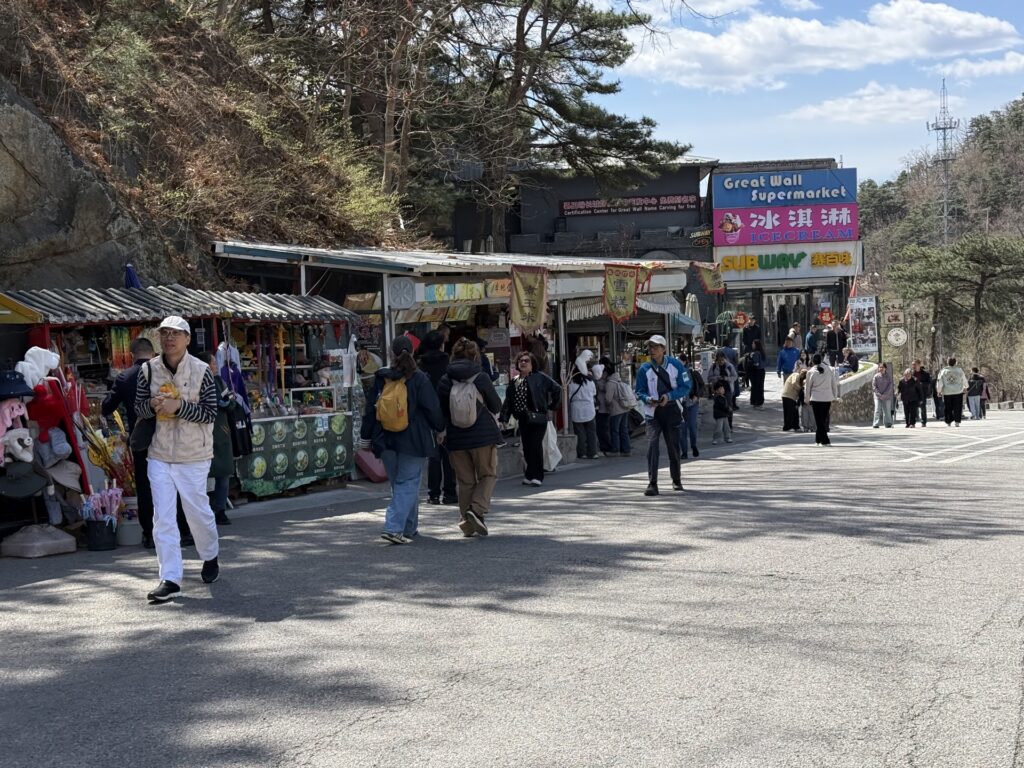
The visitor area at Mutianyu has a few restaurants including table service restaurants, food stands, cafes and even a Subway. There’s also a small supermarket if you want to pick up some snacks or drinks for the wall. Personally, I’d suggest getting to the wall as quickly as possibly.
Map of Mutianyu. I really like this map, which clearly shows the layout of the visitor area and wall. If you want a live map, use Amap, which is pretty accurate and detailed. (Google Maps is useless here.)
Getting to the top of Mutianyu
There are three ways to get from the visitor area of Mutianyu to the top of the wall: enclosed cable car (round trip), open chairlift (with optional toboggan down), or walk. The cable car and chairlift/toboggan both cost CNY 140 roundtrip and the hike is no extra charge.
Cable Car to Mutianyu
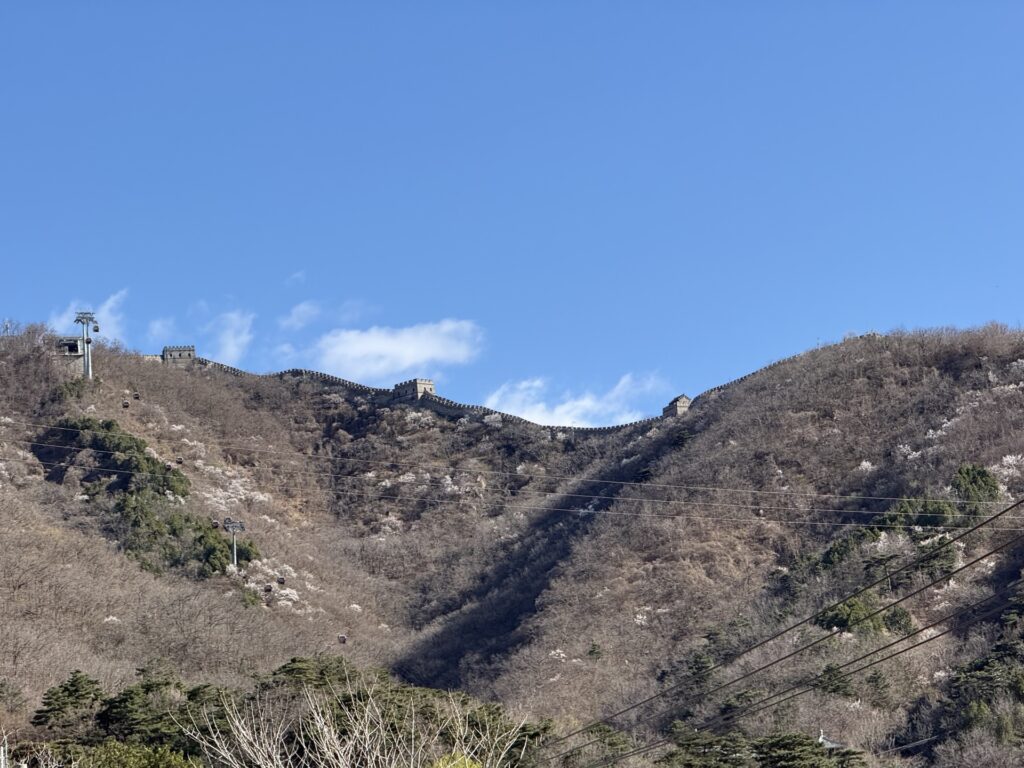
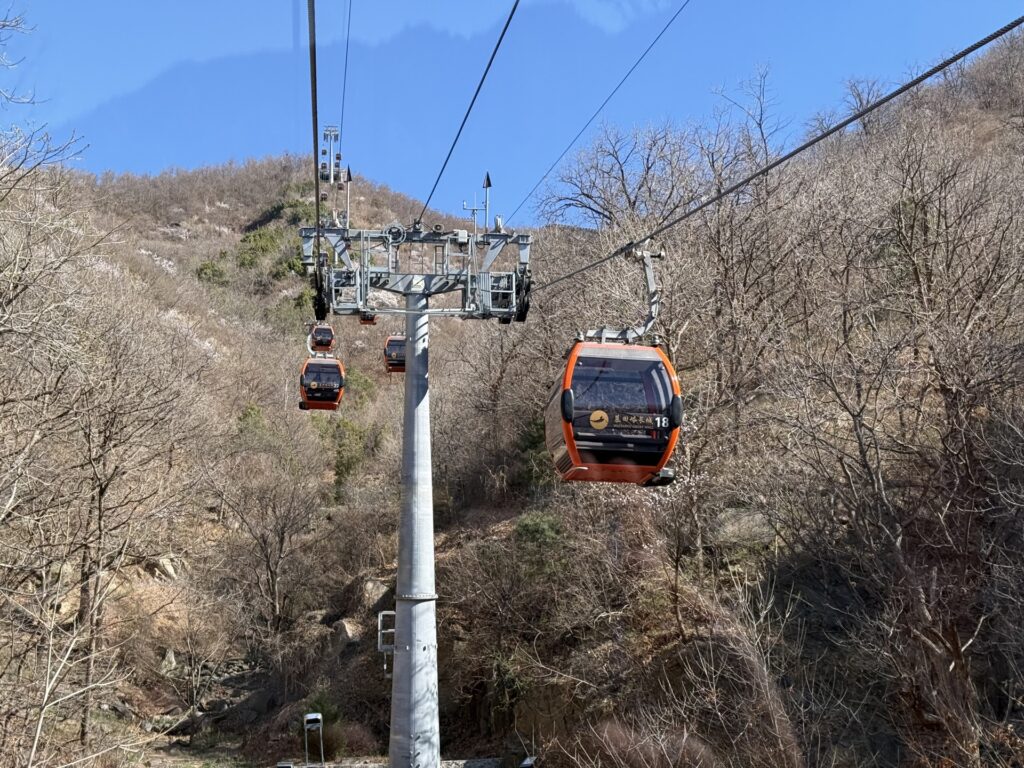
The cable car is the easiest to find, most comfortable, and often has shorter overall waits. The cable car goes up to Watchtower 14, which is the best place to start for the west route and Hero Slope.
The ticket booth for the cable car is located along the main road, after most of the restaurants and shops. Once you have your ticket, you’ll pass through the north entrance into the scenic area, and then on to the cable car loading area.
To be honest, the cable car was my last choice, but it actually worked out great. It was very efficient and a perfect location.
Chairlift to Mutianyu
The chairlift is an open-air ski lift type ride that goes up to Watchtower 6. There is no age limit, but there is not much of a seatbelt, so you’ll want to be careful. This is a good option if you want to take the east route toward Zhengguan Terrace and Grand Corner Watchtower.
The chairlift is also the best choice if you want to take the toboggan ride down. The toboggan is included in this round trip ticket. You can also take the chairlift down if you prefer. Both of these run from Watchtower 6.
If you want to ride the chairlift, you’ll need to go through the south entrance. You’ll turn right off the main road before you get the north entrance. You’ll pass through a ticket check, and then move on to chairlift loading area.
This was my original plan. However, when our guide told us that the toboggan wait is regularly hours long, we decided to change course.
Hike to Mutianyu
To hike to the top of the wall, you can enter from either the north or south entrance. From the north entrance, you can hike up to Watchtower 12 or 8. From the south entrance, you can hike to Watchtower 8 or 6. You’ll need to purchase an entry ticket for the scenic area (CNY 40), but you’ll save the CNY 140 on the lift ticket.
It’s a steep climb though, with lots of stairs. Going up, it takes between 30 – 60 minutes. Going down is much more reasonable, taking only about 10-15 minutes. If the return waits at the cable car, chairlift or toboggan are long, as they’re known to be, walking down is a good option.
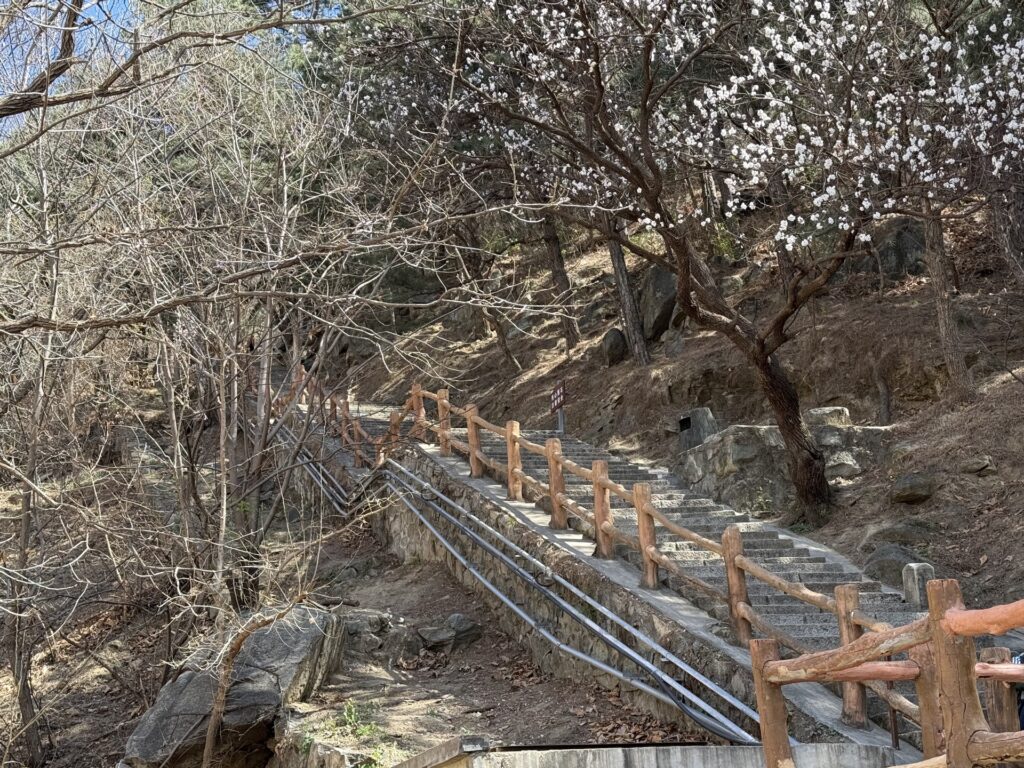
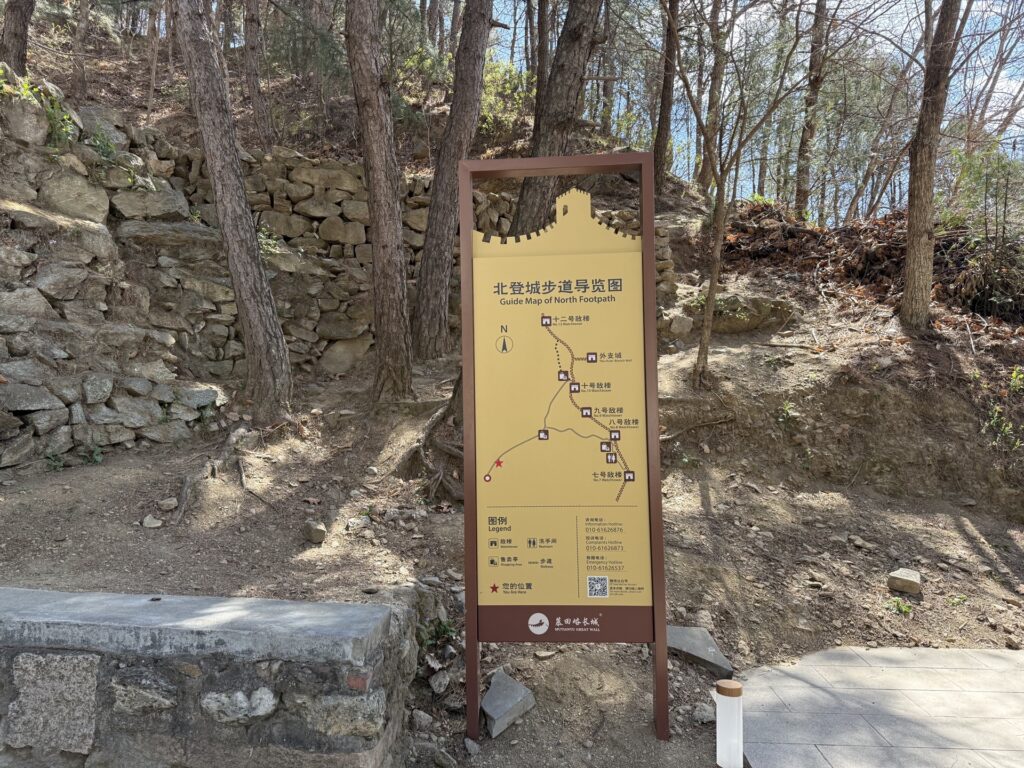
After our guide dissuaded us from the chairlift, we decided to hike to the top … he also talked us out of that. In hindsight, he was correct, and we were glad to have saved our energy for the walk on the wall. It was going to to be the cable car for us.
Our Experience on the Cable Car
We arrived at Mutianyu at about 8:45 on a holiday Monday. At this time, there were moderate lines at the ticket counter, entry point and cable car. They moved quickly though, and we were able to skip the ticket counter because our guide had already purchased our tickets digitally. It was 15 minutes from the time we left the bathrooms to the time we boarded the cable car.
The cable car ride up was just a couple minutes, and we quickly started out on our adventures on the wall.
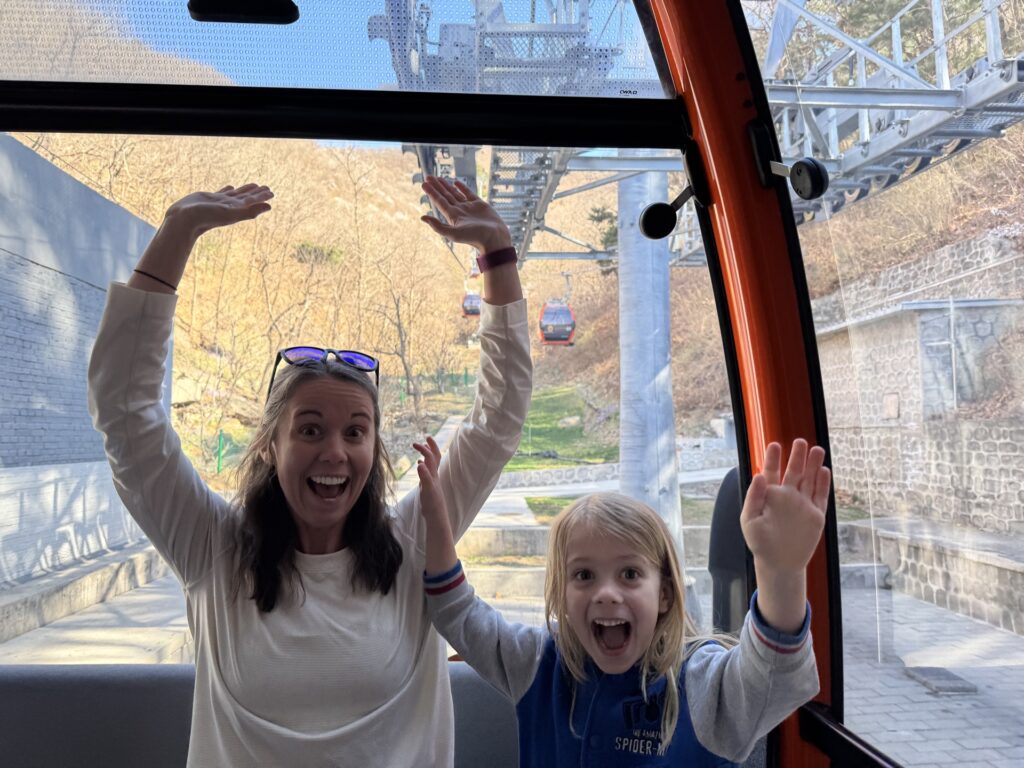
After the wall, we were back at the upper cable station by 11:30. There was only a short wait and we were back at the lower station in under 10 minutes.
These waits are not guaranteed though. For example, when we got down to the lower station around 11:30, the line for the ticket booth stretched back almost all the way to the shuttle stop. The waits up and down would have been much later at that time.
Walking Routes on the Great Wall at Mutianyu
I have this problem with maps sometimes, where I just look at them (with complete disregard for scale) and think, “That looks pretty close, I can walk that.”
When I first saw the Mutianyu map, I figured we’d walk the full stretch of wall. I thought we’d start at Watchtower 14, walk west to Watchtower 20, walk all the way east to Watchtower 1, and then return to Watchtower 14 for the descent.
That would haven bananas. The Great Wall is long, uneven and hilly. The hike would have been over 4.5 miles, with over 2000 feet of elevation gain, and taken at least 4 hours. I’m not saying we couldn’t have done it, but it was just more than we were interested in.
There are three more reasonable routes that people typically follow.
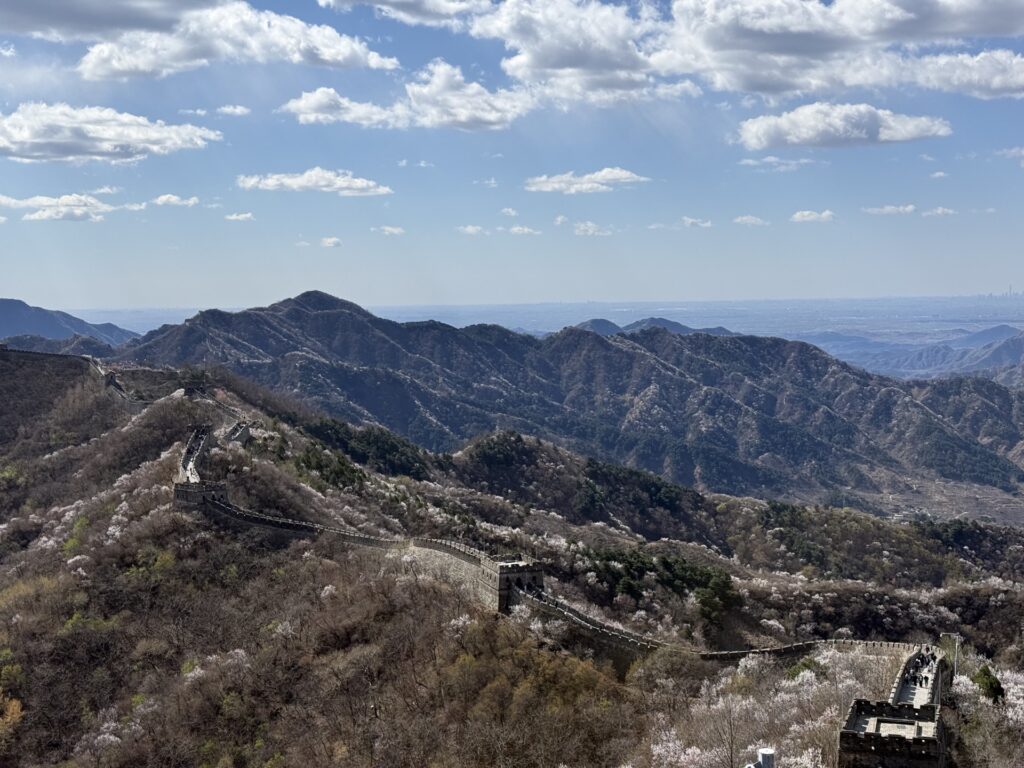
One is the west route, also known as Hero’s Journey, which goes from Watchtower 14 (top of the cable car) to Watchtower 20 and back. This route includes the steepest sections of the wall, which also means it has the best views.
Another option is the east route, which goes from Watchtower 6 (top of the chairlift/toboggan) to Watchtower 1. The highlights this direction are Zhengguan Terrace and Grand Corner Watchtower. This route is a little shorter and slightly less hilly. Typically, you’d ride the chair lift up, hike this section of the wall, and then toboggan down.
There is also a middle section route, which runs between Watchtower 14 to Watchtower 6. You can do it either direction, but it makes the most sense to take the cable car up to Watchtower 14, walk downhill to Watchtower 6, and then hike down to base. You could also do it the opposite way, but then you’d be going uphill most of the way. It’s also easy to extend this route in either direction, if you wanted a longer hike.
Hero’s Journey — West Route — on the Great Wall at Mutianyu
We decided on Hero’s Journey, the west route, from Watchtower 14 to 20 and back. (Honestly, with a name like that, how could we not pick it?) This route spans a 0.75-mile section of wall, and is almost entirely uphill going out. (The return is downhill, which is nearly as hard, just in a different way.)
We were off the cable car by 9:15 AM. It’s a short walk to the actual wall. At the entrance, there were signs and staff pointing left toward Hero Slope or right toward the toboggan/chairlift and Grand Corner Watchtower. We turned left.
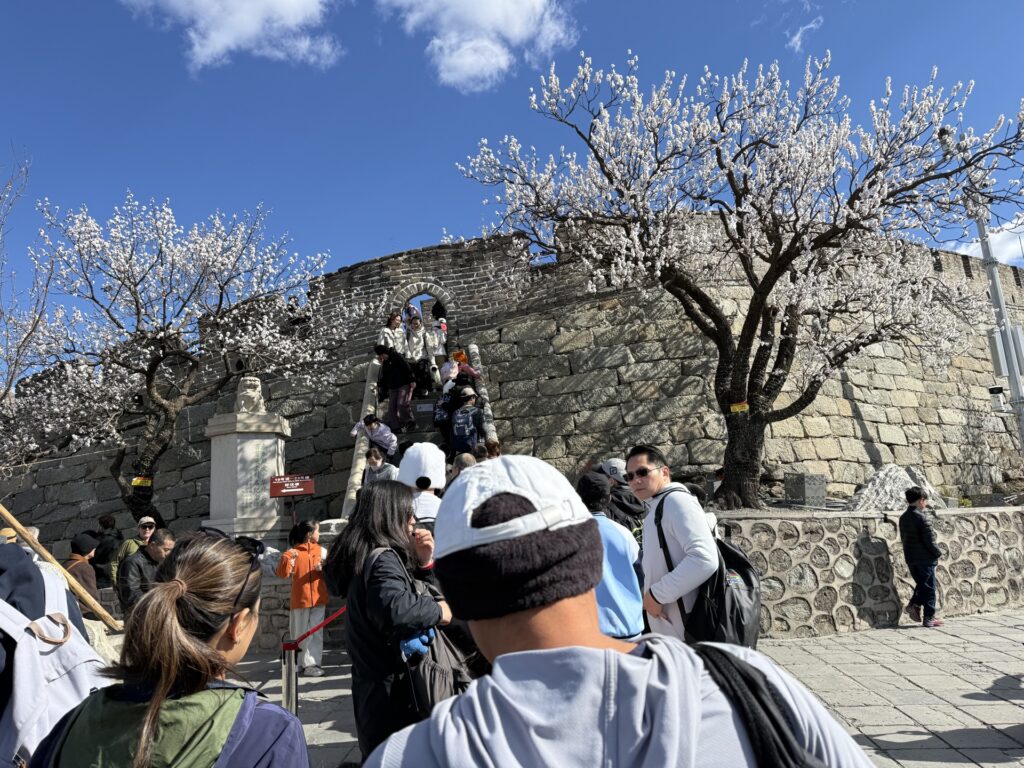
Tip! Don’t look up! Just the sight of Hero Slope was nearly enough to make us turn back. From here, it looks very intimidating.
Part 1: Watchtowers 14 – 18
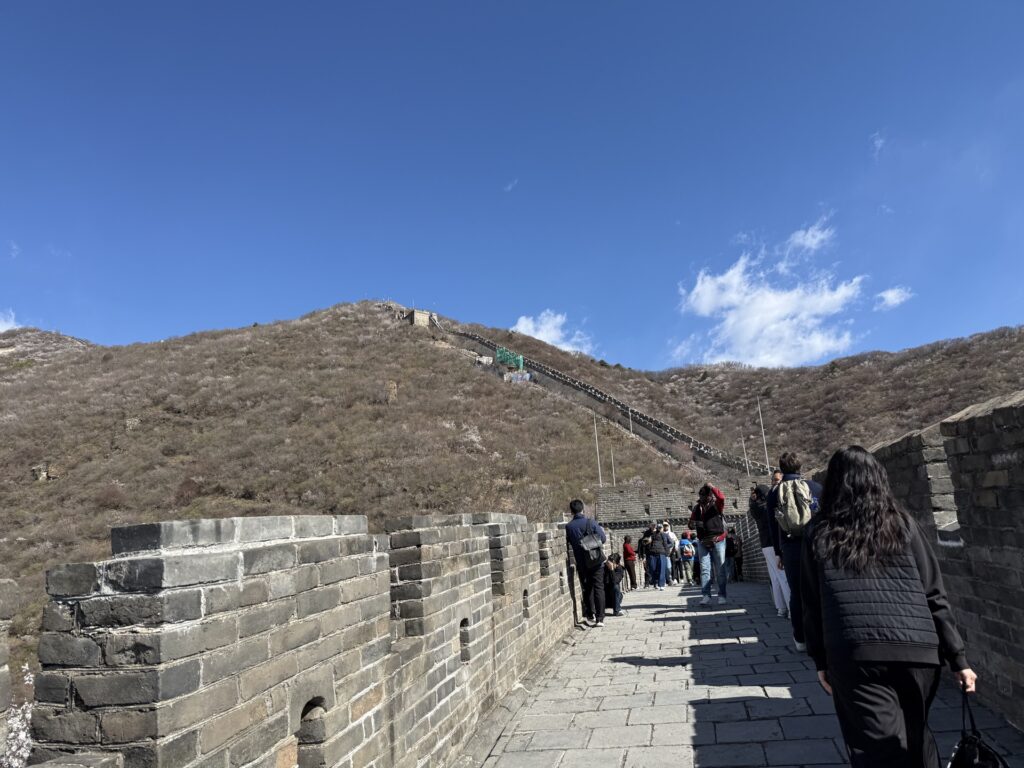
The wall is impressive right from the start. There are lots of good chances for photos early on, because the winding turns of the wall and early watchtowers. The crowds are most dense here though, because everyone is just starting.
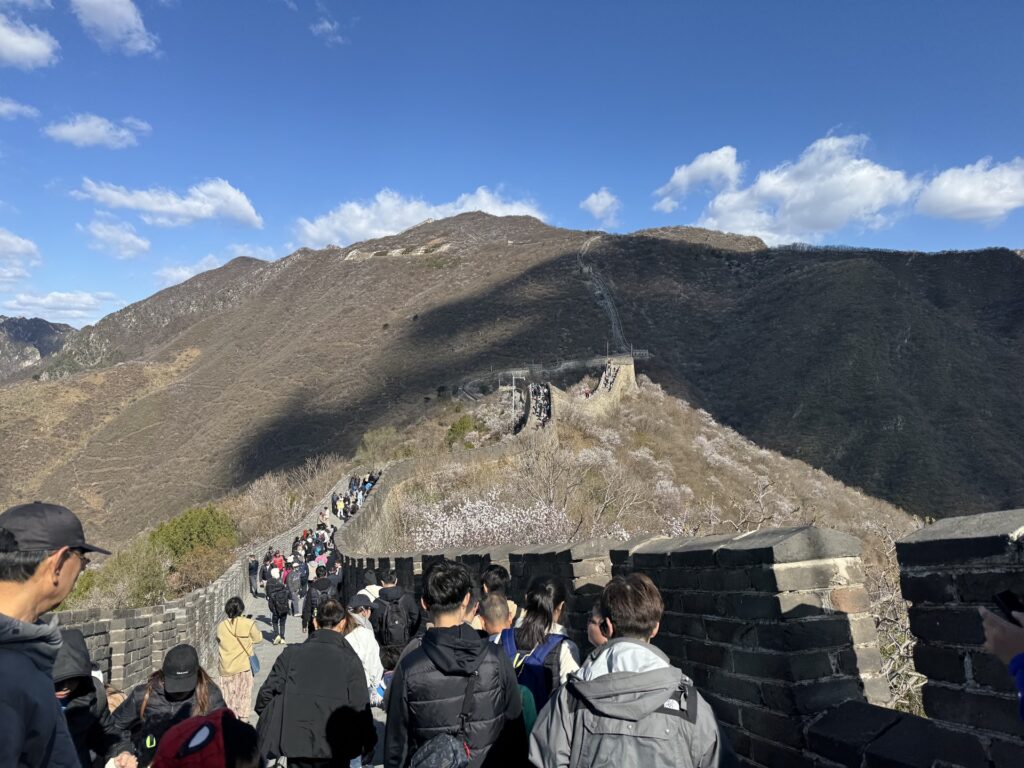
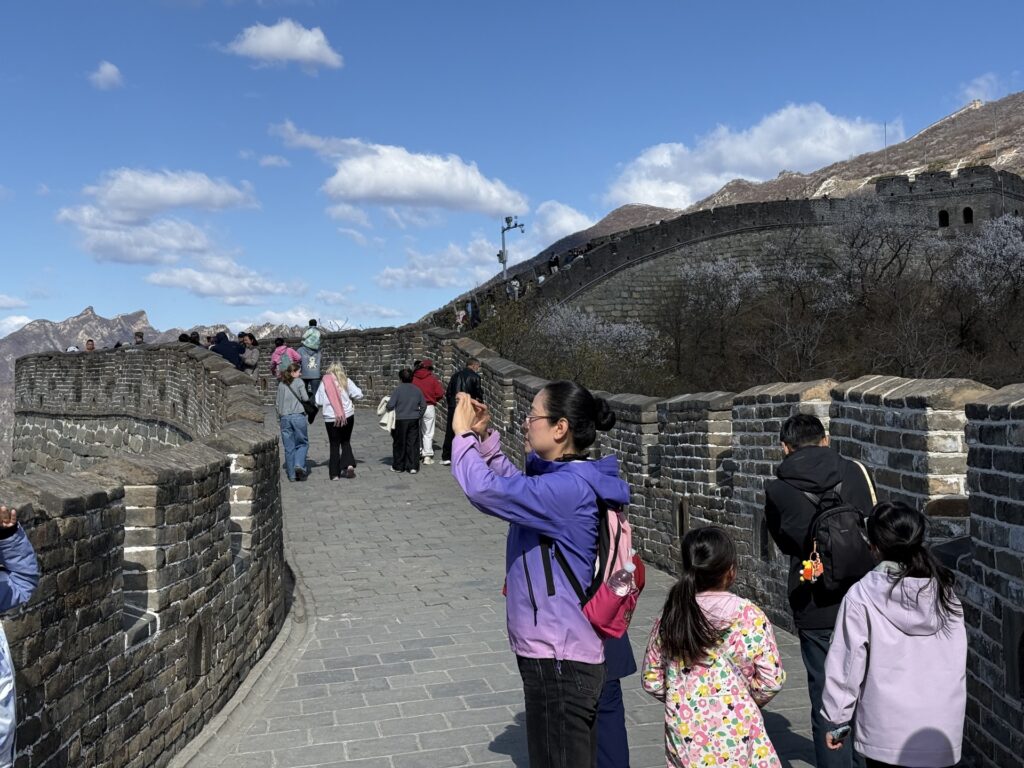
We passed through several watchtowers quickly, and reached the base of Hero Slope in just 15 minutes. We’re pretty quick walkers and didn’t stop for many photos, but mostly we were able to make such good time because the crowds were still low.
The watchtowers have narrow entryways and staircases, plus they’re attractions themselves where people tend to slow down and explore. As the crowds tick up, bottlenecks start to form at each watchtower. More on that later.
Part 2: Hero Slope
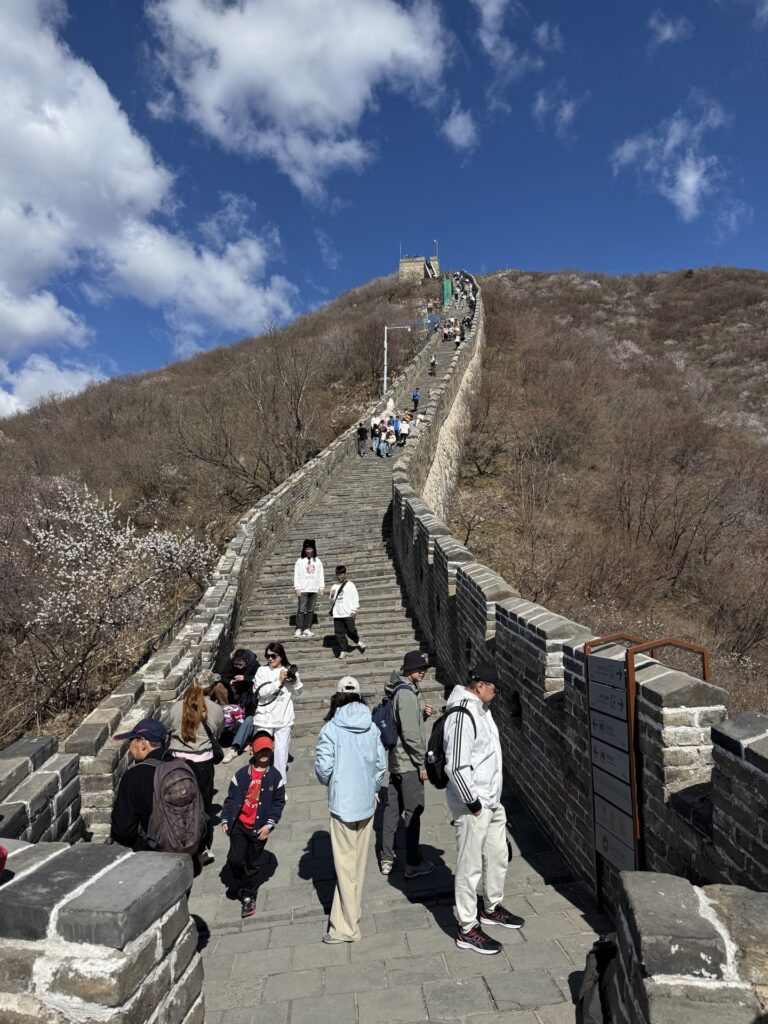
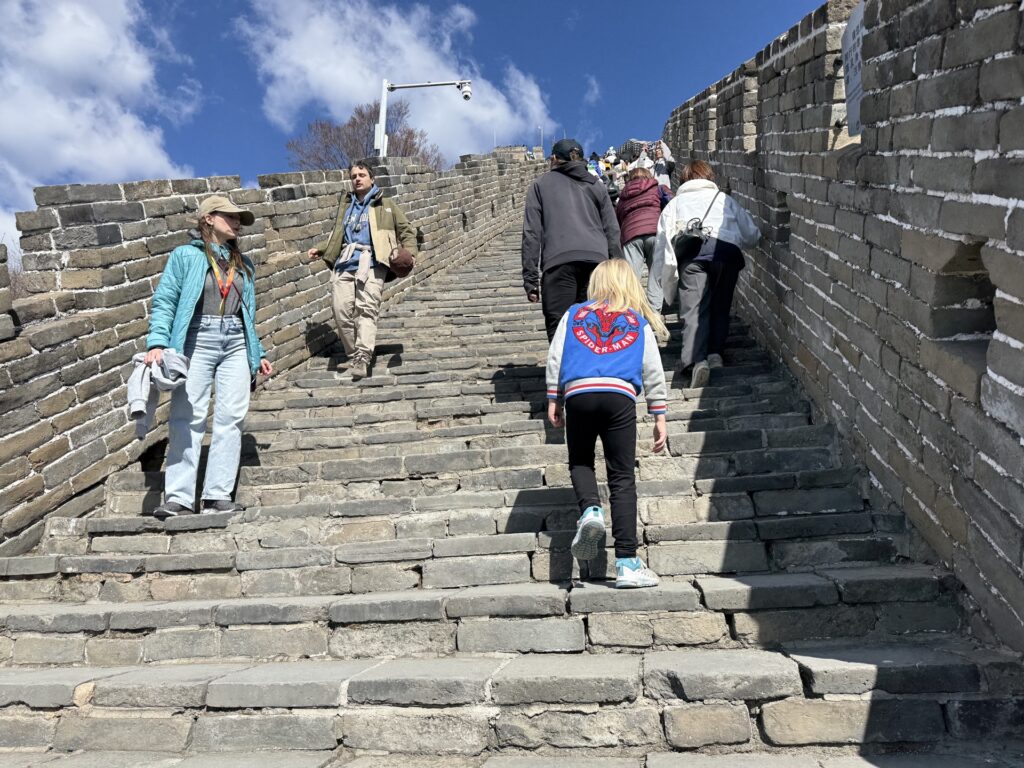
Hero Slope refers to the section of the Great Wall between Watchtowers 19 and 20. It’s a very steep section of the wall, with a near 80% incline (AllTrails has it at a grade of 46%.) Some people report that it often requires arms and legs to ascend, though we didn’t think that was the case.
This section was definitely tough. We took a few short breaks, but honestly tried to push up it as quickly as we could to get it over with. There is no handrail and the steps are very steep, but at least they’re good steps — they’re flat, pretty even, and not just crumbled rock.
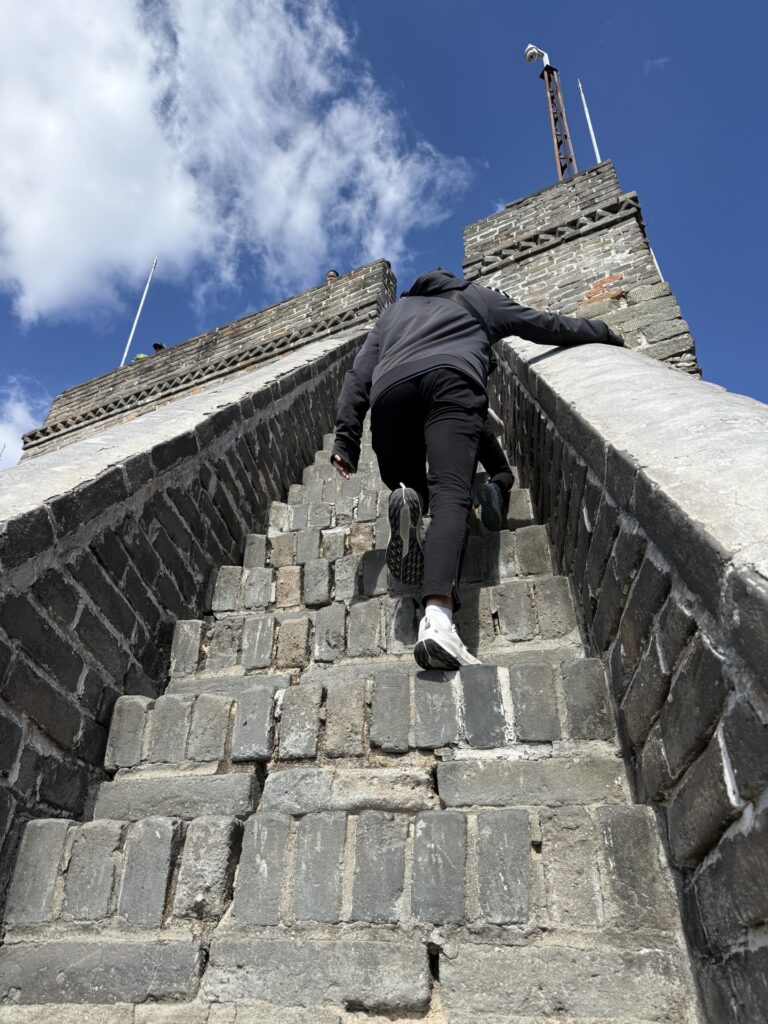
At the top is Hero Platform, with a stone marking that you’ve made it! Well, you’ve made it somewhere. There is still more wall — and more incline! — if you want to reach the end.
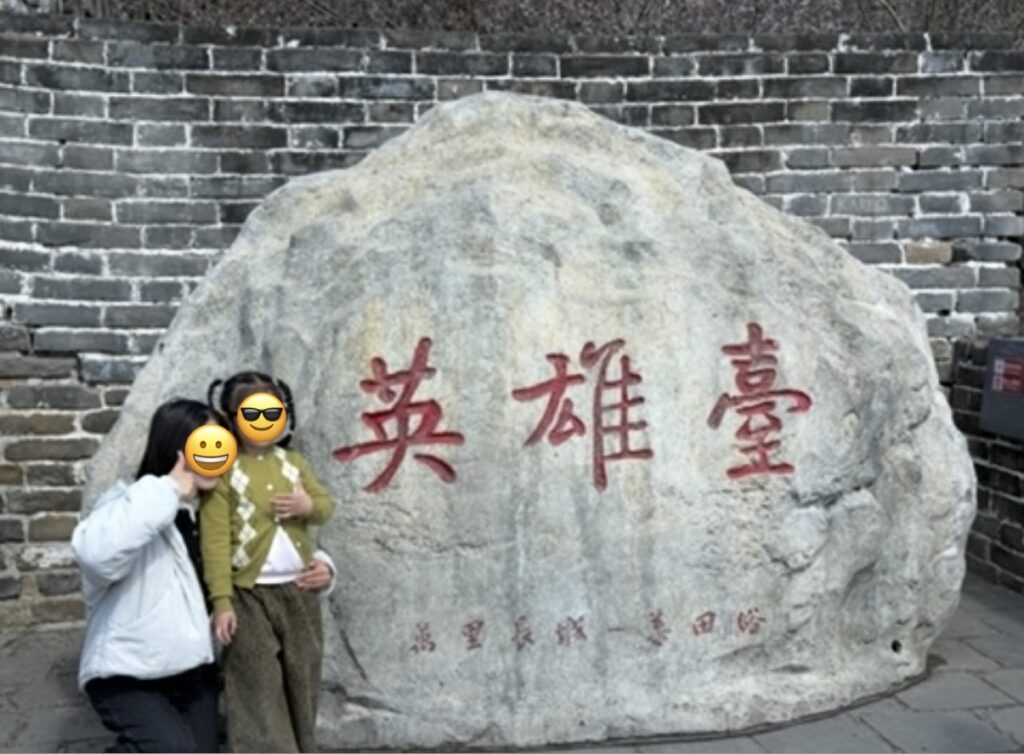
We were at the top at 9:56, just 11 minutes after our photo at the bottom. Like I said, we were trying to push through this section. In hindsight, that wasn’t entirely the right choice.
On the return, you can’t walk down Hero Slope. Instead, security funnels you down a side path, off the wall, down concrete stairs. I didn’t realize that at the time.
The views from Hero Slope are pretty incredible, and going up is the only chance to enjoy them. Be sure to pause and turn around to enjoy the view as your going up Hero Slope.
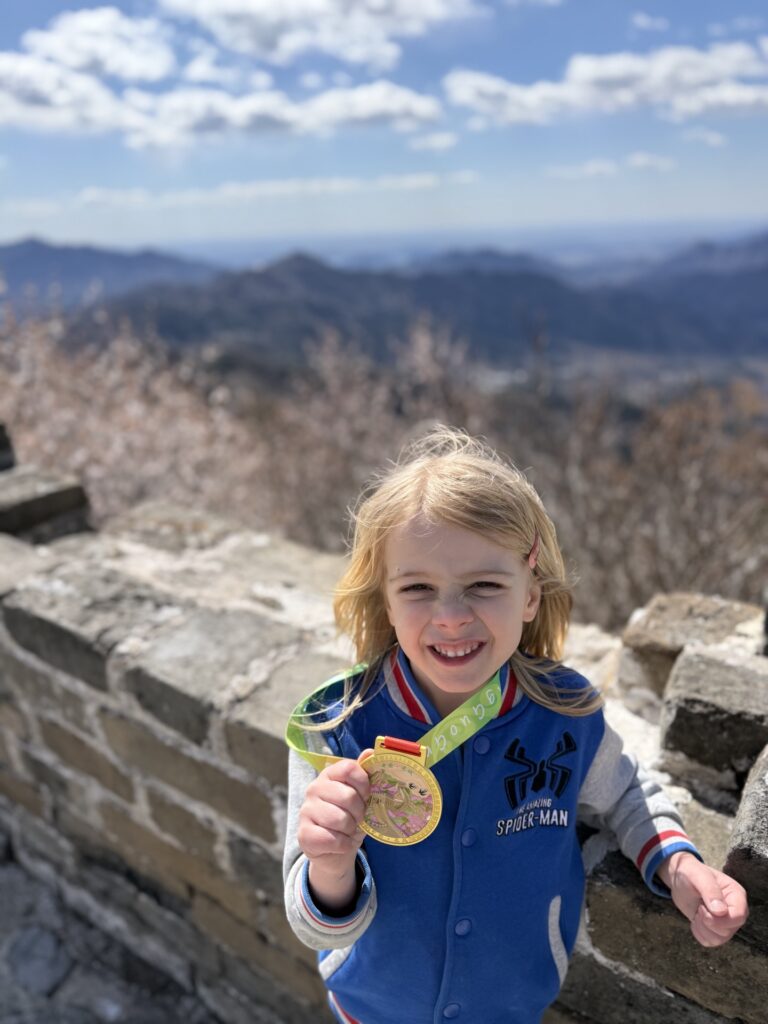
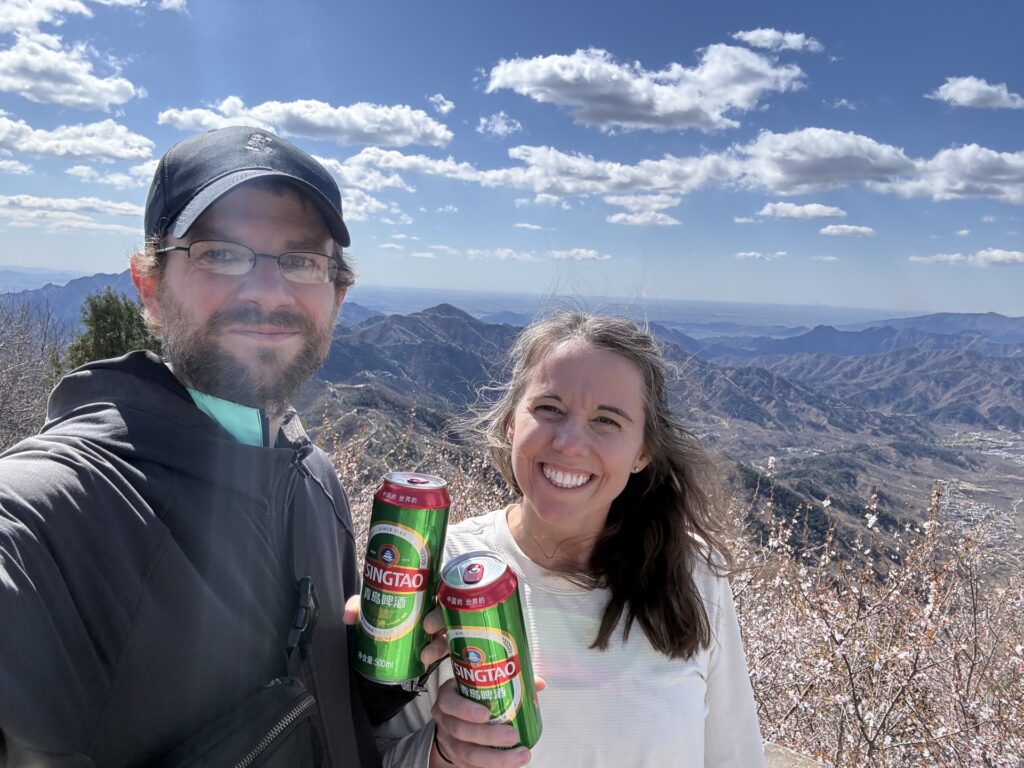
At Hero Platform, you’ll find a few provisions for sale. Pop up stands here sell a limited selection of food, drinks and souvenirs. It’s totally overpriced but also totally worth it. We bought Tsingtao beers for us, Snickers bars for all, and a medal (ha!) for our 5-year-old champion.
Part 3: The Final Push to Watchtower 23
Hero Slope culminates at Hero Platform at Watchtower 20, but tourist access on the Mutianyu section of the wall stretches to Desheng Hall at Watchtower 23. We couldn’t turn around now.
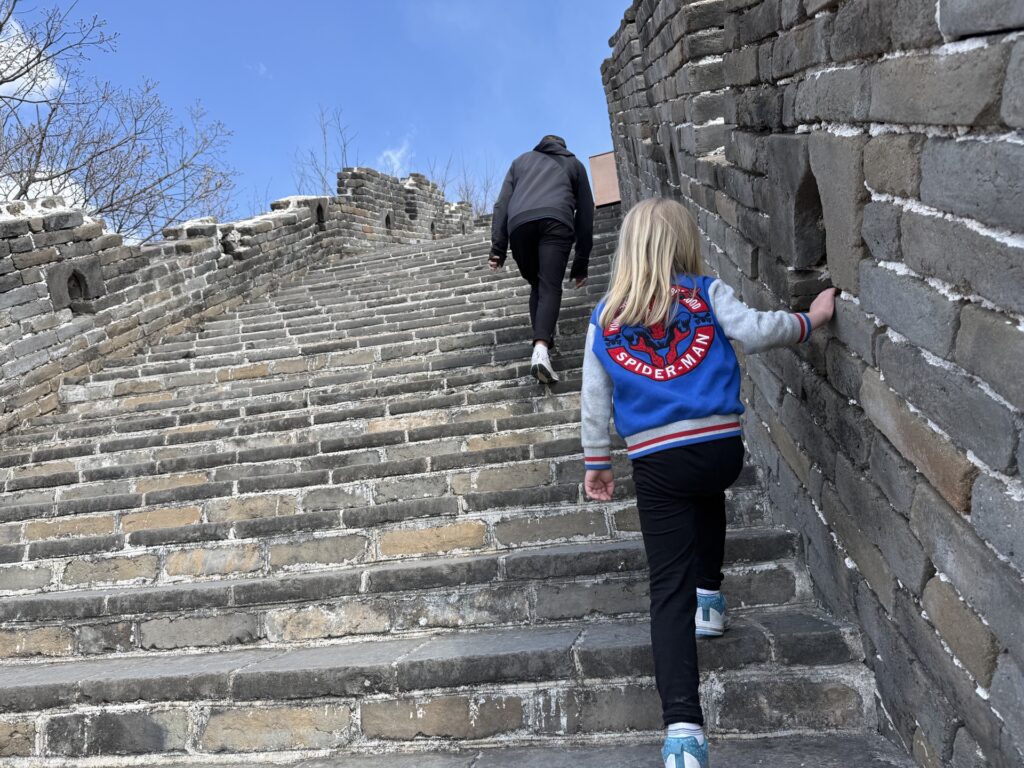
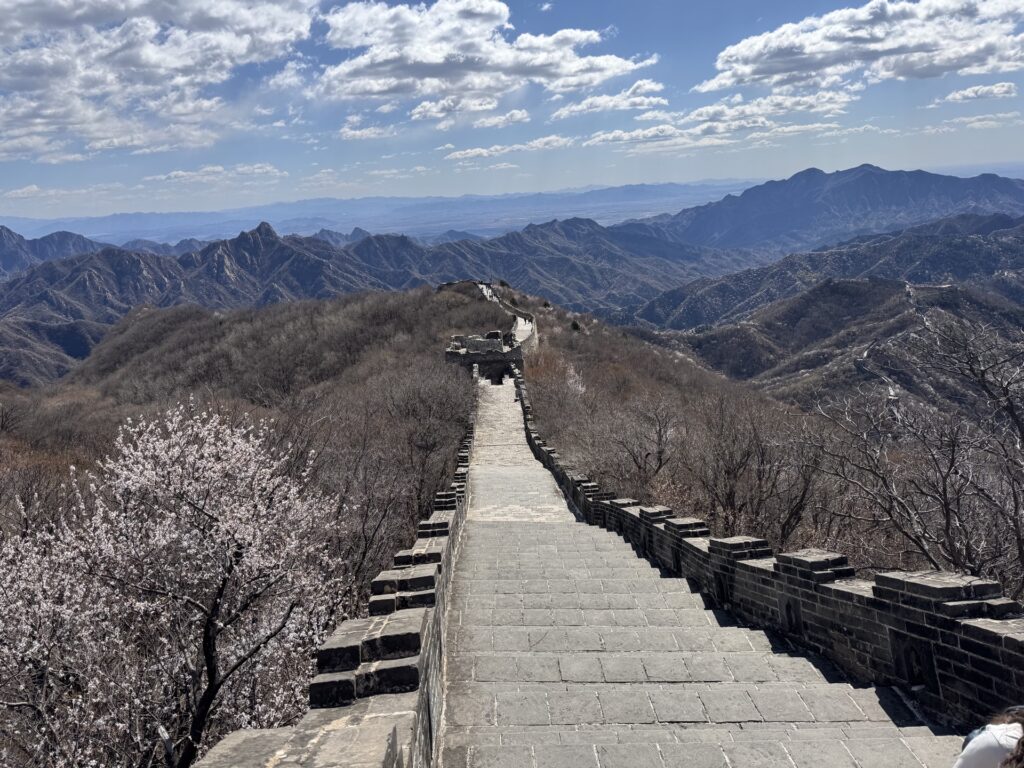
We decided to continue on all the way to Desheng Hall, even though it was more stairs. This final section felt just as steep and difficult as Hero Slope, honestly. There’s a bit of reprieve initially, but then it quickly climbs up again.
The crowds significantly thinned by this point, and we had the final watchtower mostly to ourselves. This was partly because a good chunk of people turned around before and after Hero Slope. It was also surely because we made such good time to this point. We beat the morning crowds, who had not yet made it to this point.
After briefly exploring the watchtower, we ran into a locked barrier. We could go no further — we had reached the furthest west point of the Mutianyu section of the Great Wall.
We reached the top about 10 minutes after leaving Hero Platform.
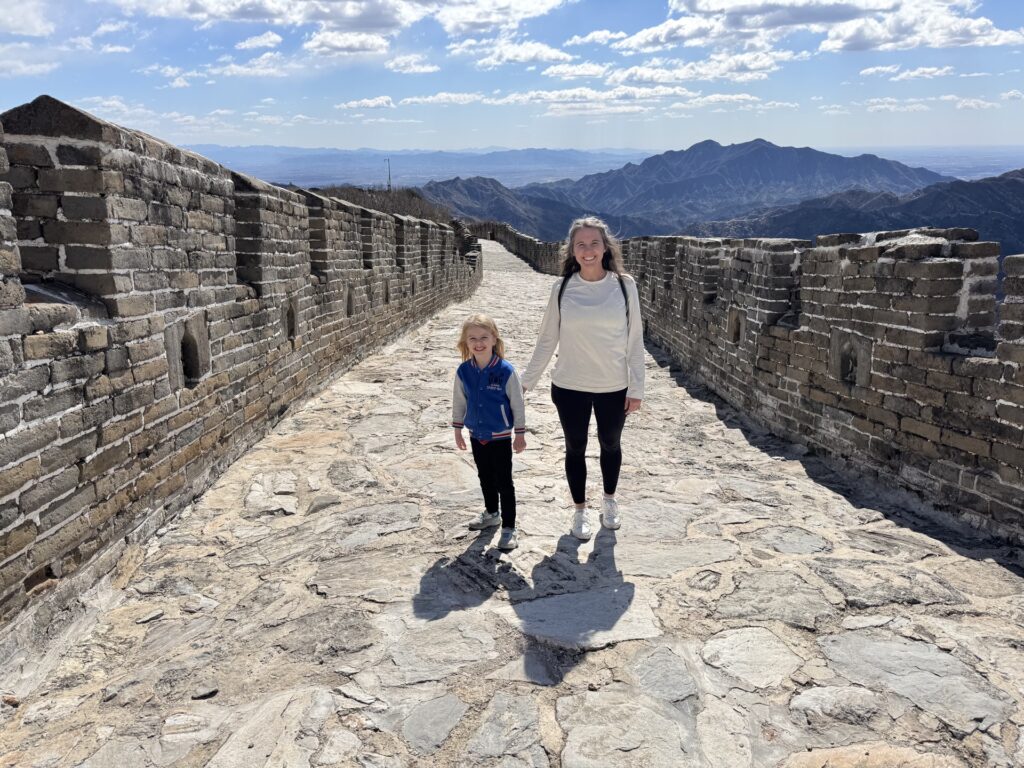
The view from up here was stunning, but not significantly better than Hero Platform. It’s still completely worth adding this last section, though. Between the low crowds and the thrill of reaching the furthest point, it was definitely the highlight of our journey. We did indeed feel like heroes!
After taking some time to relax and enjoy our provisions, we turned around and began our descent.
Part 4: Return to Cable Car
We began our descent at 10:30 AM. From Watchtower 23, we turned around and climbed down to Hero Platform.
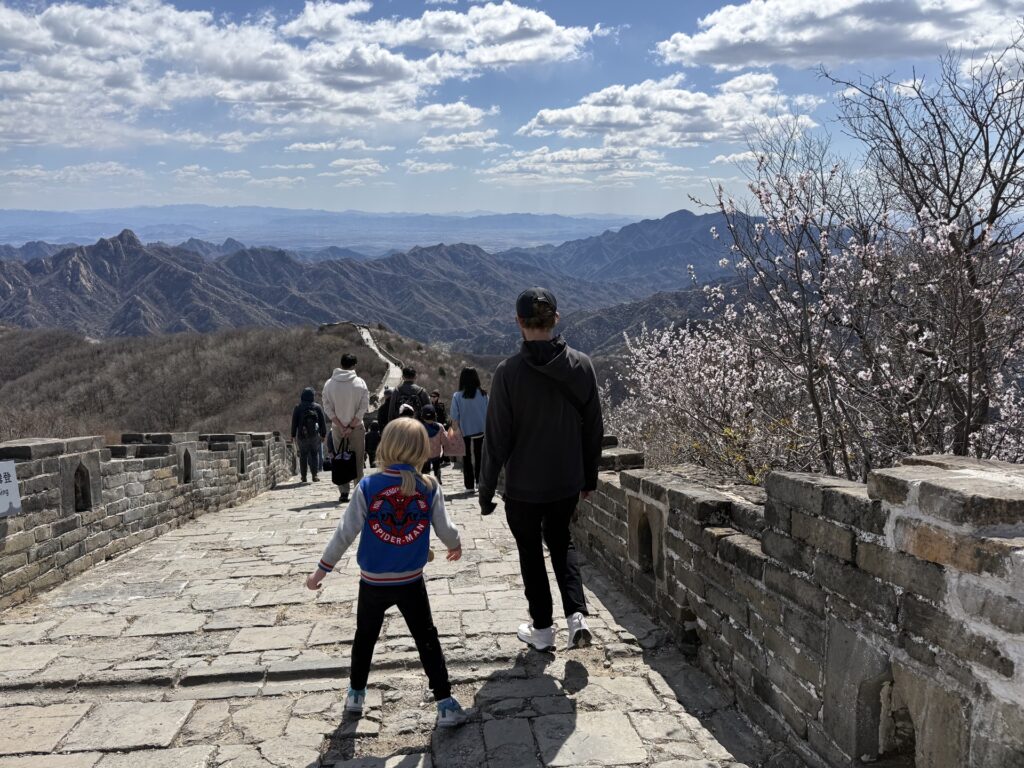
At Hero Platform, security was routing downward traffic to a side route off the the wall. (Hero Slope is one-way, uphill.) This side route was down concrete steps, with hand rails. This was the hardest and worst section for me. My knees were on fire, though I’m sure going down the actual wall would have been just as bad.
It wasn’t more than 10 minutes though, and we returned to the wall. By now though, the crowds had gotten much heavier. Security did a good job of keeping traffic flowing in both directions on the watchtowers.
On our way down, we could pass through the towers fairly quickly. However, visitors heading uphill at this time, 11:10 AM, did not fare as well. The bottlenecks at the watchtowers resulted in long lines and waits for anyone heading up. It would have not been possible to ascend the wall as quickly as we did at this point in the day.
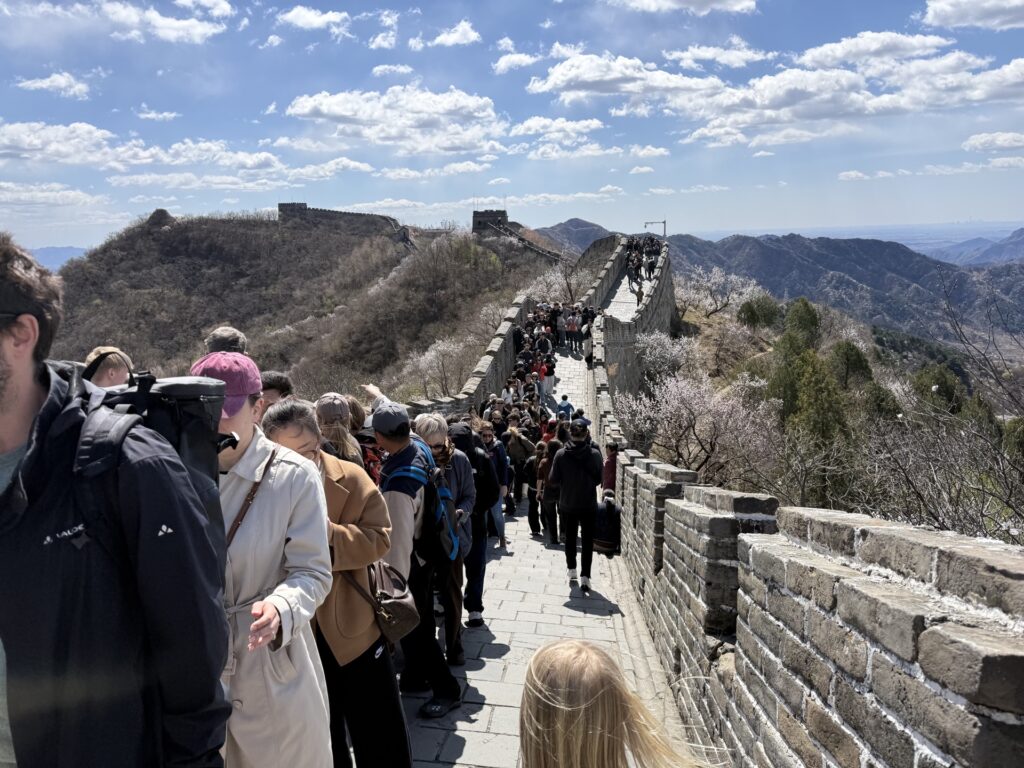
We were back to the cable car station at Watchtower 14 by 11:22 AM. With a 9:15 AM start, we were able to complete the ~1.5 mile Hero’s Journey roundtrip in just over 2 hours. (With a 5 year old!)
We decided to head back down to the visitor area. However, if you were feeling good, you could continue on to Watchtower 6, which is all downhill. You can pick up a walking path down near Watchtowers 12, 8 and 6, or take the chairlift or toboggan down from the top of 6.
Return to Visitor Area
Around 11:30, the wait for the cable car down was short. We basically walked right on and made it to the lower station in less than 10 minutes. Now was the time to spend more time at the visitor area, buying snacks or souvenirs.
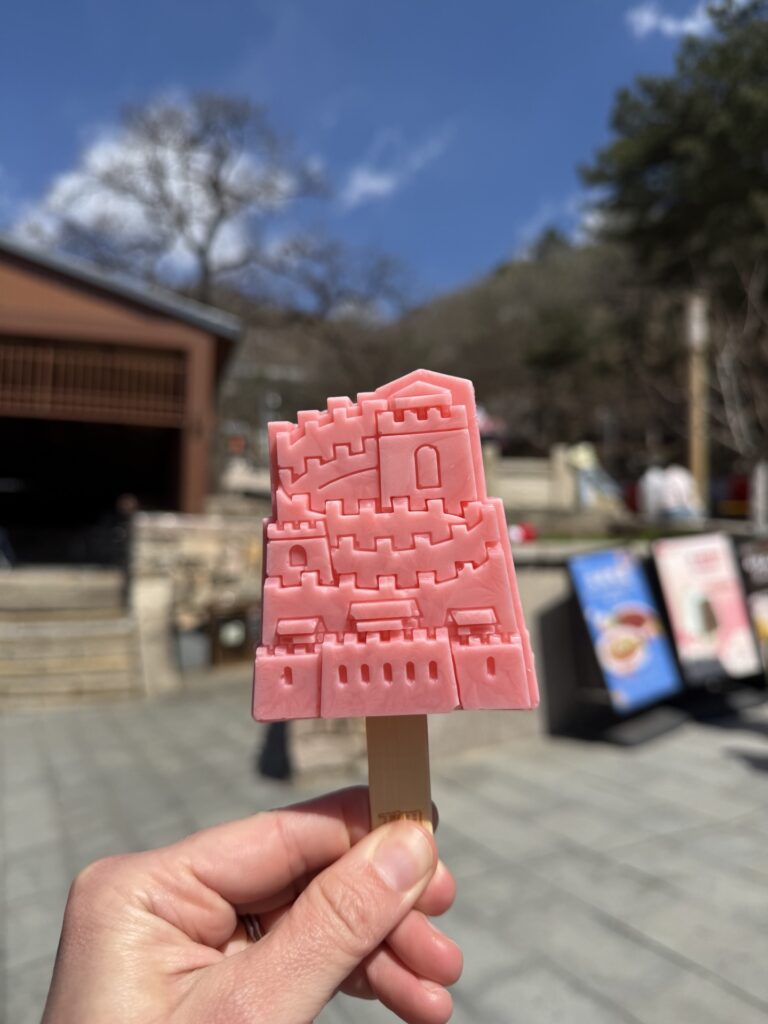
We beelined to this Great Wall popsicle, which I got a real kick out of! (It was my first tourist attraction in Mainland China … I didn’t yet realize that these themed popsicles were a thing. We’d go on to get them at most every opportunity.)
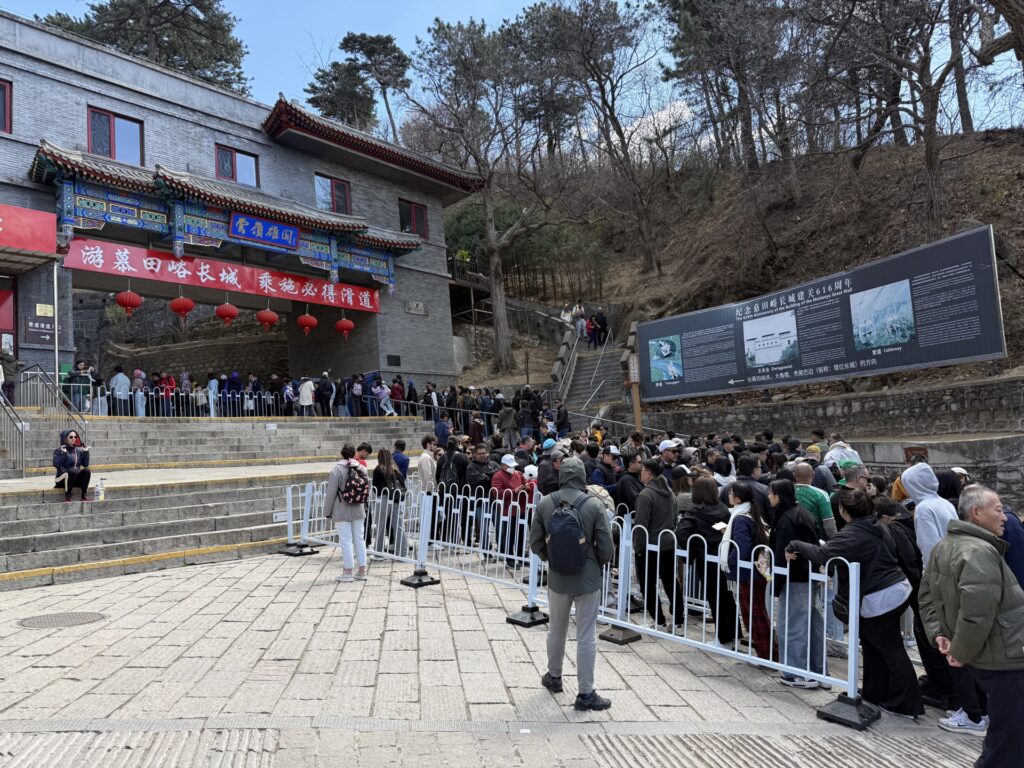
By the time we were walking out of the visitor area, it was about noon and the lines were long. The entry queue stretched all the way back to the bus stop! This crowd of people had to enter, wait in another long cable car queue, wait in the long watchtower queues on the wall (which would only get longer!) and surely wait in a much longer queue to get back down. They were not finishing Hero’s Journey in 2 hours, I’m sure of that.
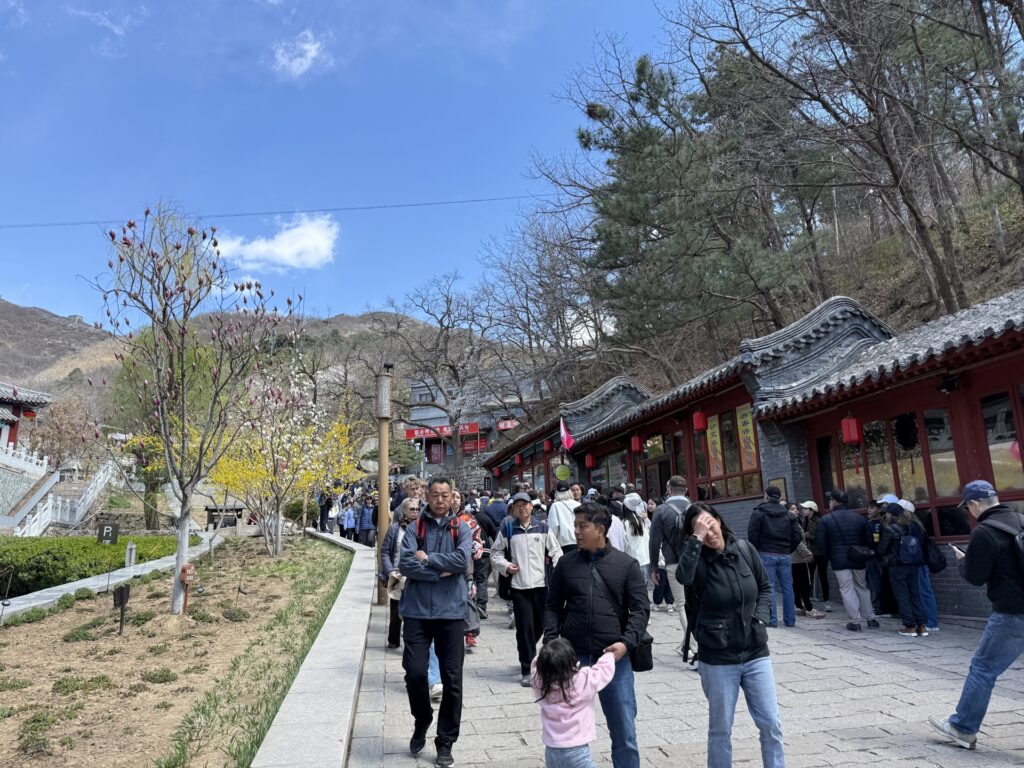
Happy with our decision to start early and move quickly, we left the Mutianyu scenic area as a majority of visitors were waiting to enter. It was a short walk to meet up with our driver, who drove us back to Beijing.
Read More! Our driver dropped us off at our hotel, which we have dubbed the Best Hotel for Families in Beijing. Be sure to check our hotel review if you’re traveling to Beijing with a child.
Tips for Visiting the Mutianyu Section of the Great Wall
- Arrive Early. The wall opens between 7:30 and 8. You don’t necessarily have to be there right at open, but it’s a good idea to arrive before 9 AM. We experienced minimal crowds, avoided so many long lines and were able to walk the wall at our own pace because we got there early.
- Walk further for fewer crowds. Another good way to avoid the masses is simply to walk further. If you head west, many people turn around before and after Hero Slope. This is where the crowds will be lowest.
- Check for Chinese holidays. Most of the visitors at Mutianyu are Chinese tourists, and Chinese holidays drive up travel crowds. Be sure to check for Chinese holidays during your visit, and try to avoid them for lower crowds.
- Enjoy the view on Hero Slope. As your are climbing up, be sure to pause and turn around to enjoy the view. It is one-way uphill, and you’ll come down a different route off the wall. This is your only chance to enjoy the view from here.
- Wear comfortable shoes. The wall has been preserved and mostly adapted to modern safety standards, but the stones and steps are still uneven and bumpy. You don’t need hiking shoes, but a good pair of athletic sneakers will be beneficial. (I actually forgot to change my shoes and wore more casual lifestyle shoes, and it wasn’t great.)
- Dress for the weather. Likewise, be sure to dress for the elements. During the summer months, it’s hot and there is basically no shade. In the winter, it can be really cold and windy.
- Bring snacks and drinks. Treat the Great Wall like a hike. Be sure to carry water and snacks with you, because you will definitely want them. Just in case you run out though …
- Set up Alipay. You can pay for pretty much everything in China with this mobile payment app, including at snack stops on the Great Wall. Set it up in advance so you can buy yourself a beer or a medal or anything else at the top if needed.
- Hire a driver. You can cobble together public transit or join a group tour, but hiring a car is so much easier. You’ll get direct access to the wall, help buying tickets, and a relaxing ride both ways.
- Plan your trip on arrival or departure day. This sounds a little counter-intuitive, but it’s actually very efficient. If you’re hiring a driver, they will typically pick you up and drop you off wherever you need them too. Arrange for pickup at the airport or train station and drop-off at your hotel — or vice versa. That way, you can avoid paying extra for a taxi to your hotel or lugging all your bags on the subway.
Leave a Reply