
It doesn’t take much to convince us to book an overnight train. Finding out that China Railway had a new sleeper cabin on a high-speed train between two cities already on our itinerary was certainly enough to do just that.
In this post, we’re going to explain what it was like to ride the China Railway overnight train from Hong Kong to Beijing in the new soft sleeper cabin. Specifically, we’ll explain logistical details like the booking and boarding process and review the features of the cabin itself, all while sharing our personal experience on board.
If you have to get from Hong Kong to Beijing, the sleeper cabin on the overnight train is a great way to do it. Whether you’re planning to take this particular train or are just overnight train curious, this post has something for you.
Why Take the Overnight Train from HK to Beijing?
The overnight train is not the only way to get from Hong Kong to Beijing. The most likely alternative is to fly. At a glance, the flight is both faster (~3.5 hours vs 10.5 hours) and cheaper (~$150 vs ~$250 USD). The calculus isn’t that black and white though. While the flight is perfectly reasonable option, allow me to make the case for the overnight train.
First, let’s look at total travel time. The flight itself is 3.5 hours, but once you factor in all of the steps, the whole flight experience is going to take closer to 9 hours. (Transit to the HK airport [+1 hour], early arrival for security & exit border patrol [+3 hours], arrival immigrations [+1 hour], and transit to central Beijing [+1 hour].
The overnight train departs from HK’s city center. If you’re staying in Kowloon near TST, as many do, the trip to train station is closer to 15 minutes. We’ll be generous though, and call it a half hour. You do still have to arrive early for security and border patrol [+2 hours], but exit and entry immigrations is all handled at the HK station. The train arrives near Beijing’s city center, with trains reaching the most popular tourist district of Wangfujing in just over 30 minutes. The total train experience takes about 13.5 hours.
The flight is still significantly faster, but I promise this exercise has a point. The overnight train takes more time, but it’s a more efficient use of precious vacation time.
The 9.5 hour flight experience is going to take up an entire day of your vacation no matter when you fly. The overnight train, however hardly cuts into it at all. When working within the confines of our kid’s spring break, time was our most precious asset. The train allowed us a full day in Hong Kong and Beijing on either side, without loosing any daytime to transit.

The one thing the overnight train did cut into was a hotel night, which leads us to the price analysis. We stayed the previous night at The Langham, which we booked with credit card points but has an April rack rate of around $225 USD ($1700 HKD) a night.
The sleeper cabin on the train costs about $100 USD ($780 HKD) more per person than the flight. (A little less for a child’s ticket.) However, the train replaces a night stay at a hotel. The flight is cheaper, but still requires the hotel night, making it more expensive overall. The exact math will depend on how many people are in your party, though.
Note: There are cheaper tickets available if you want a seat instead of a bed. The sleeper cabins are the overnight train equivalent to business class on a redeye flight.
This all leads us to the final, immeasurable factor: overnight trains are fun! We think so at least. Our 5-year-old child — who often awakes and visits our room in the middle of the night from their own bed at home — has an uncanny ability to sleep like a rock, through any disturbance, on an overnight train. They love the bunk beds, staying up a little late, and the thrill of what breakfast might be. We (the parents) sleep slightly less well, but it’s still my husband’s favorite thing about travel.

So in short, the overnight train is more time efficient, more fun, and roughly the same price as the flight. With logic like that, we’ll take the overnight train every time.
Read more! We’ve traveled on several overnight trains around the world. From the chaos on the overnight train to Agra, India to the whimsical luxe of the Santa Claus Express, we’ve yet to meet an overnight train we didn’t love.
Important Things to Know about the Overnight Train from HK to Beijing
Before we dive into the details of our experience, here are a few notes (tips?) that you should know before you keep reading.
- Hong Kong to Mainland China requires an official border crossing. All passengers on the train from Hong Kong to Mainland China must pass through border patrol and immigrations. This includes exiting Hong Kong and entering China. A passport is required.
- A Chinese Visa (or visa-free documents) is required. Foreigners entering Mainland China for over 10 days must have a Chinese visa in their passport. You’ll need to secure this well before arrival. Tourists visiting for 10 days or less from select countries may enter visa-free, but you must provide specific travel documentation.
- The overnight train runs between Hong Kong West Kowloon and Beijing Xi (West) stations. Both of these cities have several major train stations, and it’s important to know the right ones. Google Maps doesn’t work great in China, so use Amaps to get the correct Beijing station location.
- Purchase overnight train tickets in advance. China Railway releases tickets 15 days in advance. Purchase your tickets through China Highlights at least before that time. These trains do sell out.
- Tickets are by berth (bed), not by cabin. You must buy a ticket for each passenger, which equates to one bed in a 4-bed cabin. The only way to reserve the entire cabin is to purchase all four berths. (Each berth requires a passport number, so you cannot just pay for an extra bed either.) Other passengers may be assigned to any empty beds in your cabin.
- Alipay is the best way to pay in China. Cash is all but extinct in Mainland China, and traditional credit cards are facing a similar fate. Mobile payments are king; specifically Alipay and WeChat. Alipay is the easiest to set up for foreigners. Be sure to set this up in advance, and then test it out on the train. You will need cellular data to use the app easily, though.
- International data plans bypass the Great Firewall. China blocks a bunch of websites and apps on their cellular networks and wifi systems. However, if you use an international data plan on your domestic service, you will typically bypass this. (I personally used US-based AT&T’s International Day Pass.)
Read more! Looking for more general China travel tips? Be sure to check out this post with 10 Useful Tips for Foreigners Visiting China.
Our Travel Day Schedule
The overnight train from Hong Kong to Beijing was part of a 12-day spring break trip to Asia, which included Hong Kong, Beijing and Shanghai. We flew Cathay Pacific Economy from JFK to HKG, and then spent our first few days at Hong Kong Disneyland. After Disneyland, we took the train into Kowloon where we stayed at The Langham for one night before this train.
We woke up at our hotel in Hong Kong the morning of our departure day. We chose The Langham specifically because of its close proximity to Hong Kong West Kowloon Station. After a delicious hotel breakfast, we packed our bags and checked them at the front desk.
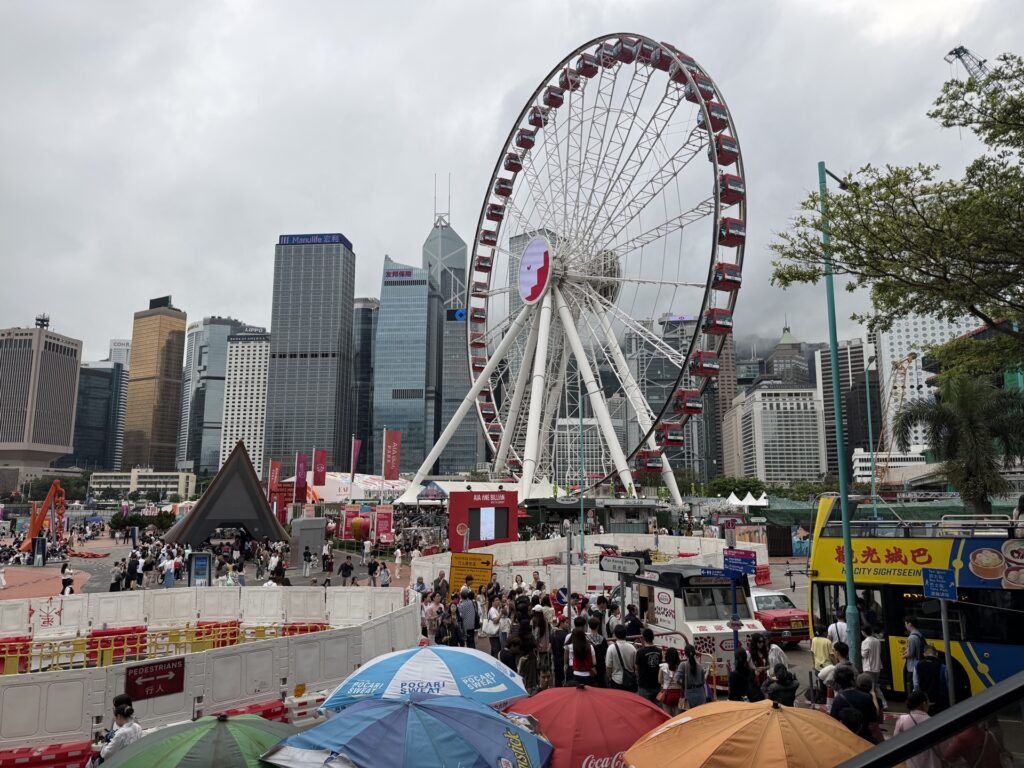
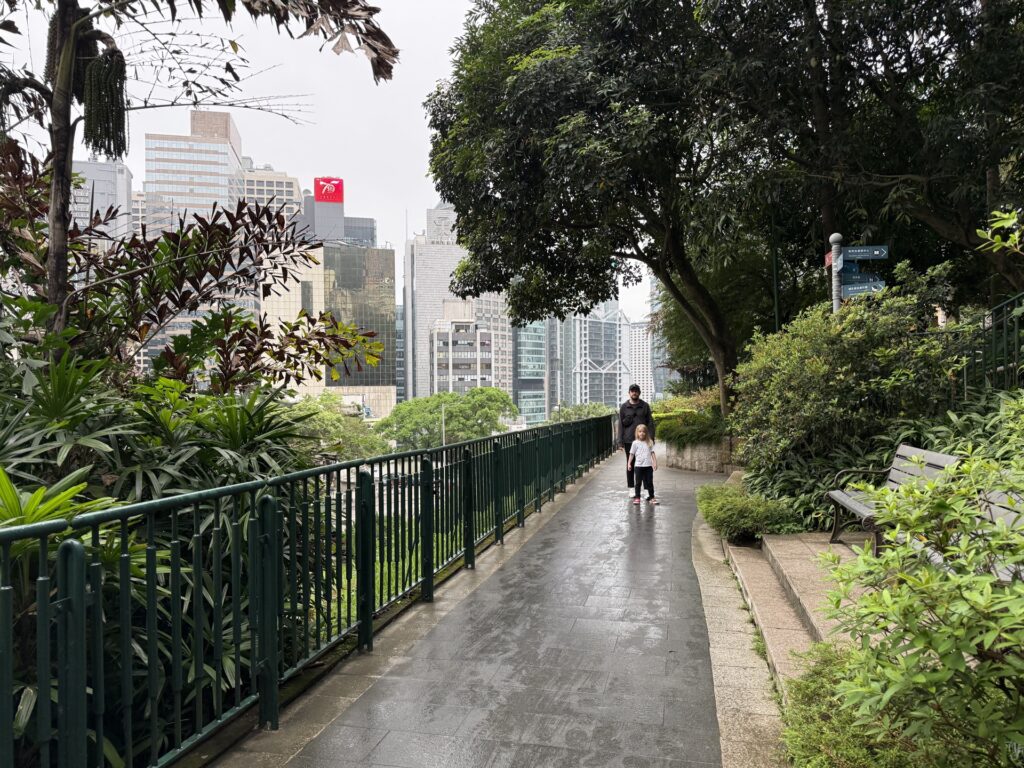
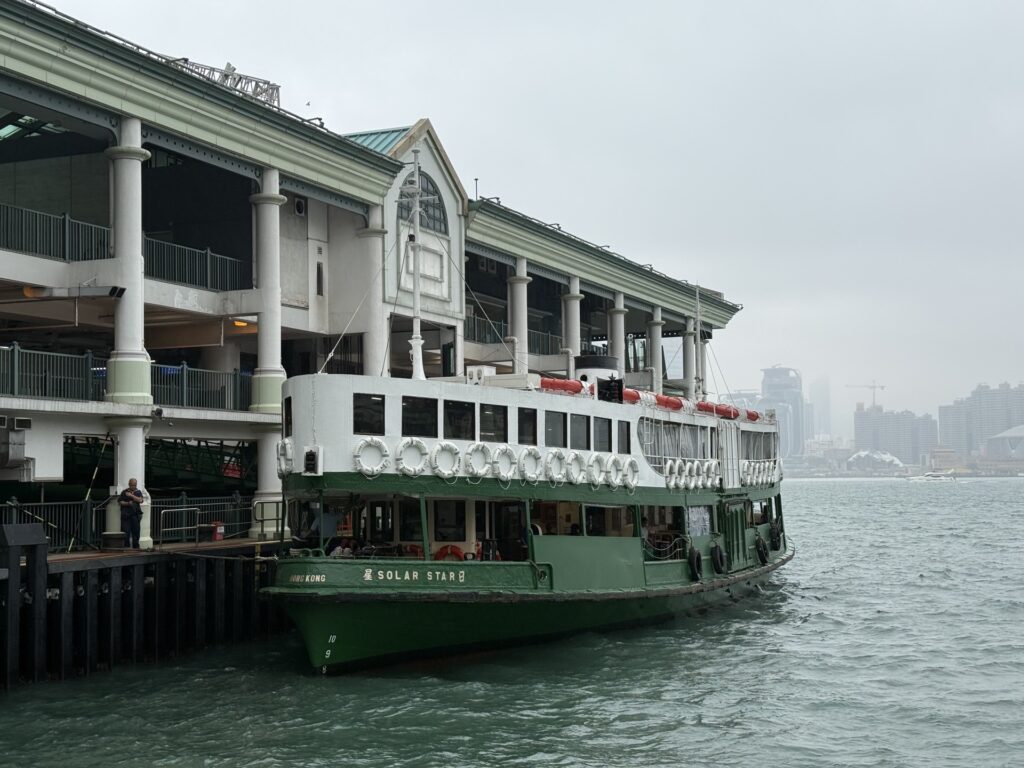
We spent the day exploring Hong Kong. For us on the rainy day we were given, this included the Star Ferry to Central, riding the Central-Mid-Levels Escalators to the Botanical Garden, catching a movie and ending with a spin on the Observation Wheel.
Around 5 PM, we returned to our hotel to retrieve our bags. It was a short train ride (<10 minutes) from the hotel to the train station for the overnight train.
The Beijing side of the train trip went just as well.
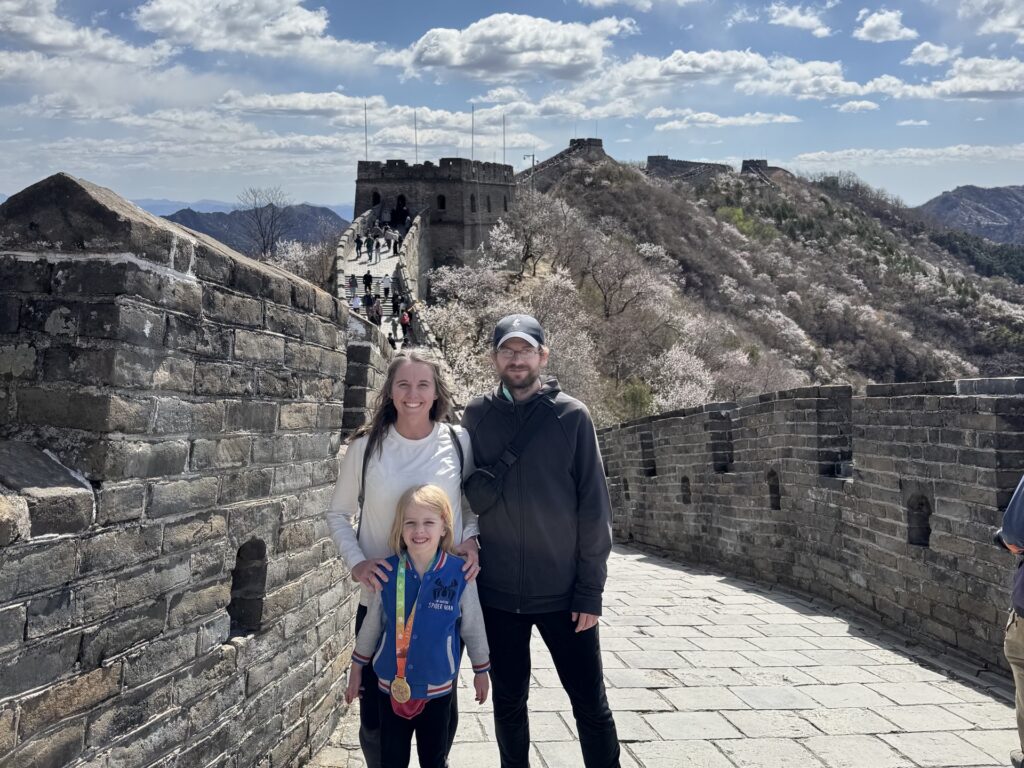
We had two days in Beijing and planned to spend one in the city and one at the Great Wall. Somewhat counterintuitively, we decided to plan the Great Wall for our train arrival morning. This turned out to be a brilliant decision. We basically used it as private transportation from the train station to our hotel, with a stop at the Great Wall in the middle. That meant we were able to avoid lugging our bags around on public transit ourselves, and didn’t pay any extra for it.
After we arrived in Beijing by train, our driver was waiting for us. (This is the listing for the transfer service I used on Get Your Guide.) He picked us (and our bags) up and drove us to the Great Wall. We spent a marvelous day at the Mutianyu section of the wall, with our bags safely stored in our driver’s trunk. Afterward, he drove us back to Beijing and dropped us off at our hotel.
Booking China Railway as Foreigners
Booking things for China from outside of China, especially if you can’t read Mandarin, is often a difficult or impossible task. China Railway bookings falls under this category. We recommend booking through a third party — we used and recommend China Highlights. You’ll pay quite a bit more, but they’ll handle the ticket purchase for you and you’ll get English support.
Here’s how that process worked.
We booked our China Railway tickets online through China Highlight’s train booking portal. The website is in English and is easy to navigate. You’ll enter your route and date details, and then you can select your train and seat type. There are multiple departures, but the sleeper is only offered on the overnight train.
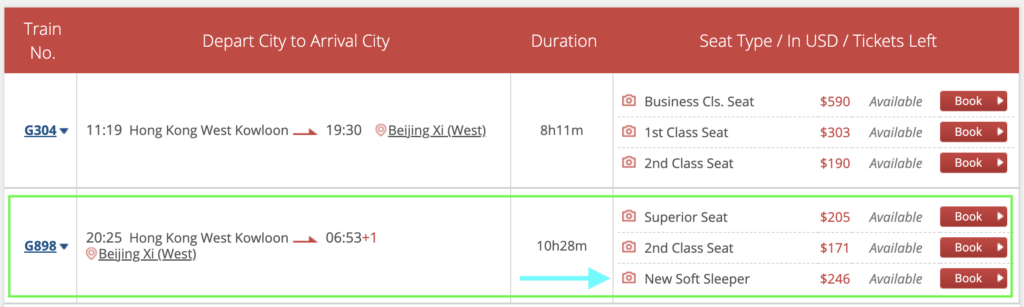
Once you make your selection, you’ll have to enter the traveler information for each ticket. This includes name and passport number for international tourists. Make sure you enter this correctly. Your passport will be your ticket, so it’s essential the information matches.
You’ll have to submit payment to complete your booking, which includes the ticket fee* and an extra service fee. Payment is processed through PayPal, so you shouldn’t have to worry about foreign transaction fees on your credit card.
*The ticket fee on China Highlights is pretty significantly higher than the rack rate on China Railway direct. Best I can tell it’s over $100 more, but it’s hard to get the exact price because it sells out direct almost immediately.
You can “book” months in advance with China Highlights, which is basically submitting your ticket request. We did this about a month in advance. They won’t actually purchase your ticket until China Railway opens reservations 15 days before departure.
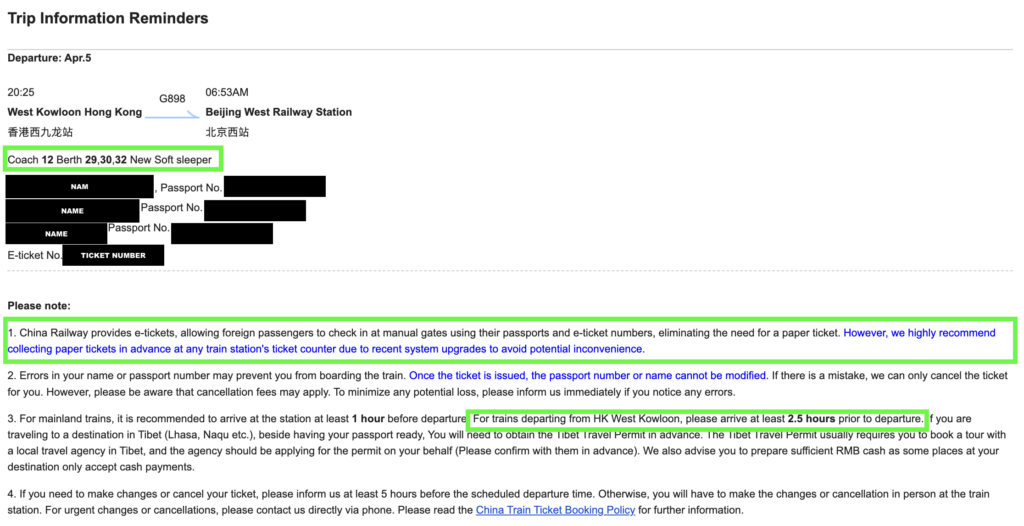
Exactly 14 days prior to departure, we received our booking confirmation via email. This email included our eTicket number and our randomly assigned cabin and berth details. The eTicket is tied to our passport.
Technically, all you should need is your passport to board the train. However, it’s a good idea to also get a printed boarding pass at the station. We’ll walk through this process more in the next section.
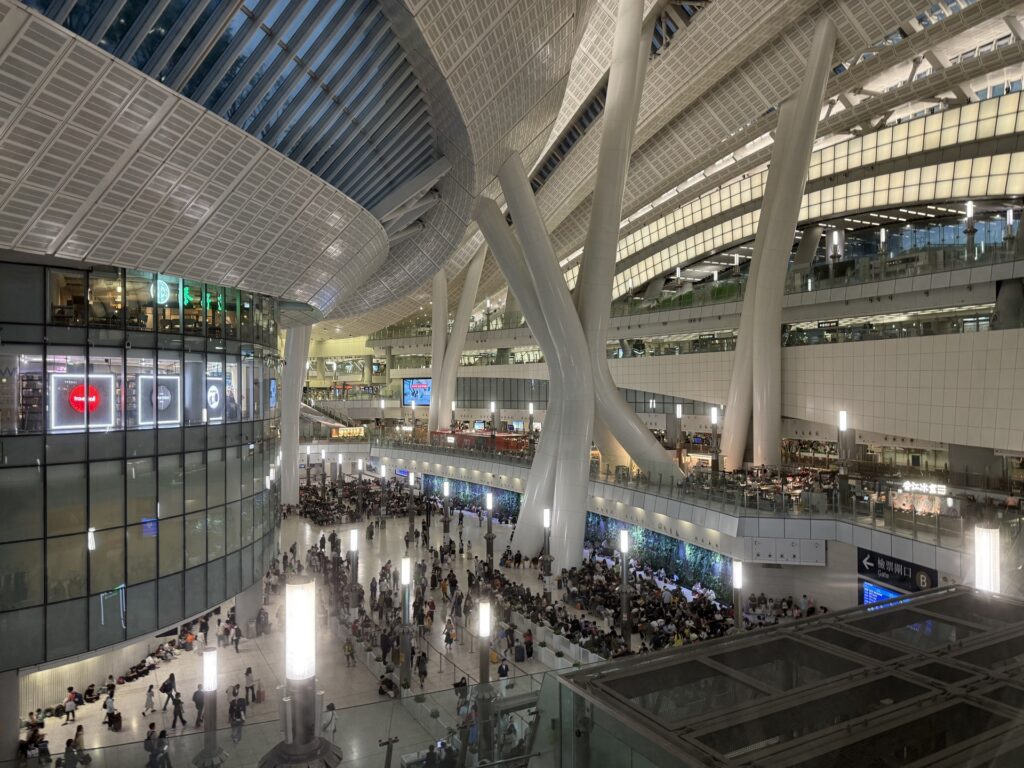
Hong Kong West Kowloon Station
The train departs from Hong Kong West Kowloon Station here. This massive, beautiful train station is conveniently located near the popular Tsim Sha Tsui (TST) district of Hong Kong. You can reach the station on the MTR (HK’s subway) via the Tuen Ma Line to Austin Station or the Tung Chung Line to Kowloon Station.
We arrived at the station at 5:45 PM for our 8:25 PM train, and went directly to the ticketing counter on level B1. There is a service desk here, with bilingual staff.
While we knew that our eTicket was tied to our passport, we wanted a printed ticket just in case. China Highlights specifically recommends doing this, too. After checking in with one agent, we were sent to a secondary ticket desk to handle everything. The agent confirmed our tickets and printed paper boarding passes. (She was able to print out tickets for another train later in our trip, too.) This only took a few minutes.
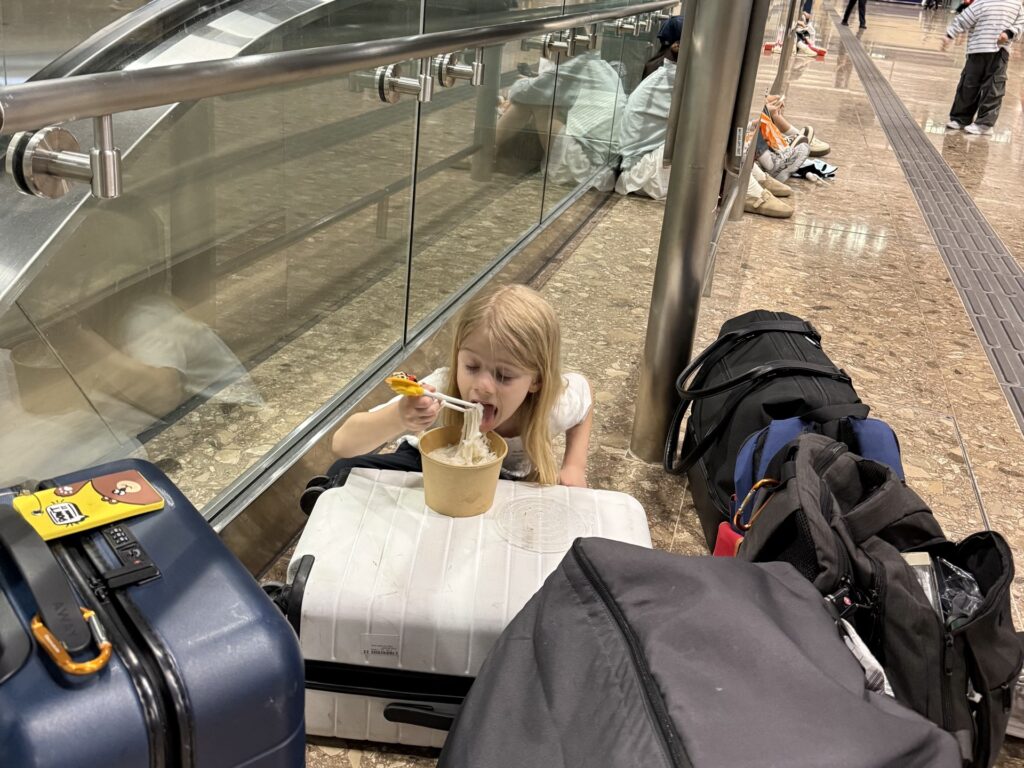
The train station has a ton of food options, but they are all outside of security. If you need any food or beverages, you must purchase them before you go through security. We found a noodle shop and some open tables, and enjoyed our dinner.
Tip! Maybe pick up some teabags or instant coffee, or even a cup of noodles. There is a tea kettle in each cabin and hot water dispensers in each car.
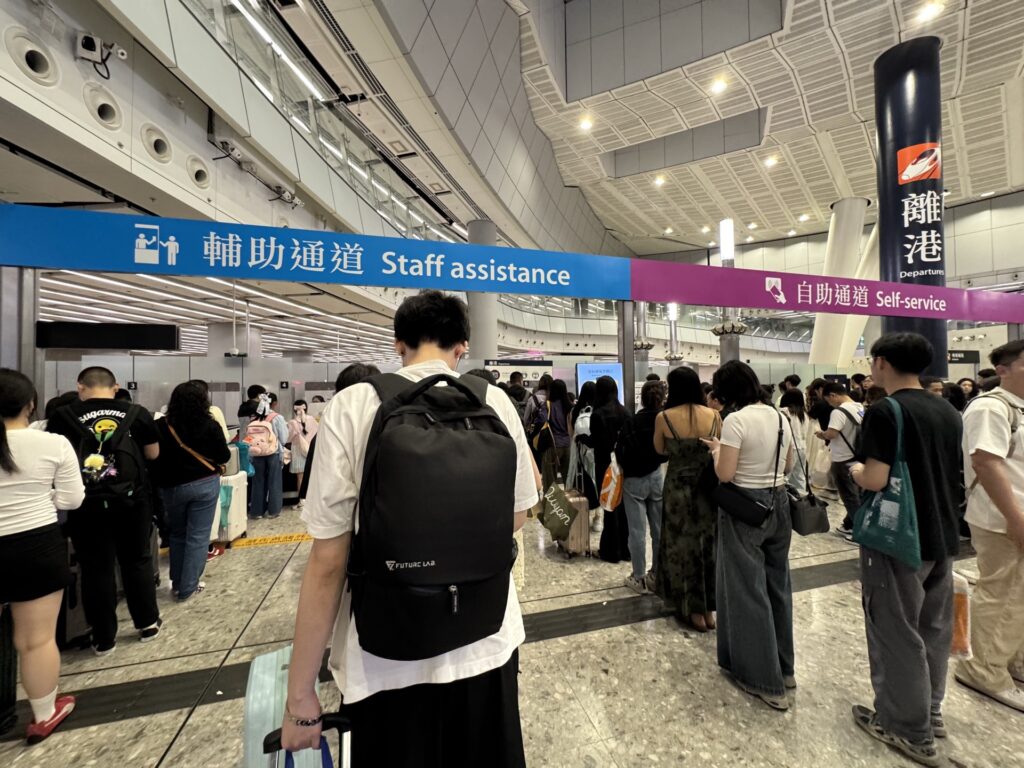
Security Protocols for Mainland Departures from Hong Kong
There are several tasks to complete before reaching the departure gates. Everyone (China Railway, China Highlights and the actual ticket agents) suggests arriving 2 – 2.5 hours prior to your scheduled departure. They really aren’t being dramatic either. We had short queues, and it still took us over an hour.
We entered the ticket queue around 6:30 PM for our 8:25 PM departure.
Here is a preview of the security steps you’ll have to go through, as well as estimates of how long each took in our experience. (Your wait times may vary.)
- Initial Ticket Check (5 minutes): Foreigners should use the Staff Assistance queue (not Self-Service). The agent will scan your passport as your ticket.
- Security Check Point — Hong Kong Side (10 minutes): Think airport security, except liquids and beverages are generally allowed. Bags go through a scanner, and passengers go through a metal detector.
- Hong Kong Exit Passport Control (15 minutes): This is a quick process, and the short lines moved fast. Exiting is usually not a problem.
- China Entry Passport Control (30 minutes): Every passenger must complete a digital arrivals form before approaching the agent. Scan the posted QR code and complete the form. Pay attention to posted signs, which include specific details for completing the form properly. China immigrations also collect fingerprint scans and photos upon arrival. This is the most tedious, and time consuming step.
- Security Check Point — China Side (15 minutes): Travelers with luggage will be sent to a secondary security screening. This one is essentially the same as the first, but you have to wait in the line again.
We arrived at the departures hall around 7:45 PM for our 8:25 PM departure. Our gate was announced at 7:55, which gave us just enough time to finish our dinner and brush our teeth before heading to the gate.
Boarding The Train
There is one main waiting area for all Mainland departures. It includes chairs and a very clean bathroom, but that’s about it. (Again, be sure you get any food and snacks prior to going through security.)
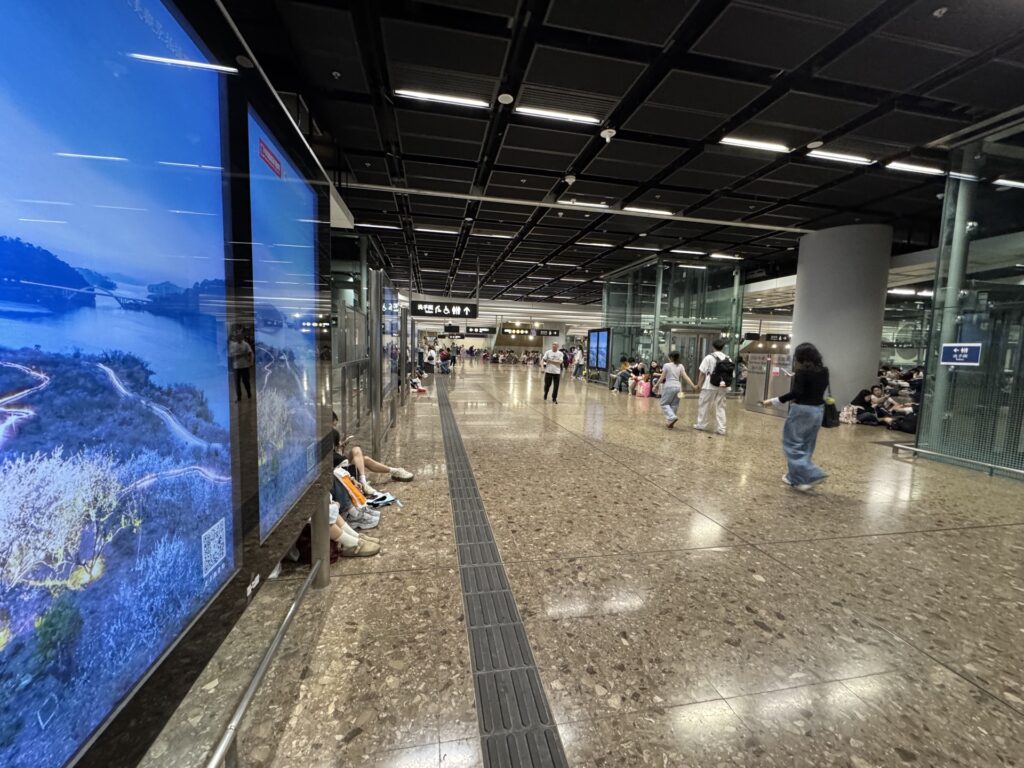
The track was announced over the loud speaker in both English and Mandarin. Gates were all clearly labeled, so we headed toward ours. Seats are assigned, but we always try to enter the queue quickly.
We waited in a queue by the gate for a few minutes until the agent arrived. She pulled some foreigners to one side and pre-scanned their passports. Foreigners have to use their passport as their ticket, so the main eGates don’t always work.
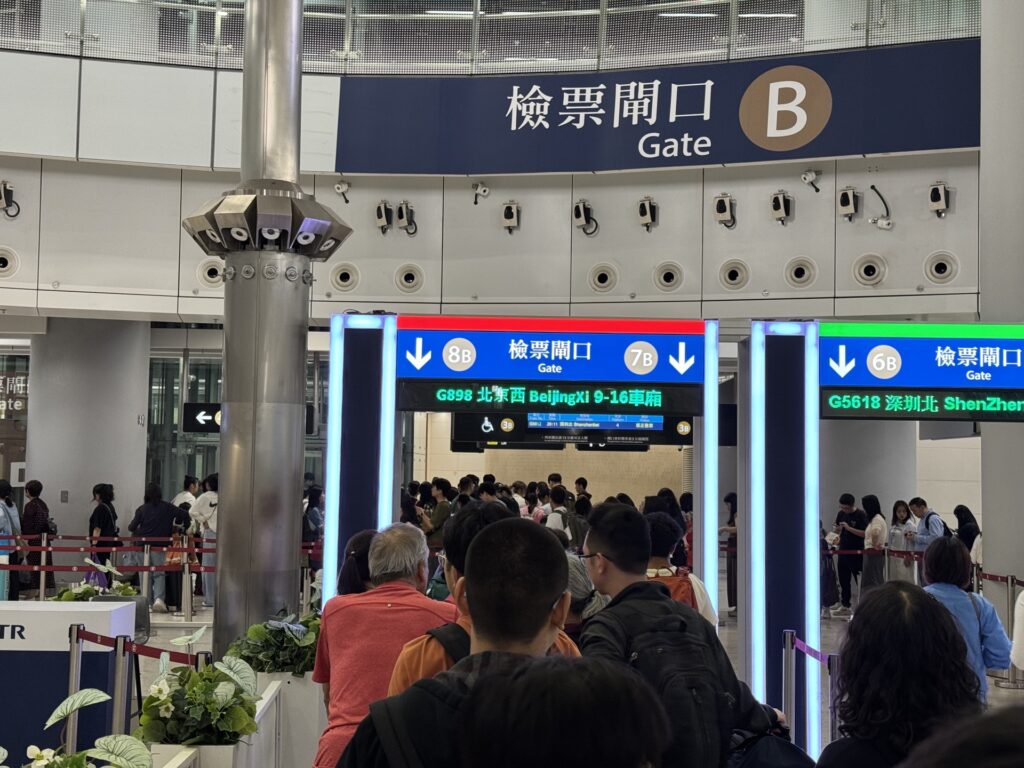
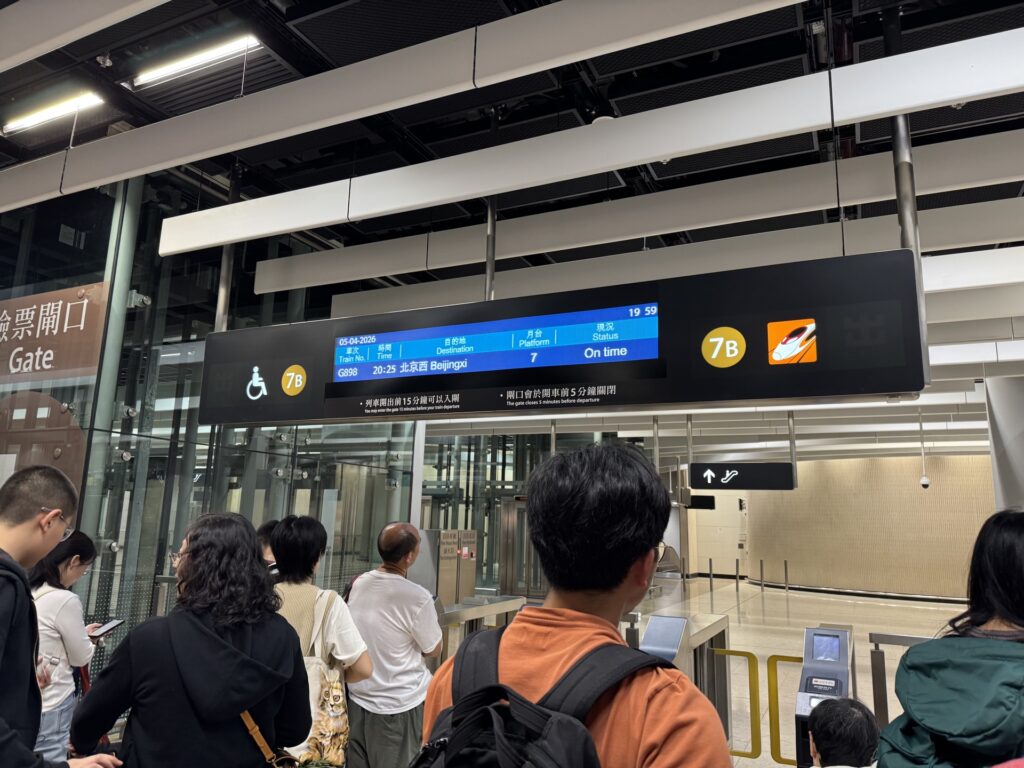
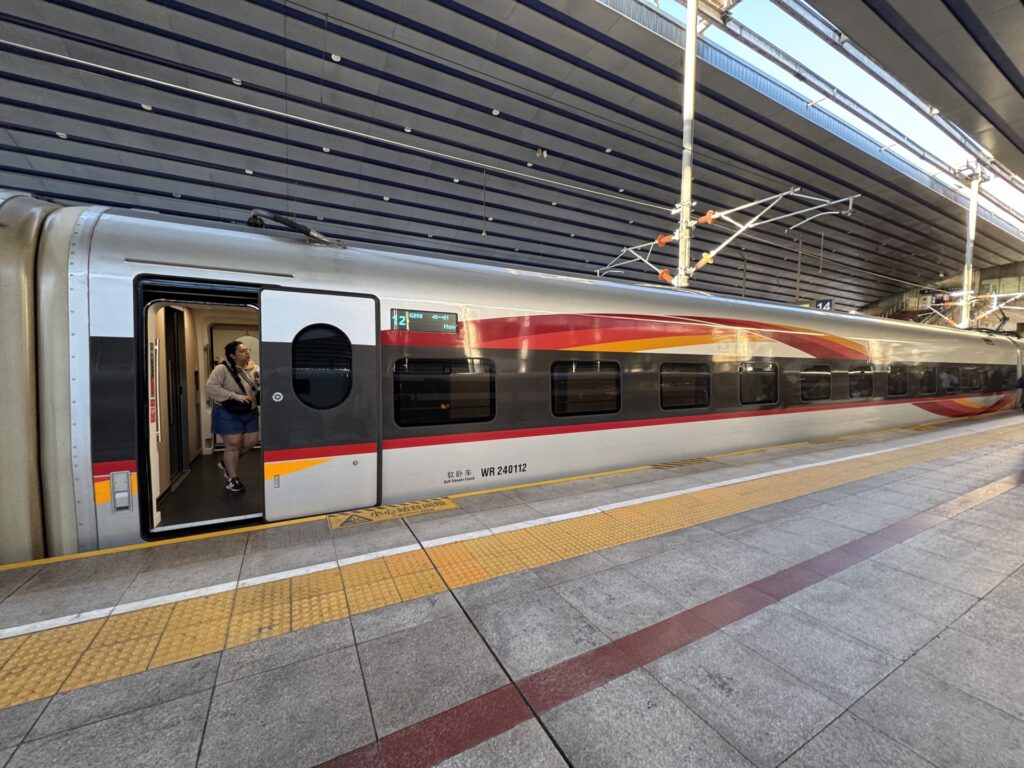
Shortly before departure, they opened the eGates and sent us down to the train. We arrived at the train at 8:11 for an 8:25 scheduled departure.
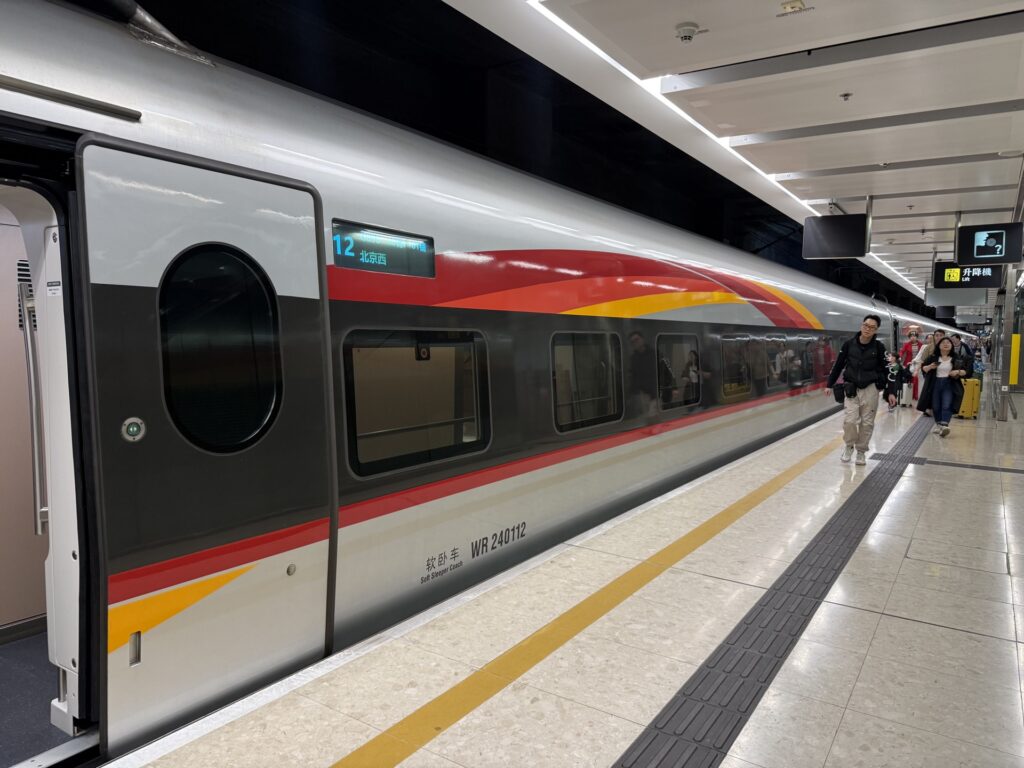
In your ticket email, you’ll find your seat assignment with a specific coach and berth number. Use this information to find your seat. The coach number is listed outside and inside each train car, and the berth numbers are listed outside each cabin. Find the one that matches your ticket.
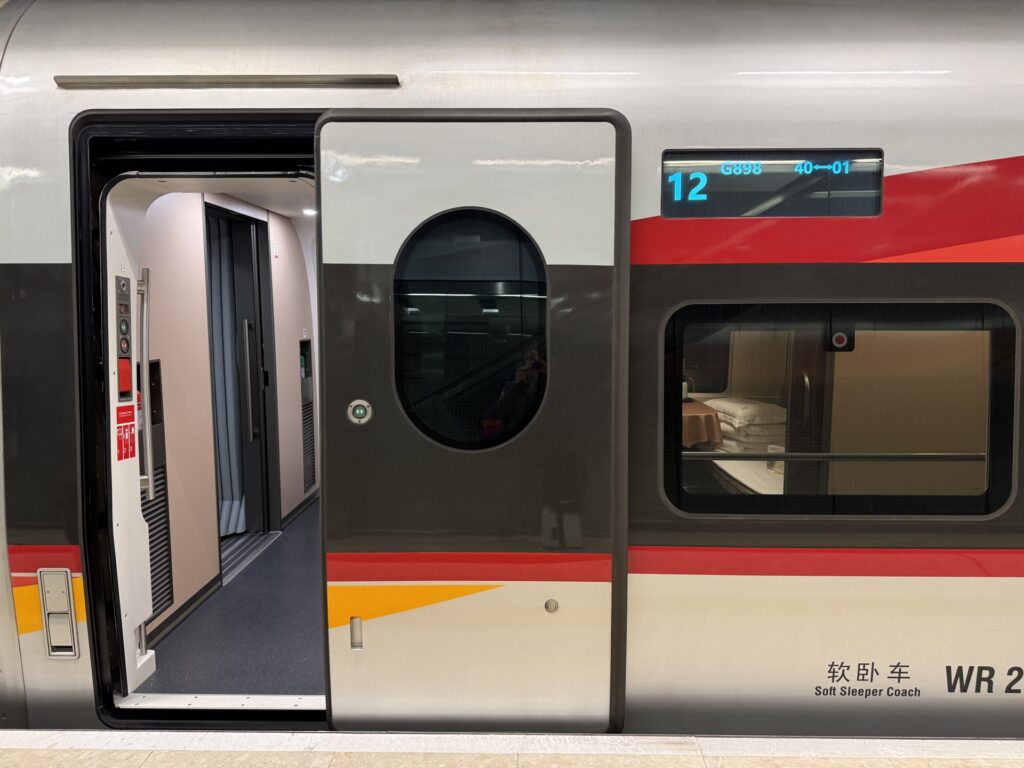
New Soft Sleeper Cabin
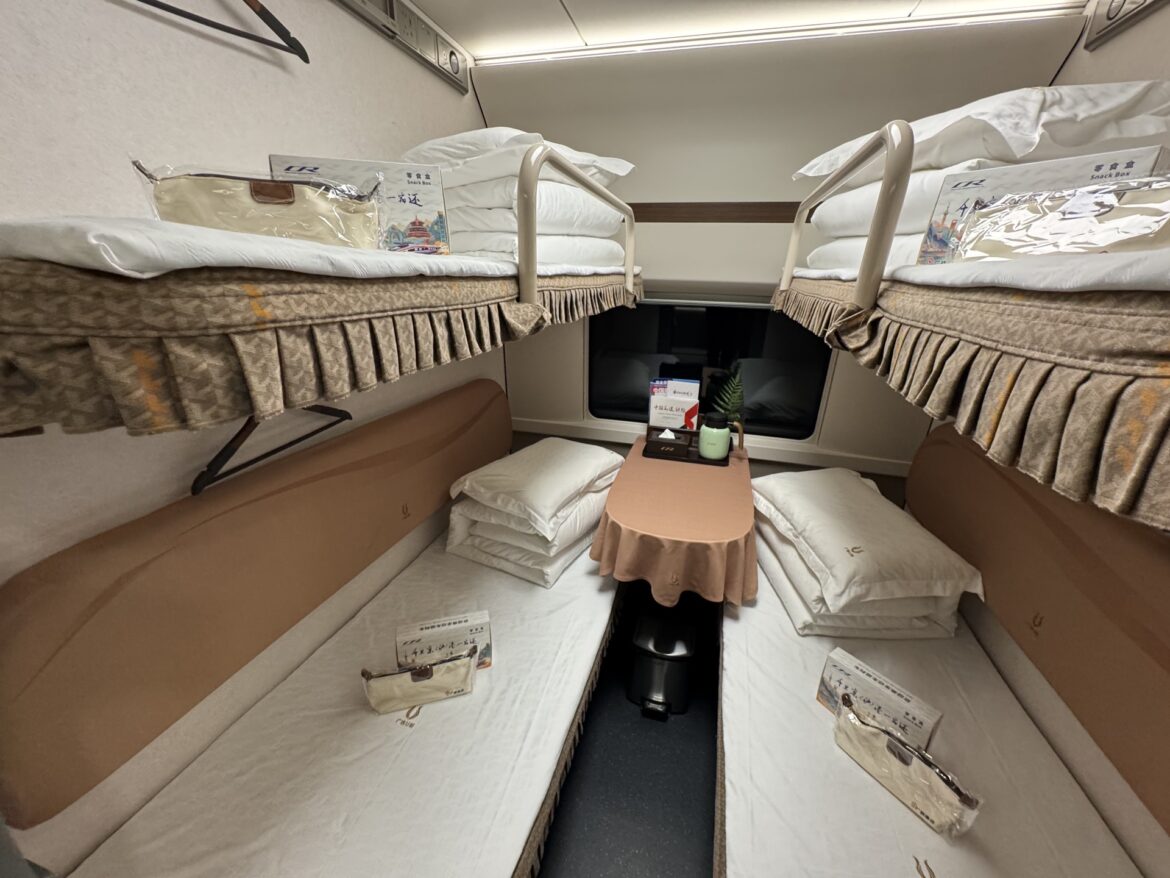
China Railway debuted the new soft sleeper cabins in 2024, and it is huge upgrade. For one, the super-fast train completes the journey in just 10.5 hours — less than half the 24-hours it used to take on the old trains. Then there’s the premium sleeper cabins, which feature comfortable beds, ample storage, smart features and useful amenities.
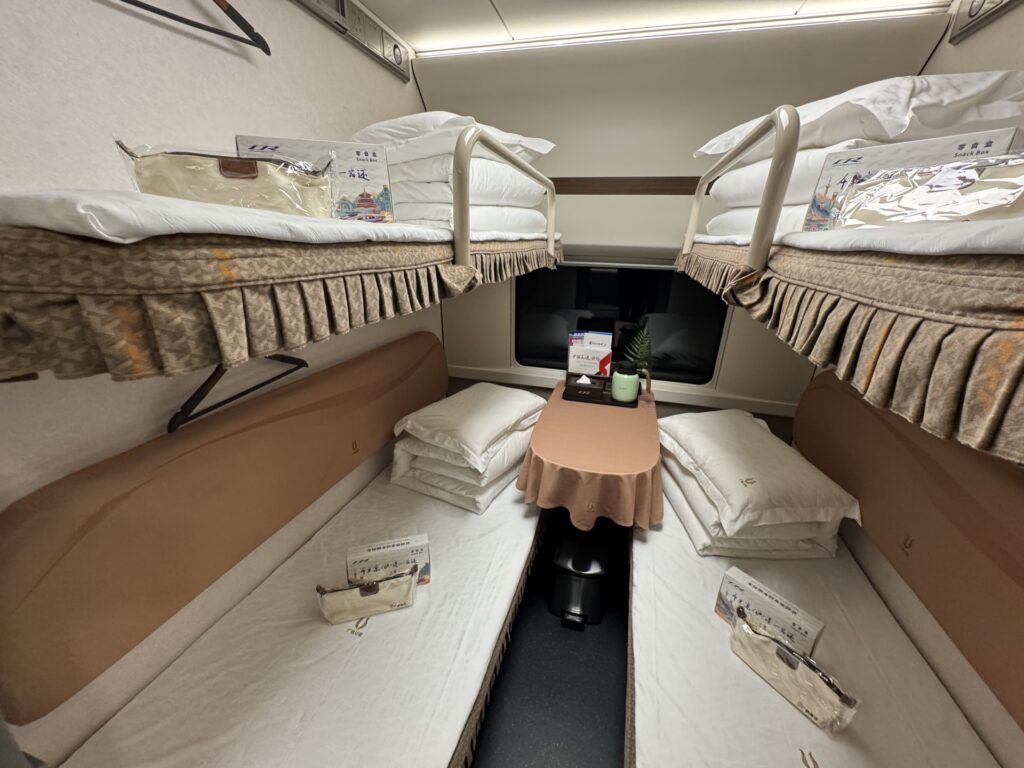
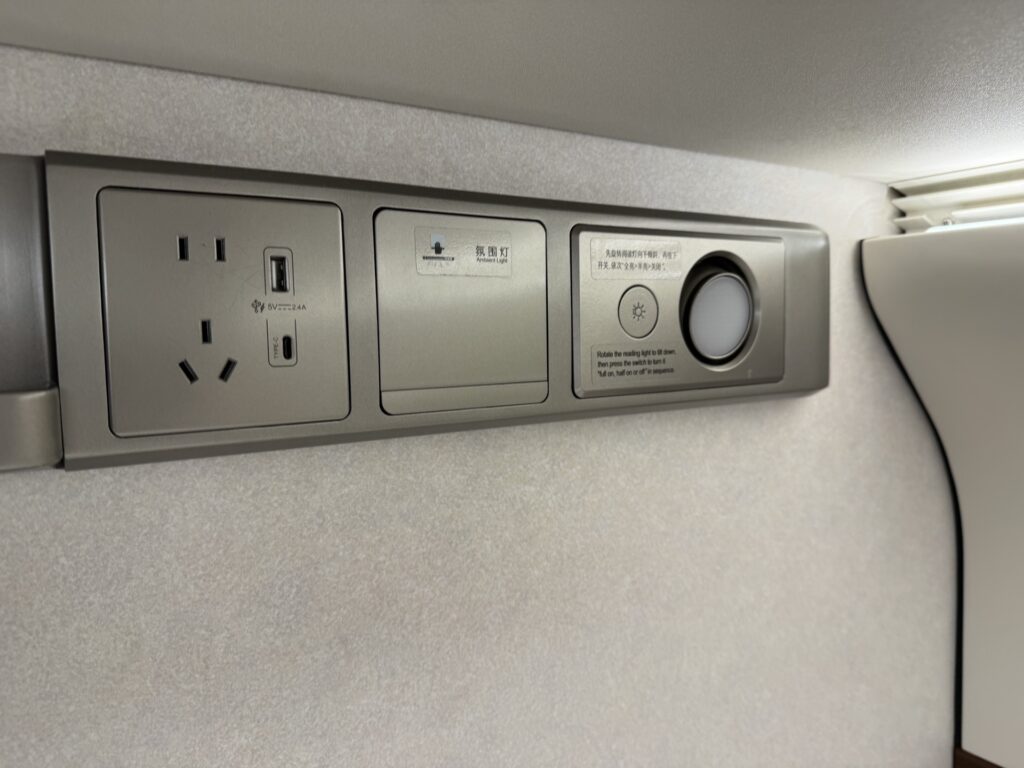
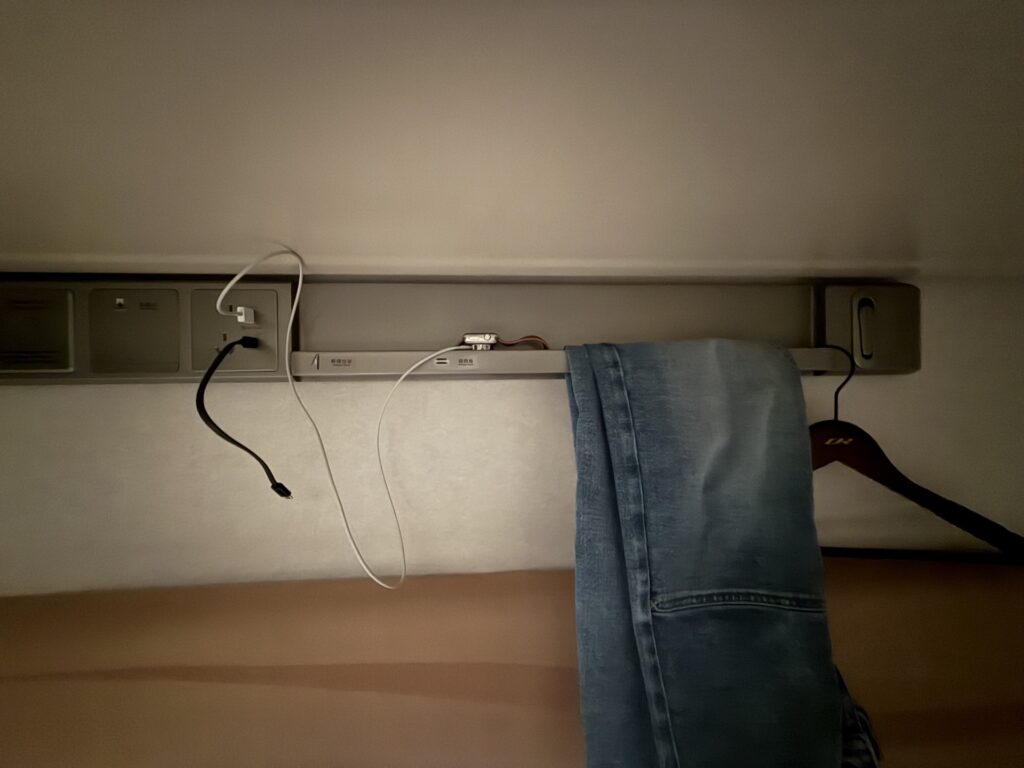
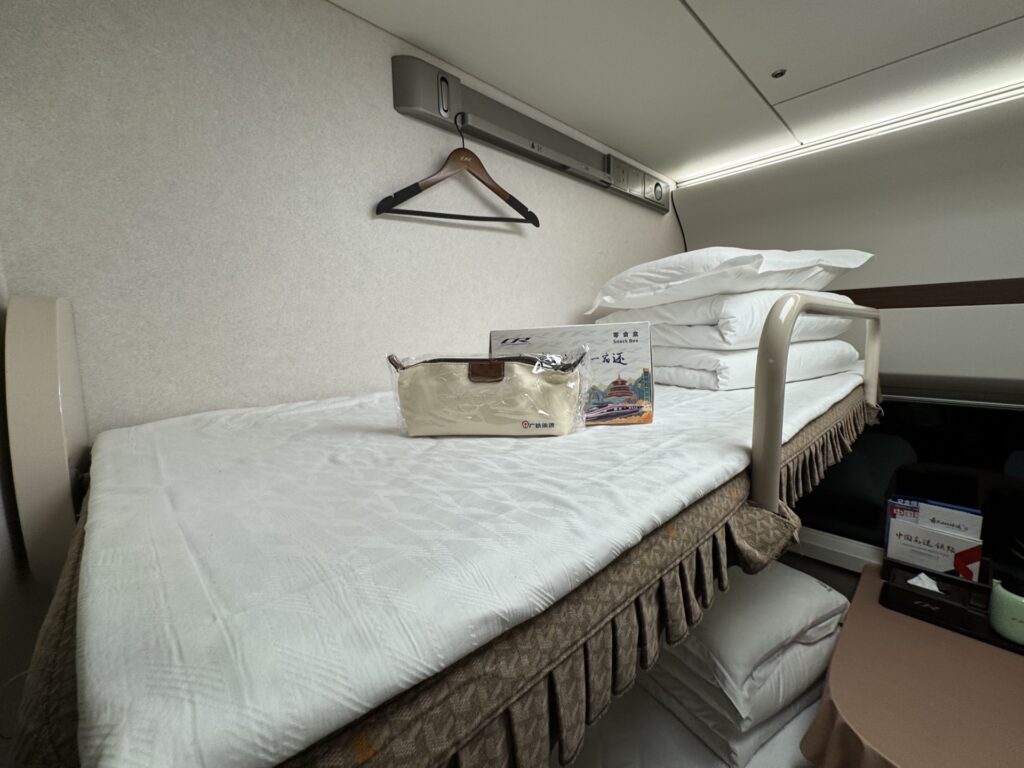
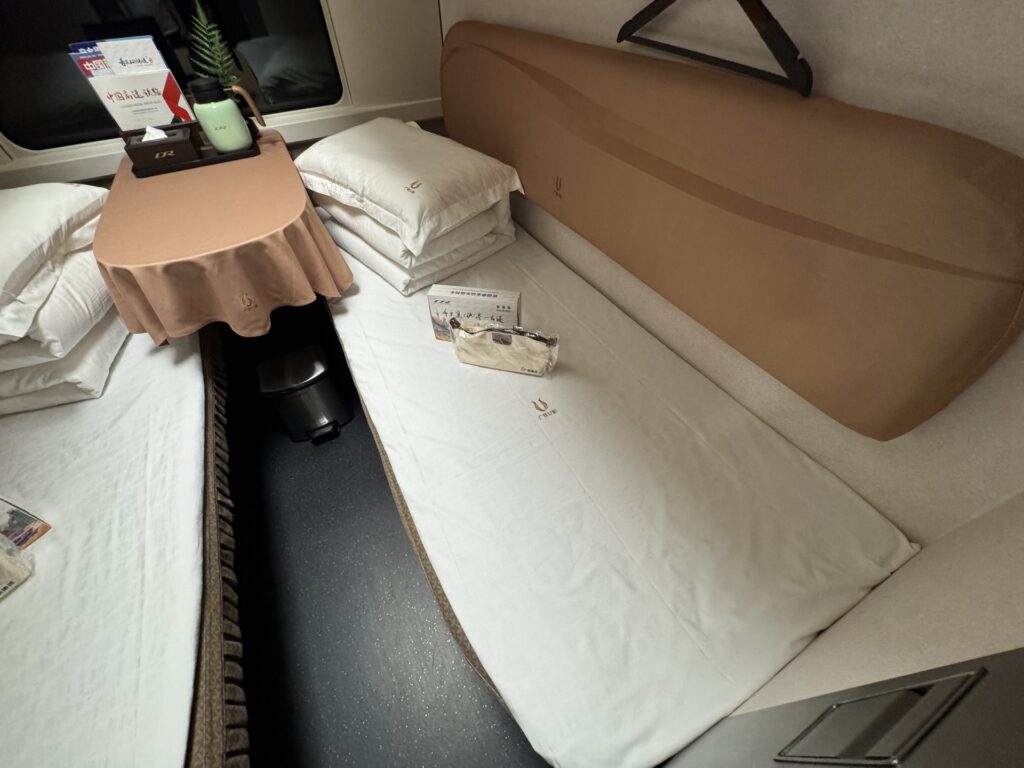
Each cabin sleeps four passengers across two bunk beds. Each bed is made up with crisp cotton sheets, a down-like comforter, and full size pillow. Every seat has a reading light, plus direct access to an AC power outlet (type A and I inputs), USB ports, alongside a handy shelf. The shelf also has a pants rack, hook and hanger provided.
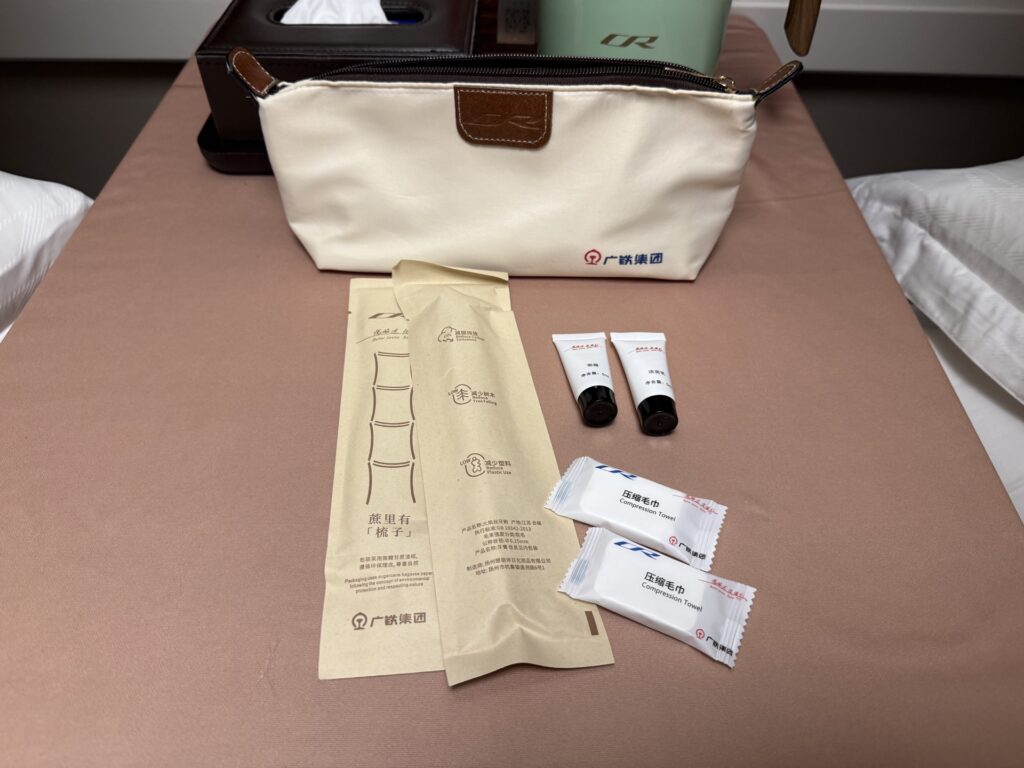
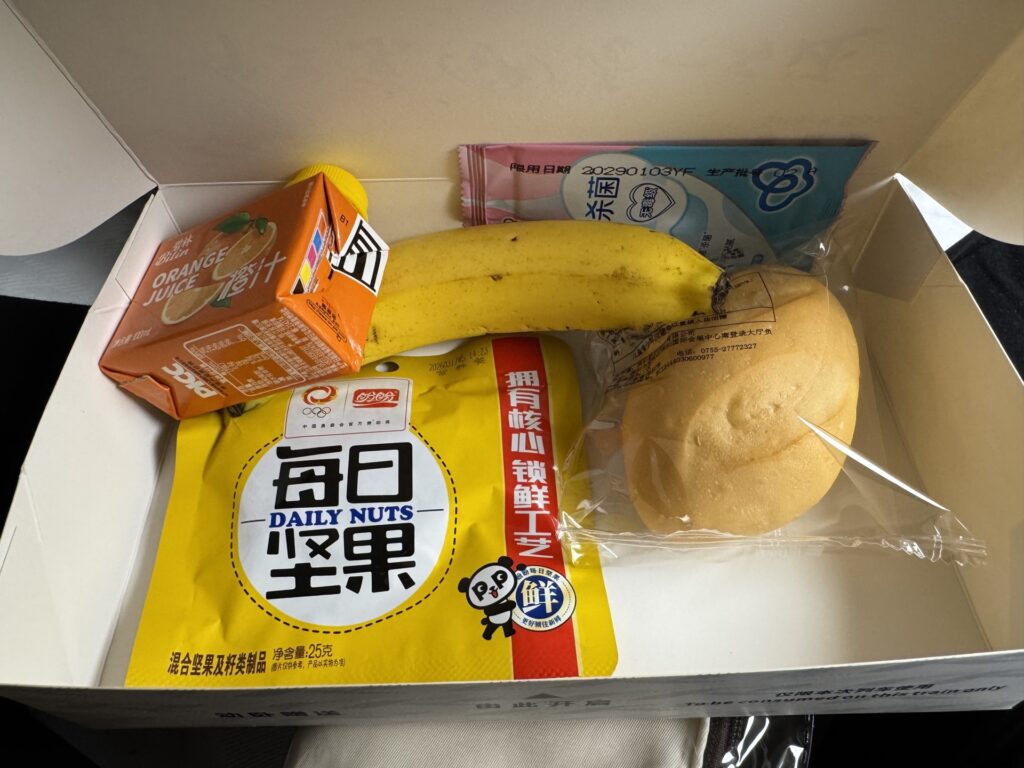
Each passenger also received an amenity kit and breakfast box, which really added to the Business Class like experience. The amenity kit included a bamboo toothbrush, lotion, and compression towel inside a reusable zipper pouch. The breakfast box included a roll, banana, juice box and peanuts.
Under the table was a small trashcan, which was incredibly useful given all the trash items left over from the aforementioned breakfast boxes and amenity kits.
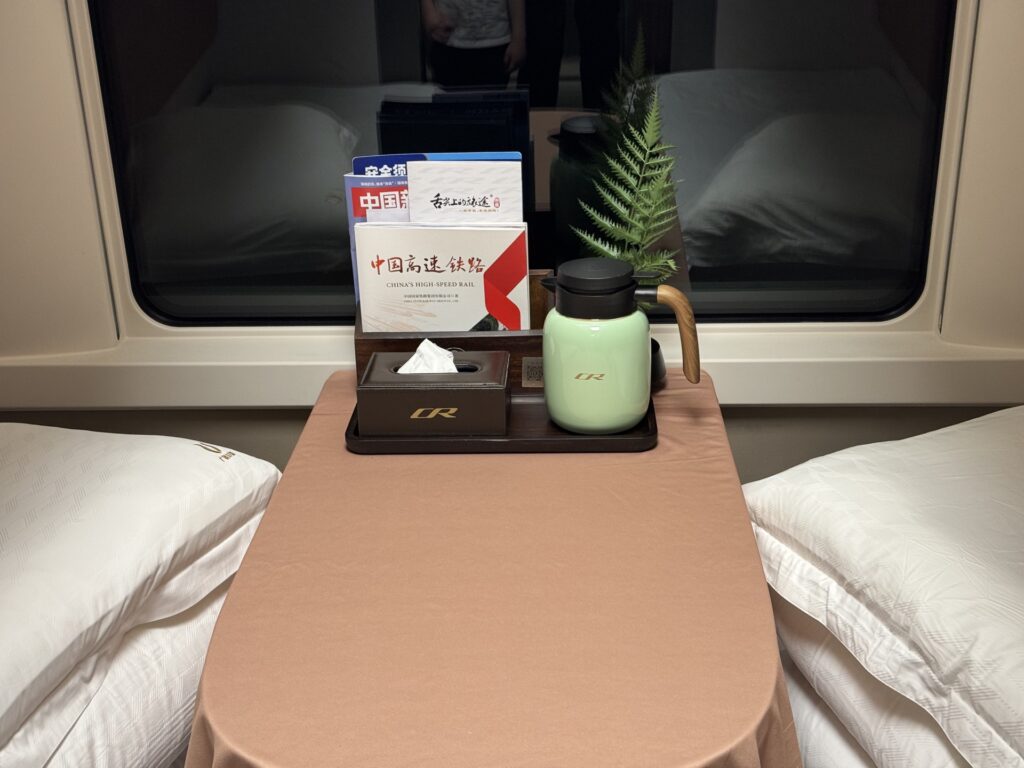
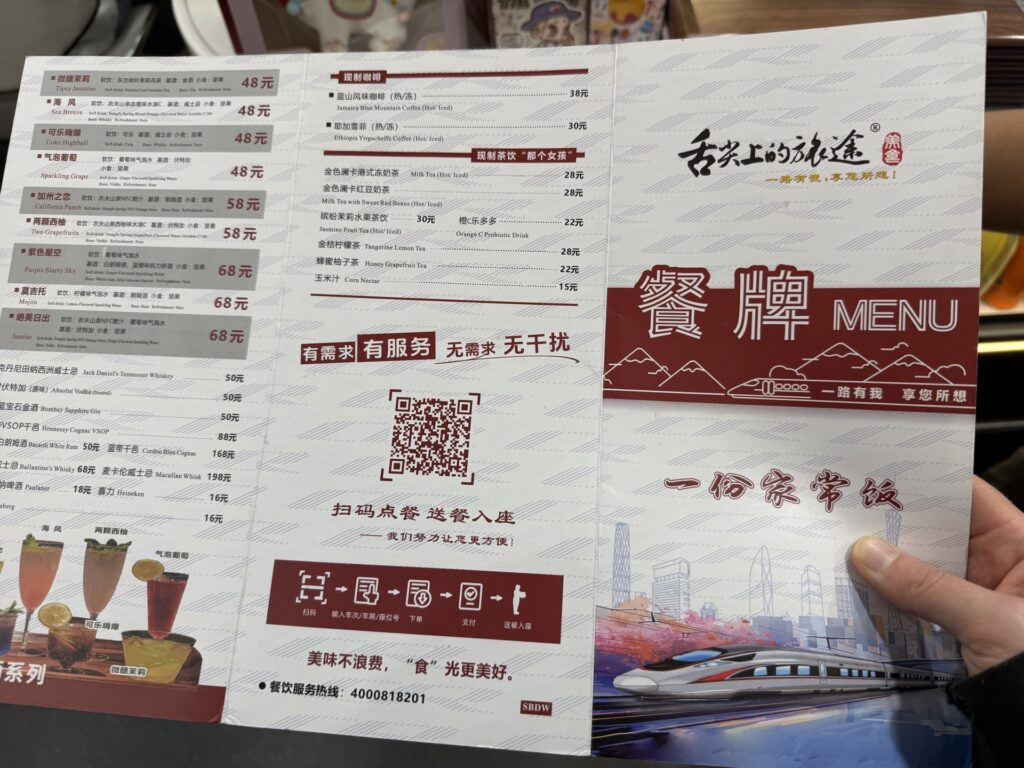
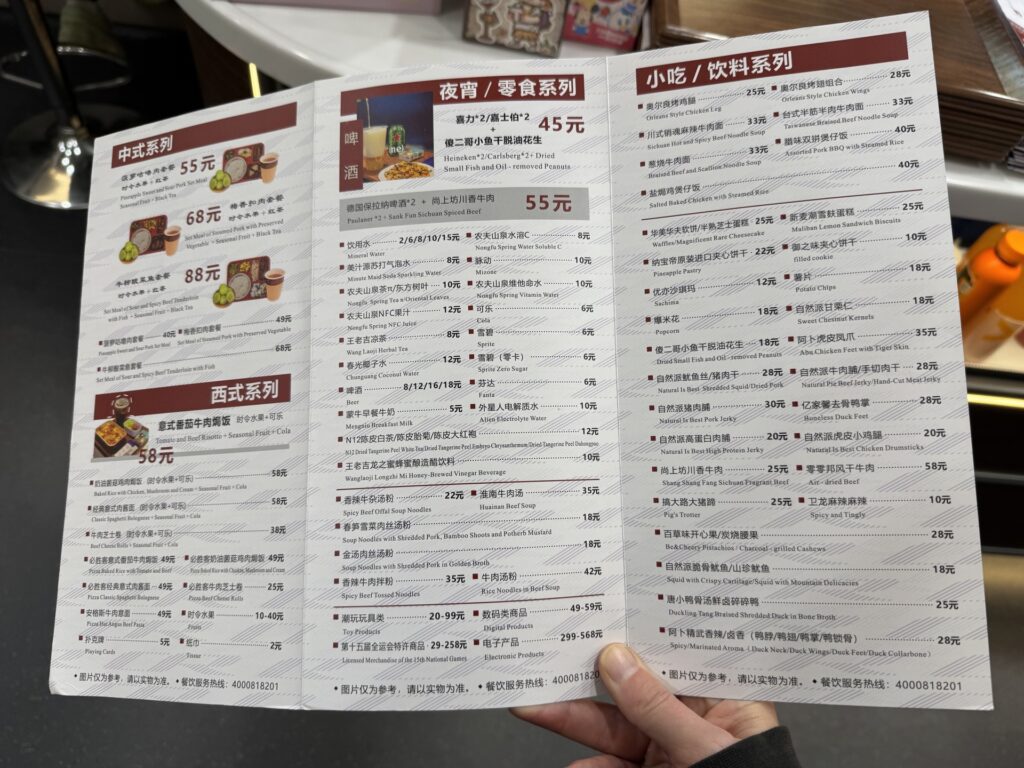
Between the two beds is a nice little table, covered with a tablecloth. There’s plenty of space to eat or work at this table. There’s a tea kettle, but no tea or coffee is provided. You’ll find the full cafe car menu here, as well as some other reading material. Behind it was a large window, with an adjustable black-out blind.
The space under the lower bunk is completely free for storage. Several suitcases and bags can slide under each bed, without cluttering the cabin.
The entire cabin was impeccably clean and in perfect repair.
Train Amenities
The rest of the train was just as new and just as nice as the cabins.
In the hallway, there was a folding seat outside each cabin. These were popular in the morning.
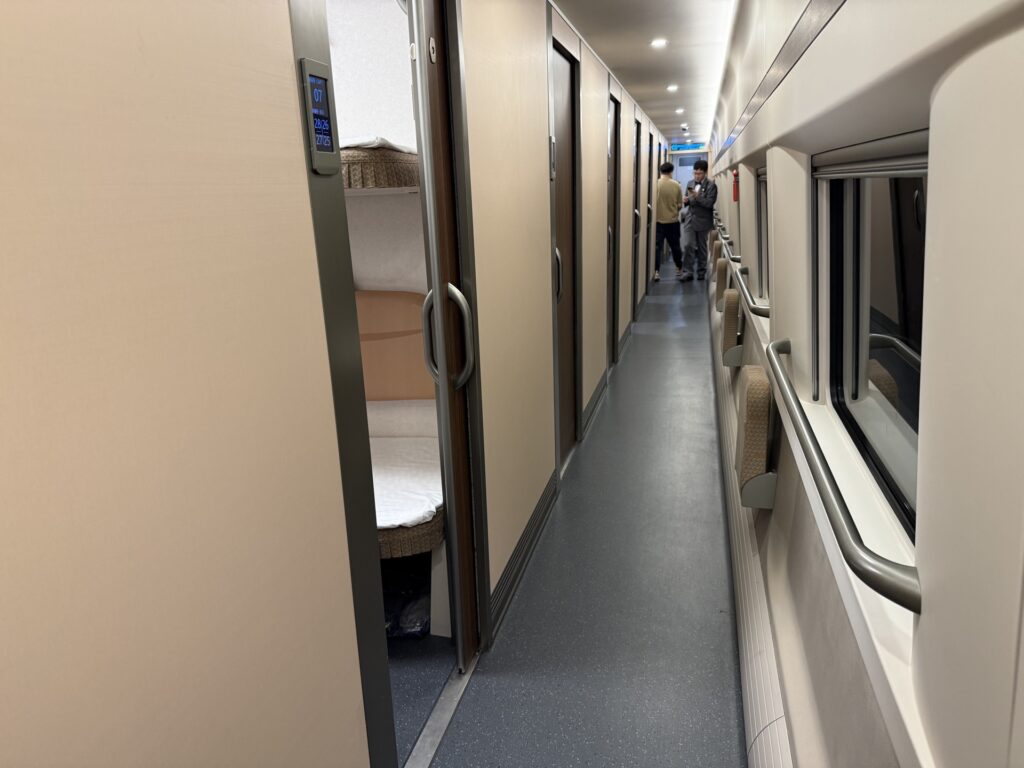
Bathrooms were located between each car, with clear availability displayed on the digital signs at the end of each car. They were notably well maintained and cleaned regularly. There was a mix of “squatty” toilets and western sitting toilets, which were labeled on the outside of each door.
On one side of each car, there was a double sink outside of the stalls for things like brushing teeth and freshening up. Hot water dispensers were located near these sinks, with paper cups provided. (Again, this would be a great train to have brought tea or instant coffee.) No cold water dispensers were available, though.
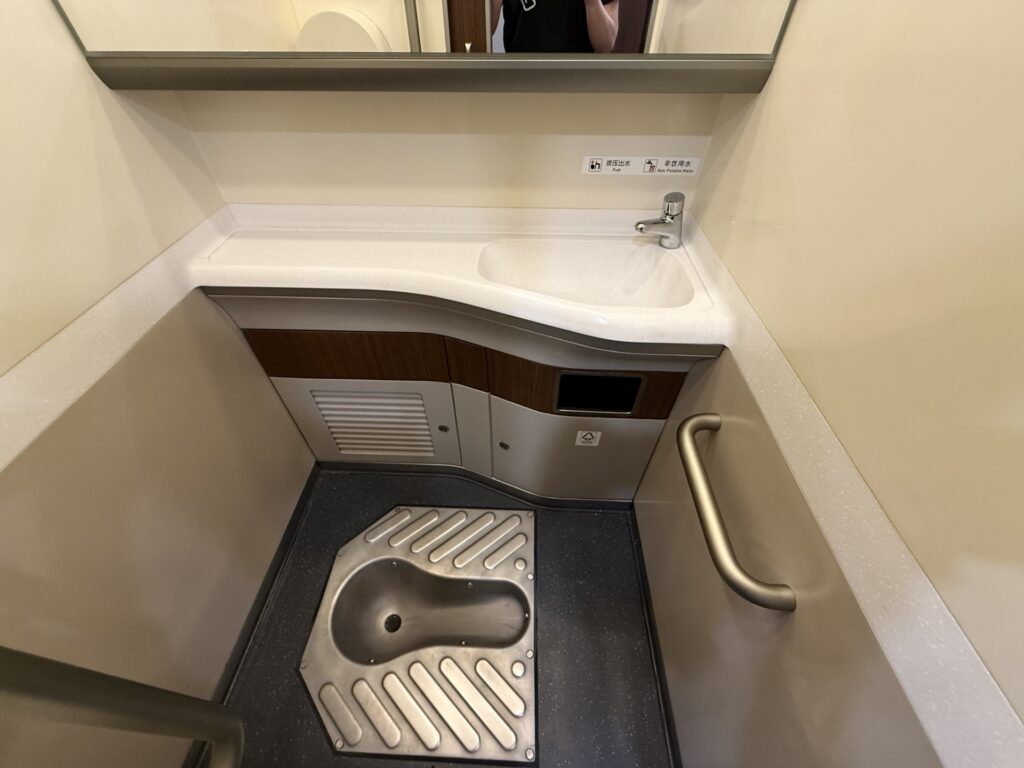
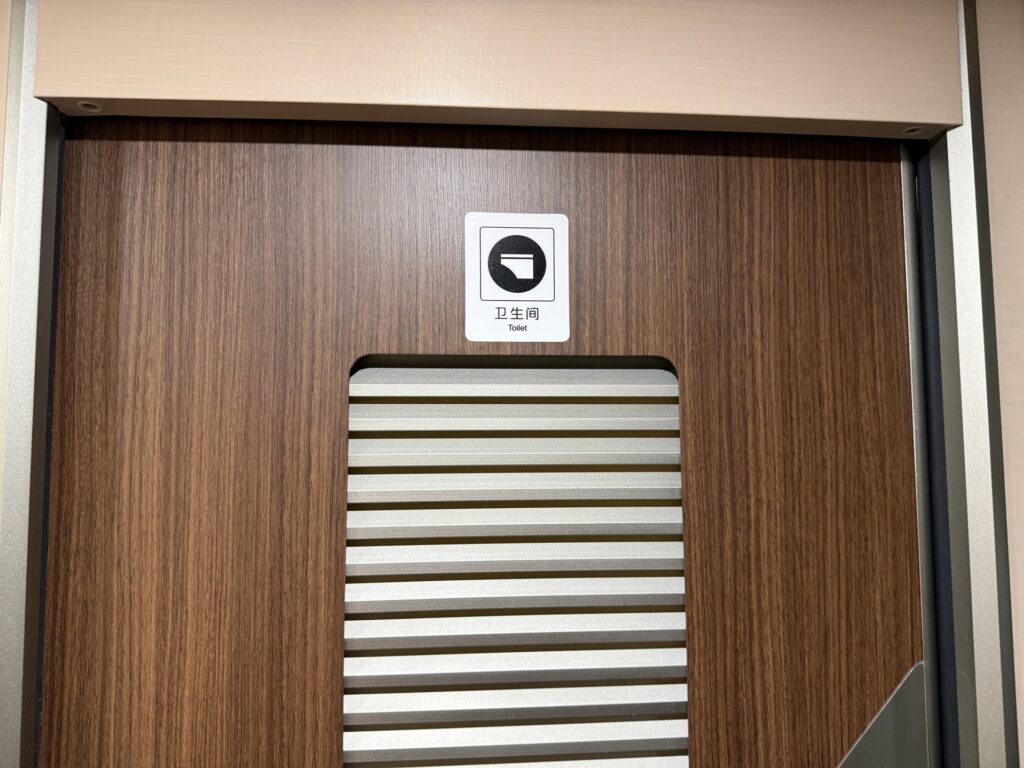
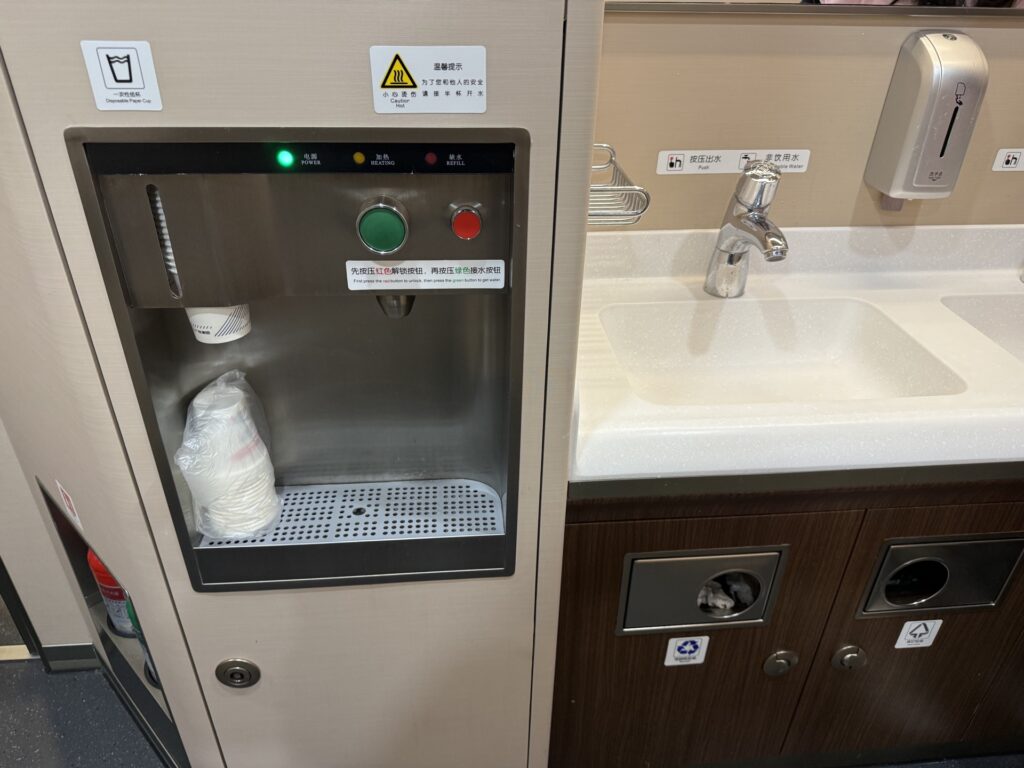
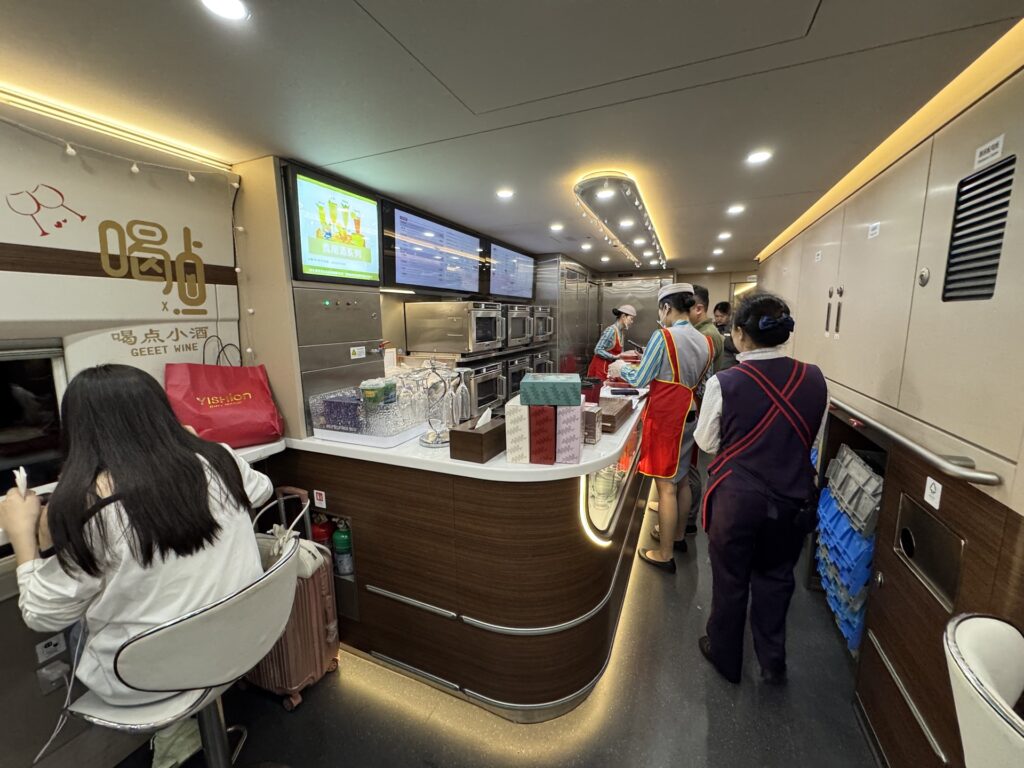
Lastly, we have the cafe car. It was open shortly after departure from Hong Kong and several hours before arrival into Beijing. They serve a wide variety of full meals, beverages and snacks. The best way to pay — like everything in China — is with Alipay. The cafe car does not have much seating, so you’ll probably have to eat in your cabin.
Evening Experience
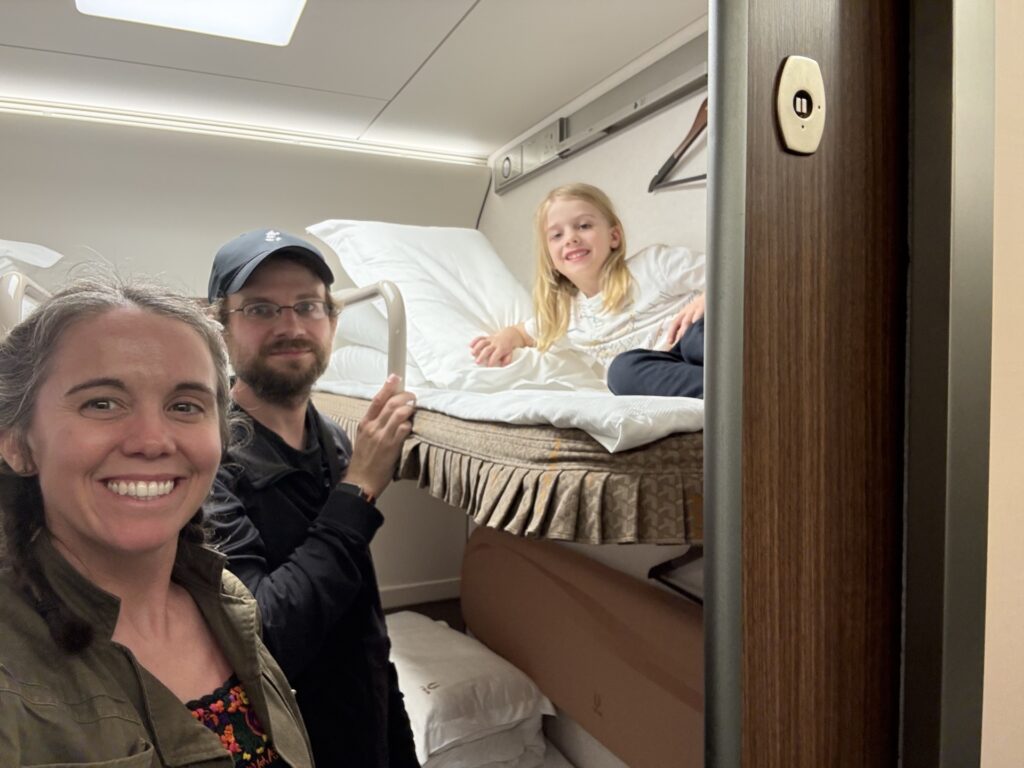
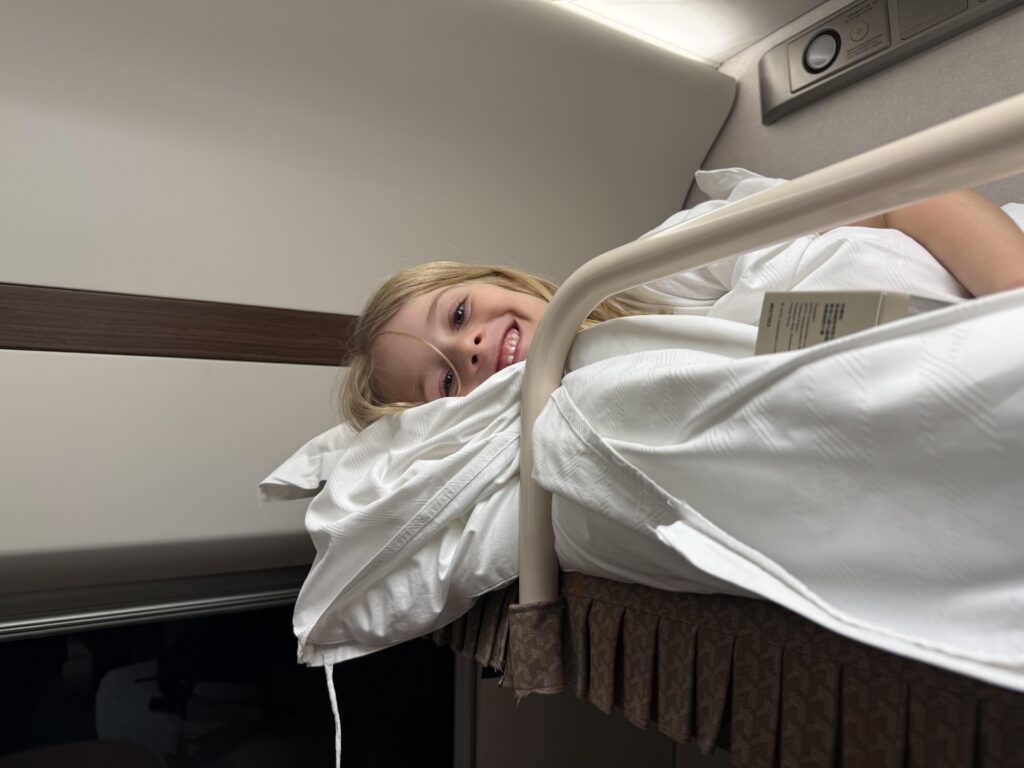
Our family of three had two top bunks and one lower. Our fourth cabin mate didn’t board until few stops later, so we had some time to get situated.
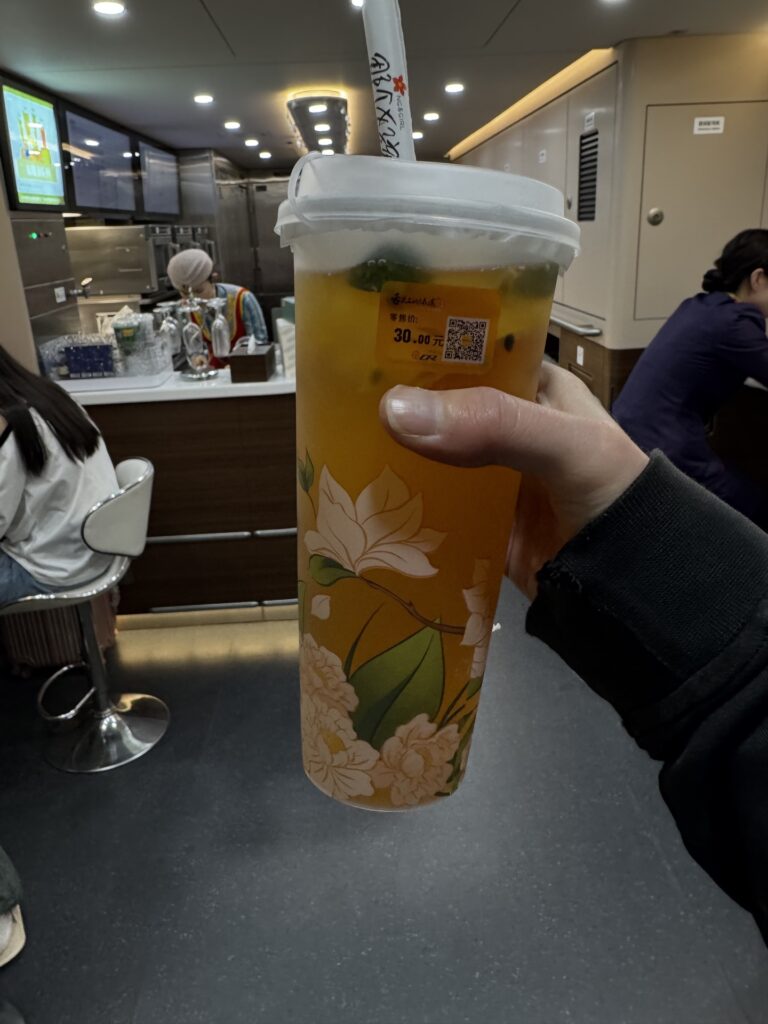
By 9 PM, it was well after our kid’s typically bedtime, and they fell asleep quickly without objection. My husband popped out to the cafe car and bought a tea. This was our first chance to test Alipay in China, and he was thrilled it worked smoothly.
I typically fall asleep to ASMR videos or comfort TV shows, and put one on without thinking. With international roaming through my US-based cell provider, China’s Great Firewall didn’t impact my access. I also maintained full service almost the entire trip.
Our fourth passenger arrived just as we were falling asleep, and spent the next few hours sitting quietly on his phone. The biggest disruption to our experience came in the middle of the night when our cabin mate departed and a new passenger arrived.
He opened and closed the cabin doors several times, letting in the bright hallway light. Then, a staff member had to enter our cabin to fully swap out the bedding. This woke my husband and I (‘woke up’ was generous though, we weren’t sleeping that well to start), but our child slept through the entire thing without a flinch.
Mid-night turnover is the worst case scenario when sharing a cabin. It was annoying, but expected, and ultimately fine. After the shuffle, our new cabin mate went right to sleep. He also departed in the early morning, and was gone before our kid even woke up.
As you may have gathered from our experience, the train makes several stops along the route. The starting and stopping can be disruptive for light sleepers like me. Oddly, it’s the silence at rest that I found most distracting. When the train is at speed, it’s very loud, but in a soothing, white noise sort of way. The silence when it stops is deafening.
The bed itself was very comfortable though, as was the temperature of the room. When the door was closed, the blinds lowered, and the lights off, it was very dar and cool in the cabin. It was all very conducive to a good night of sleep.
My husband and I both slept for a few hours, but not well. Honestly, that was mostly jet lag and a bit of stress over our child falling off the top bunk. Our kid slept as well on the train as they did in any hotel room. Overall all, it was as good as we could have hoped.
Morning Experience
We were up a few hours before we arrived in Beijing. Our cabin mate had departed and we again had the space to ourselves. Unfortunately, he left with one of our breakfasts and amenity kits. What can you do? (The first passenger took his, and they never refreshed it for the second passenger in that berth. He surely thought it was his.)
When I swung by the sink area to freshen up, I noted that it was just as clean as the evening before.
Then, I went to the cafe car. It seemed lots of people were up already, and the hallway seats were dotted with passengers watching the countryside go by. None of them were in the cafe car, though. I ordered our coffees and the server prepared my two single-serve pour-over coffees with expert care.
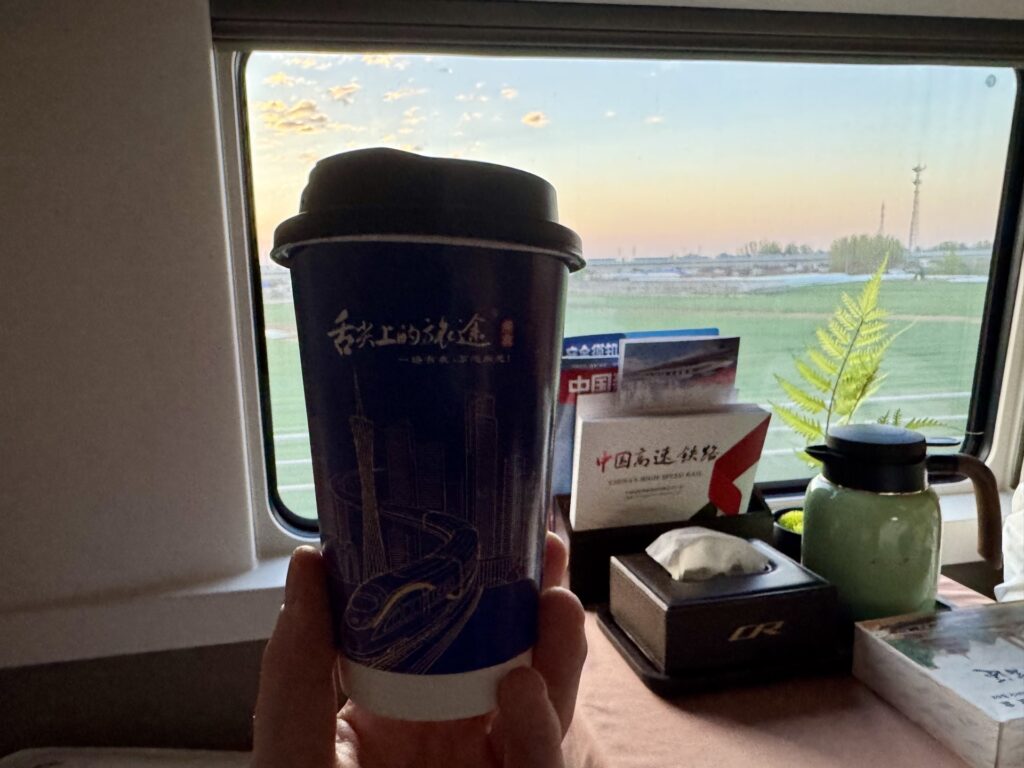
We enjoyed our coffee and breakfast, packed our things, and got ready to depart.
Beijing is the last stop on the train. While they don’t make overnight station stop announcements, they did announce this one over the loud speaker. All announcements were made in both English and Mandarin.
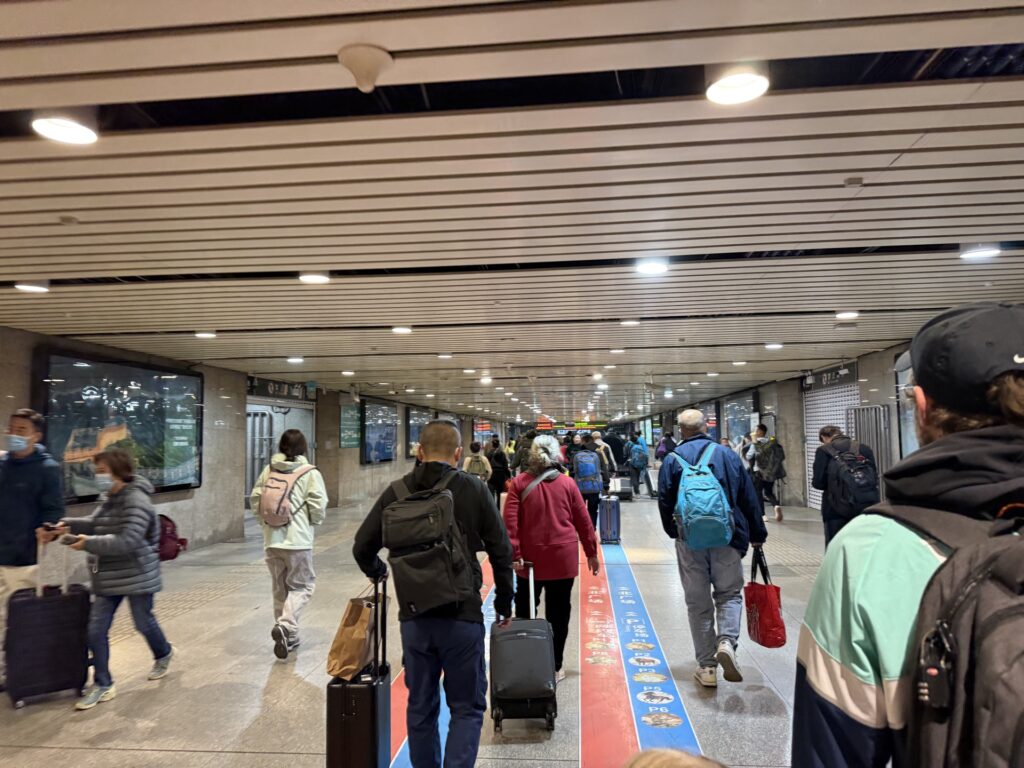
We arrived at Beijing West station and followed signs toward the exit. There are no immigrations upon arrival, as all of that was handled in Hong Kong prior to departure. We quickly found our driver for our tour and were off to our next adventure.
Overall Review of China Railway’s New Soft Sleeper Cabin
I have no complaints about our experience on China Railway’s overnight train in their new soft sleeper cabin. This was as good an overnight train experience I could possibly expect for anything short of a luxury first class train experience.
I was most impressed by the service. The cleaning staff, specifically, kept the train perfectly clean the entire trip. I tried to compliment one of the workers, but I think my compliment was lost in translation.
The cabins themselves were new, clean, and very comfortable. Specifically, I loved the accessible charging at every seat, and the useful shelf adjacent to them. I was able to stay incredibly organized on the train, which makes the experience so much more relaxing.
While I didn’t sleep perfectly, I can’t blame the train for that. We had a great experience and we’d highly recommend this sleeper cabin. Beijing is one of our favorite places, and we had an incredible time during our short two days there. We would not have been able to fit Beijing into this tight itinerary if it wasn’t for this overnight train. We’d ride this train again in a heartbeat.
Leave a Reply