
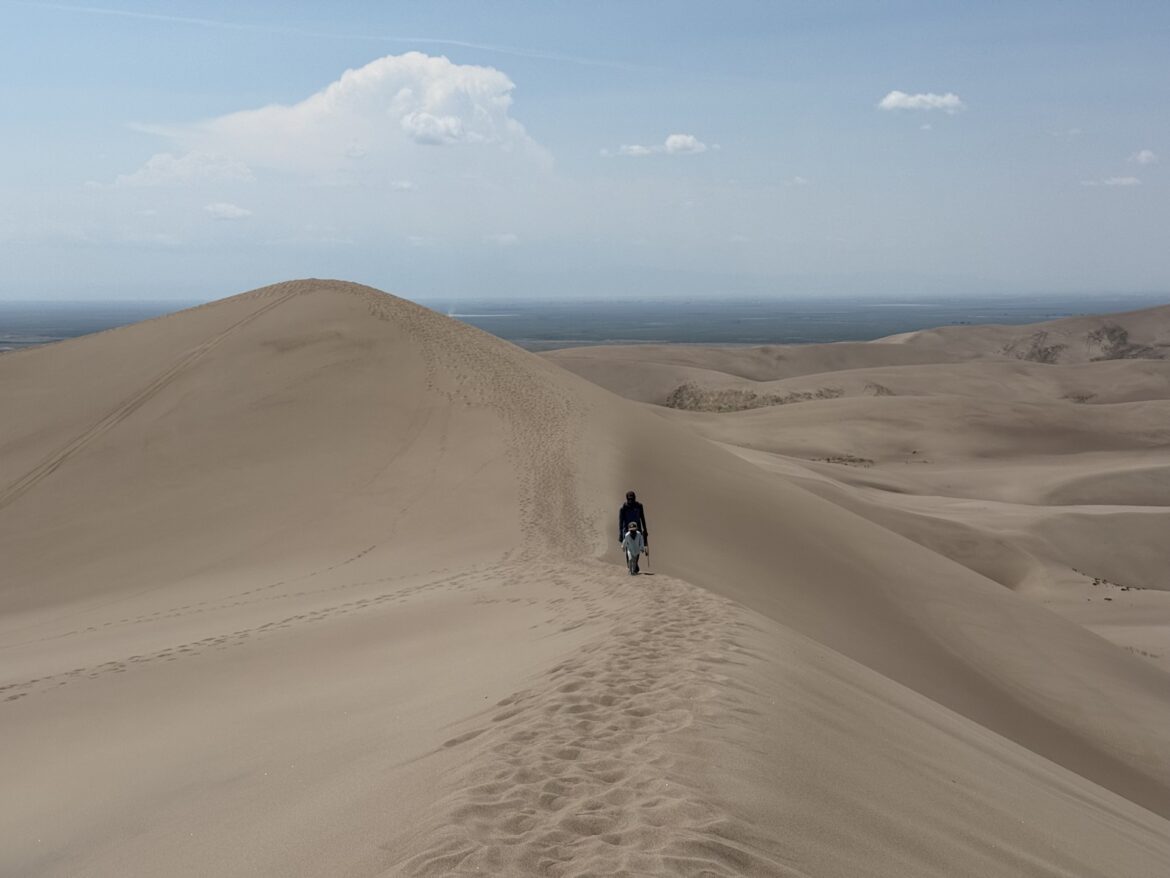
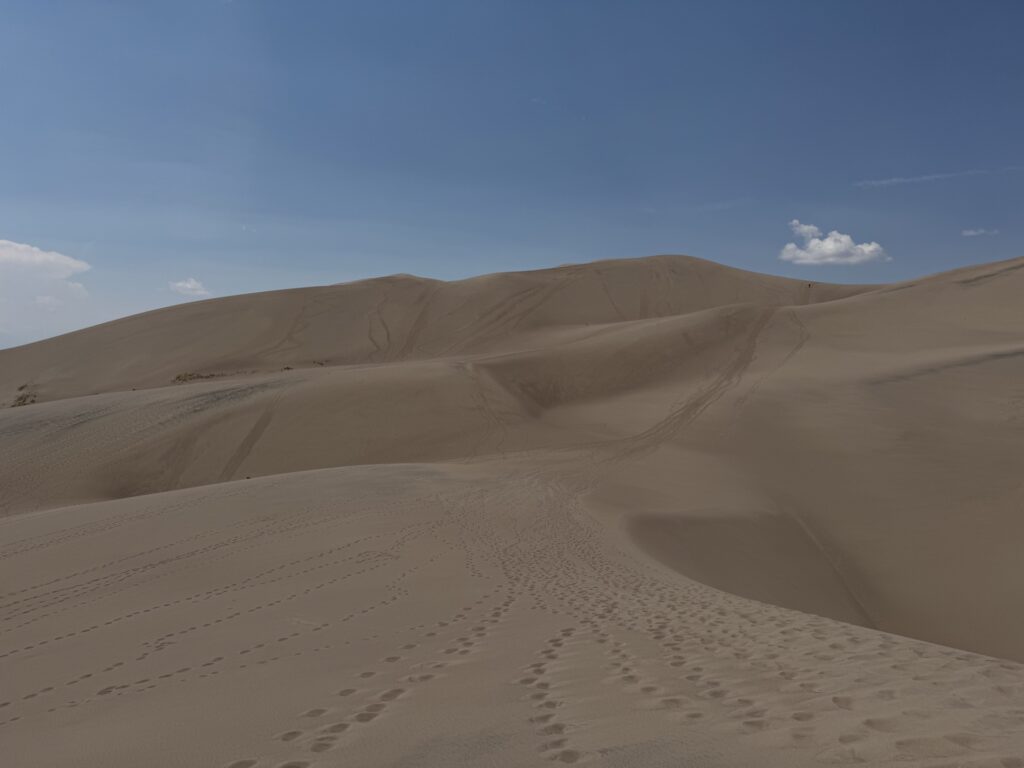
Great Sand Dunes National Park, located in Southern Colorado, was somehow exactly what I expected and nothing like I expected at the same time. Just as the name suggests, the park is primarily and huge expanse of massive sand dunes. I just didn’t expect it to feel so overwhelmingly like I had landed on Mars — nor did I expect it to include the hardest hike of my life.
If you’re interested in visiting Great Sand Dunes and want the scoop from a friend who just went, you’ve come to the right place. This is by no means a “everything you need to know about the Great Sand Dunes” post, but more of a real-life example of how to spend one perfect day there. Wanna come along?
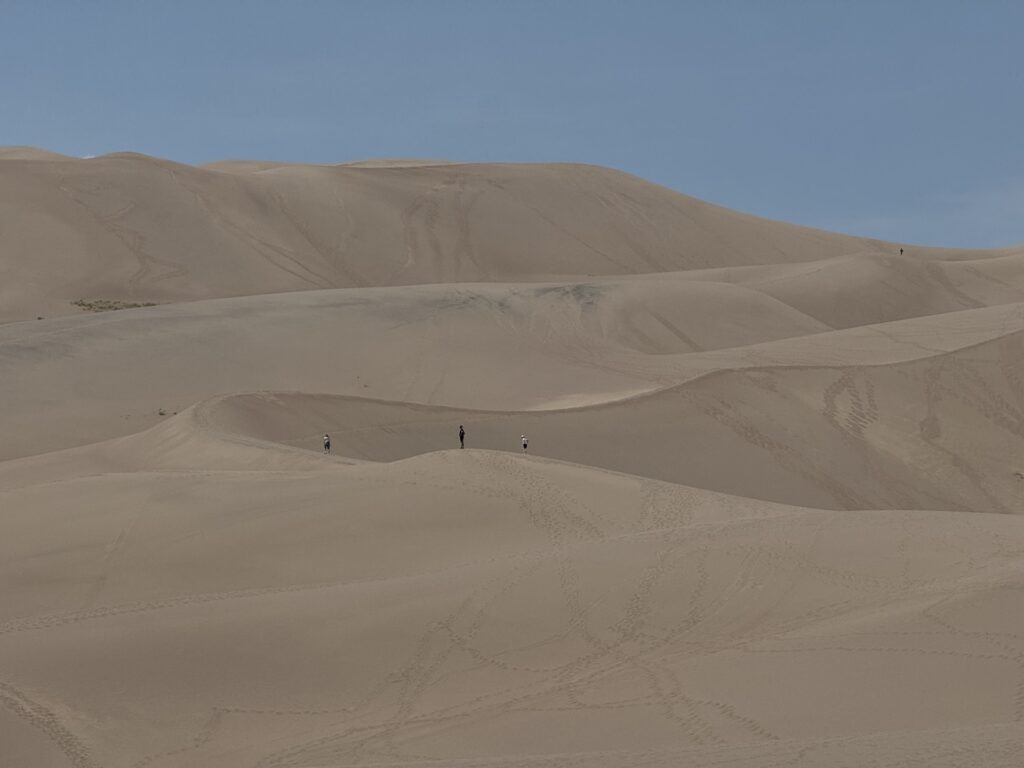
In this post, we’re going to talk about how to spend a day at Great Sand Dunes National Park. I’ll walk through the timeline and details of the day, plus offer some helpful tips along the way. Some of the highlights of our visit included sand sledding down the dunes, hiking to the High Dune, plus a few smaller attractions in between.
About Great Sand Dunes National Park
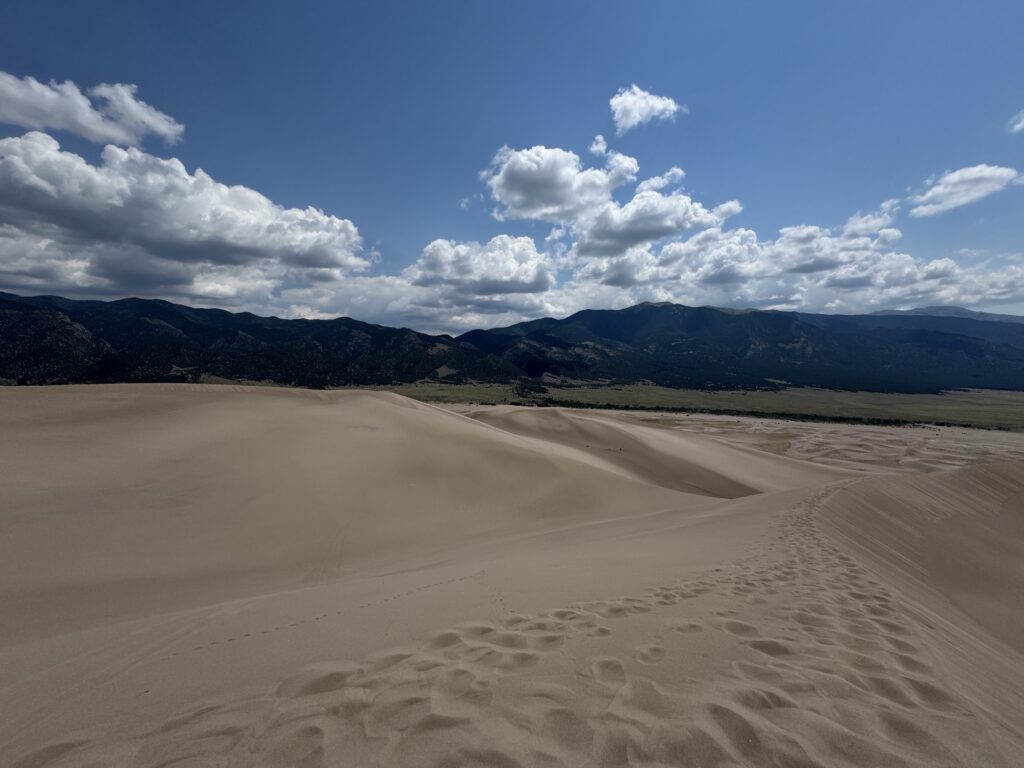
Great Sand Dunes National Park is kind of the middle of nowhere, about 3.5 hours south of Denver. The highlight and namesake of the park are the sand dunes. The massive dunefield covers about 30 square miles, and includes the tallest sand dune in North America.
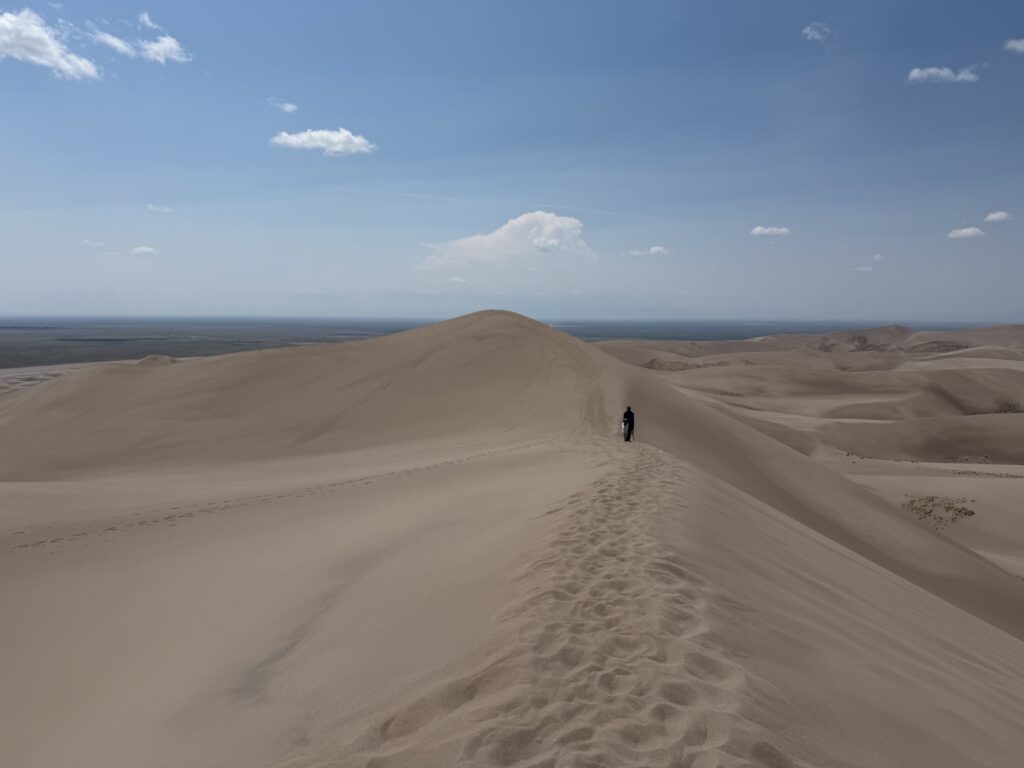
The dunes formed naturally, with our best guess suggesting that they started to form about 400,000 years ago. You can read the full geology story here, or this is my short version:
Sediment was brought to the area from streams and lakes, which eventually dried up. Winds from opposing directions trapped the sand at the foot of the mountains, and created the dunes.
Great Sand Dunes was recognized was a National Monument way back in 1932 by Hoover, but wasn’t established as a National Park until much later in 2004. In addition to the dunefield, the National Park also includes some non-sand hiking trails and a seasonal creek for tubing and swimming.
Due to its location and elevation (8,200 ft), Great Sand Dunes experiences four seasons with drastically different weather nearly every month. (You can view the weather by month here.) The summers are hot and and the winters are cold and snowy, with comfortable weather in between. The most popular time to visit the Great Sand Dunes is in late-May, early-June when the creek reaches it’s peak flow, the weather is mild, and the mosquitoes have not yet arrived.
The main town near Great Sand Dunes National Park is Alamosa, which is about 40 miles from the park. This is where you’ll find the most variety in accommodations, restaurants and stores. However, there are a few other remote lodging options and a few small towns slightly closer (Hooper, Fort Garland).
Our Trip to Great Sand Dunes
Really quick, allow me to to set the stage for our trip.
We visited Great Sand Dunes National Park in mid-August. During this time, the temperatures were hot, the sun was bright, and the nearby creek bed was dry. It sounds bad, but it honestly wasn’t terrible. It was hot, don’t get me wrong, but with proper sun protection and plenty of water, it was definitely tolerable.
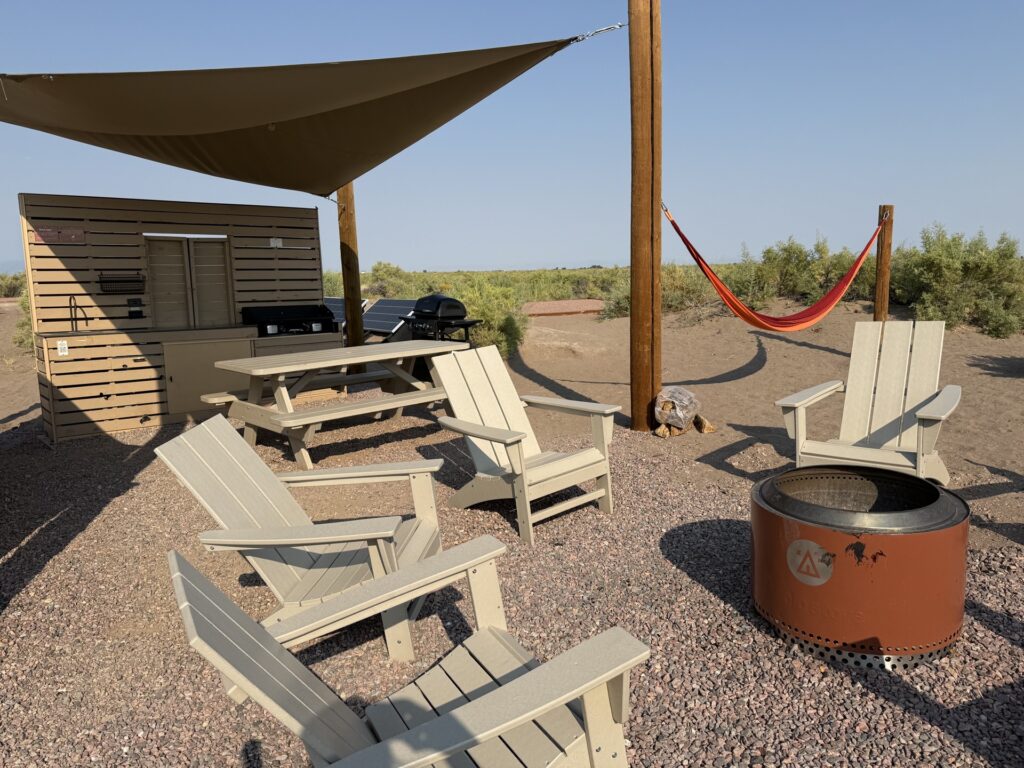
During our 2-night visit, we stayed at Ramble at Great Sand Dunes National Park. It was incredible. Think of it as elevated camping, but not quite glamping. We needed to bring our own tent, but the site was otherwise stocked with the essentials (like tables, chairs, grills). There were other creature comforts like a playground and games (bags, disc golf), self-service cantina (with basic food and drinks, including coffee), and clean bathrooms with hot showers.
And finally, our stay here was part of larger Colorado & Utah trip which included a whopping five national parks. I plan to write a full itinerary, but this was the outline: Denver > Rocky Mountains National Park > Moab (Arches National Park & Canyonlands National Park) > Mesa Verde National Park > Great Sand Dunes > Denver.
A Perfect Day at Great Sand Dunes National Park
Let’s get to the good part! In this next section, we’ll walk through our full day at Great Sand Dunes National Park. This was a full day, with overnight stays nearby on either side. We also visited the park for a few hours on our arrival day, but we won’t cover the details of that here.
Renting Sand Sleds and Boards at Great Sand Dunes
First on the agenda: rent a sand sled. The National Park itself does not offer any sand sled or board rentals, so you have to take care of that with a third party outside the park.
The easiest place to rent sand sport equipment is at the Great Sand Dunes Oasis. It’s located just outside the park on the main road, so you’ll have to pass it anyway on your way into the park. Board and sled rentals were $20 per day, per item (deposit or credit card required.) Rentals here included a small piece of wax, which is helpful.
Note: The oasis is only open seasonally from Spring (usually early April) through Fall (usually late October). Be sure to check the current hours.
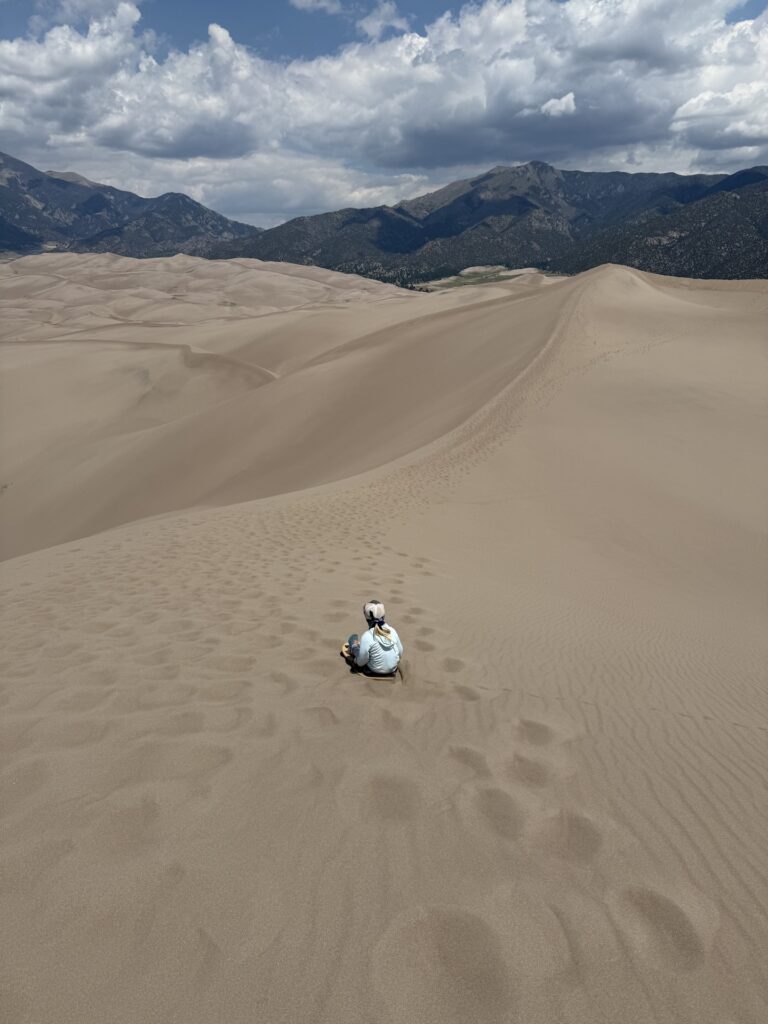
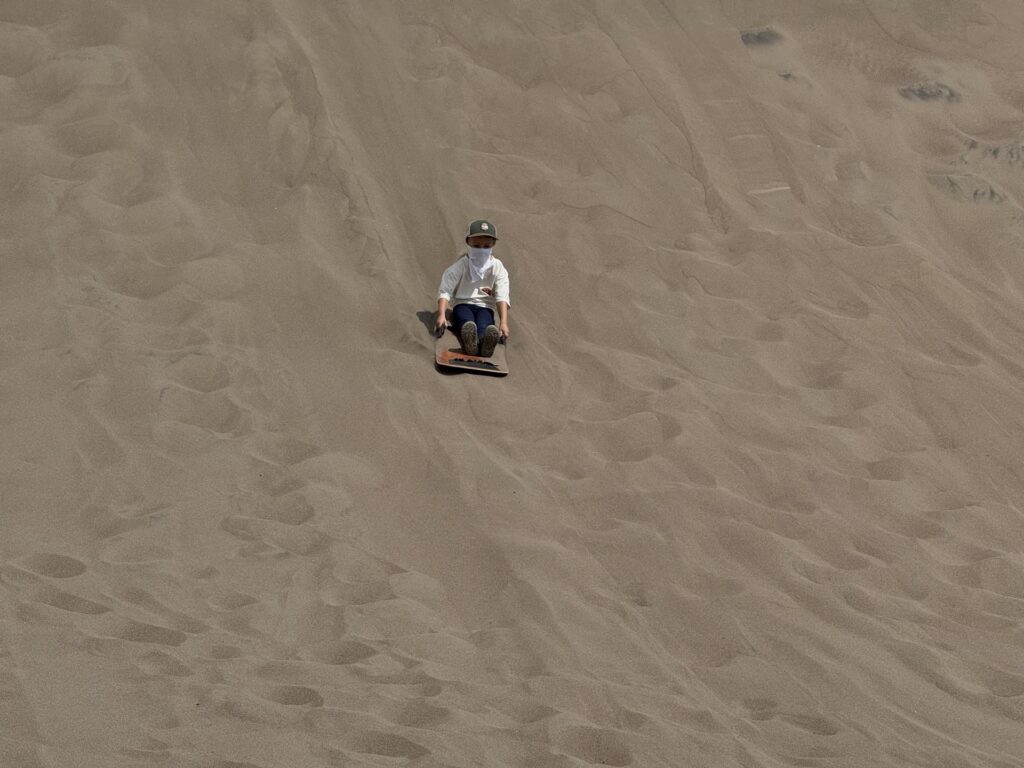
We rented sand sleds at the Oasis the afternoon we arrived and it was easy peasy. On the morning of our full day, though, we actually rented a sled directly from Ramble (our campsite.) It cost a little more — $25 vs $20 at Oasis — but Ramble had a smaller children’s sled option. Plus, it was just easier. That way, we didn’t have to stop or worry about crowds.
Speaking of crowds, we didn’t see any. During busy seasons, there might be lines at the rental desk in the early morning. There were no lines for us in the previous afternoon and we didn’t see any notable crowds when we drove by in the morning.
Arrival & Visitor Center
Our schedule was light, so even with a high of 80 degrees and sunny, we weren’t in much of a hurry. We ate breakfast at our campsite and then had a quick coffee from the cantina after renting our sled.
We left camp just after 10 AM and arrived at the visitor center around 10:30.
The Great Sand Dunes Visitor Center, is small but nice. It has excellent bathrooms, a gift shop, discovery center and film room. There is also a picnic area and spray showers nearby, plus a small looped nature trail.
Tip! If you’re visiting with kids, pick up a Junior Ranger Book at the start of your day. This particular Junior Ranger Book is pretty short and easy. If you follow this itinerary, a child could finish the whole thing in a day and earn their bad later in the afternoon.
We took the next 20 minutes to get ready. This meant filling up water bottles, packing up snacks, putting on tennis shoes, lathering on sunscreen, and doing a last minute review of the “trail.”
Then we were off.
Hiking to the Dunes
The parking area is near the dunes, but not at the base of them. Before you get to the hills of the dunes, you first have to hike about 3/4 of a mile through flat sand. Emphasis on sand, not on flat.
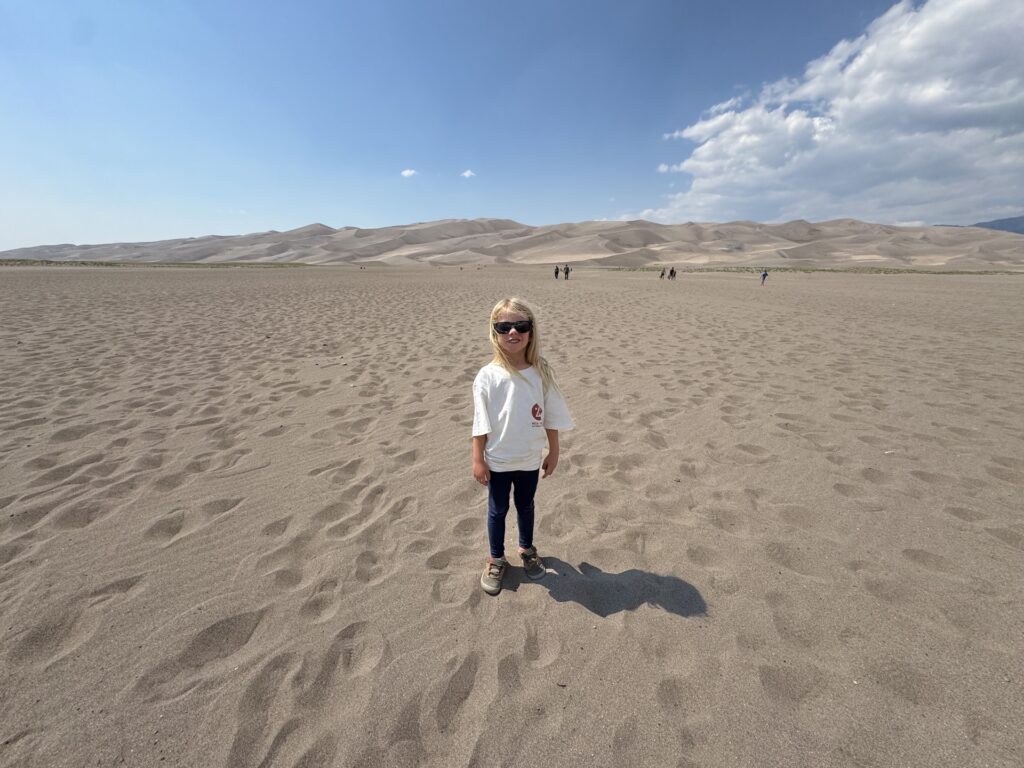
This is no easy task.
It’s not particularly interesting or complicated either. There are pathways from the parking lot and visitor center that lead to the sand, and you can see the dunes from there. You just walk straight until you hit them. You literally cannot miss them.
With a 5-year-old and a sled in tow, this walk took us about 20 minutes.
Sand Sledding on the Dunefield
You are allowed to sled and board on any of the dunes at Great Sand Dunes. The first dunes you approach are lower, rolling hills. The further you walk along the ridges, the steeper and bigger the slopes are.
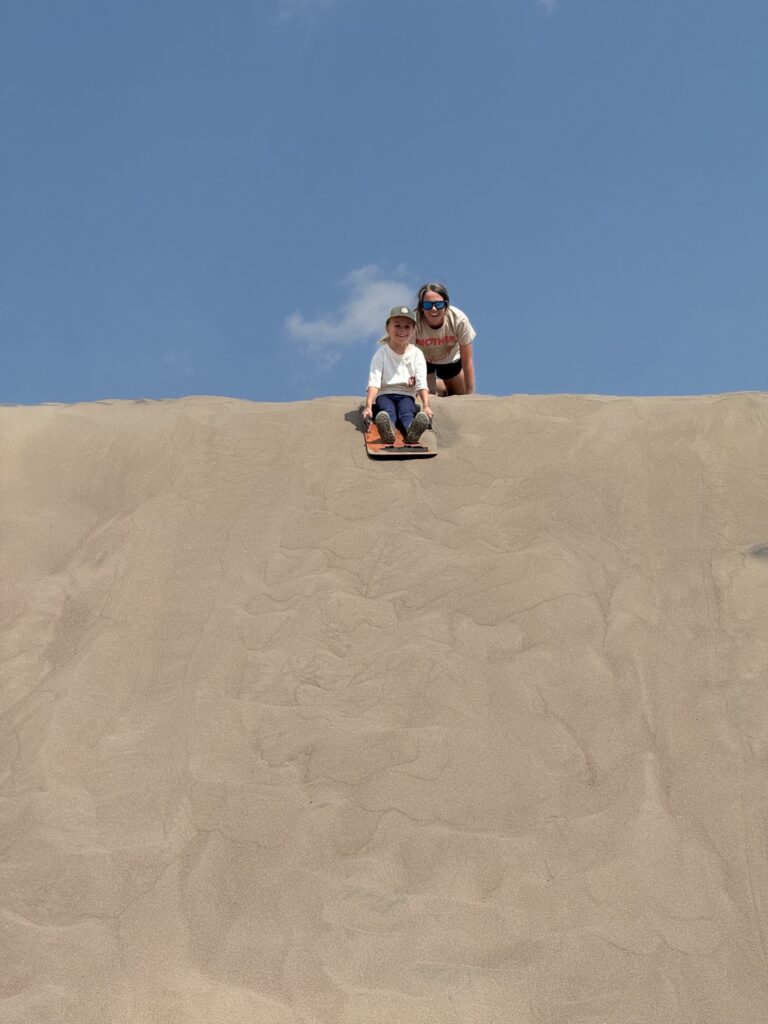
We followed the crowds to one of the first, smaller slopes. After about an hour with the sled on the smaller sand slopes, we learned a few things.
- Kids do better on smaller slopes. Lighter children slid down much easier than heavier adults.
- Wax helps a lot. Really lather it on the front curve of the board for best results.
- Cover your face. One wrong turn or a weird angle toward the end and you’ll get sprayed with sand. Sunglasses and a bandana helps a lot.
- What comes down, must go up. Climbing up the sand dunes is really hard. The sand falls under your weight, so it is actively pushing you down as you try to go up. Choosing smaller hills means you’ll (hopefully) have the stamina for more rides.
- Boarding looked hard. We never tried the stand-up sand boards, but we saw a lot of people wipe out on them or struggle to get going at all.
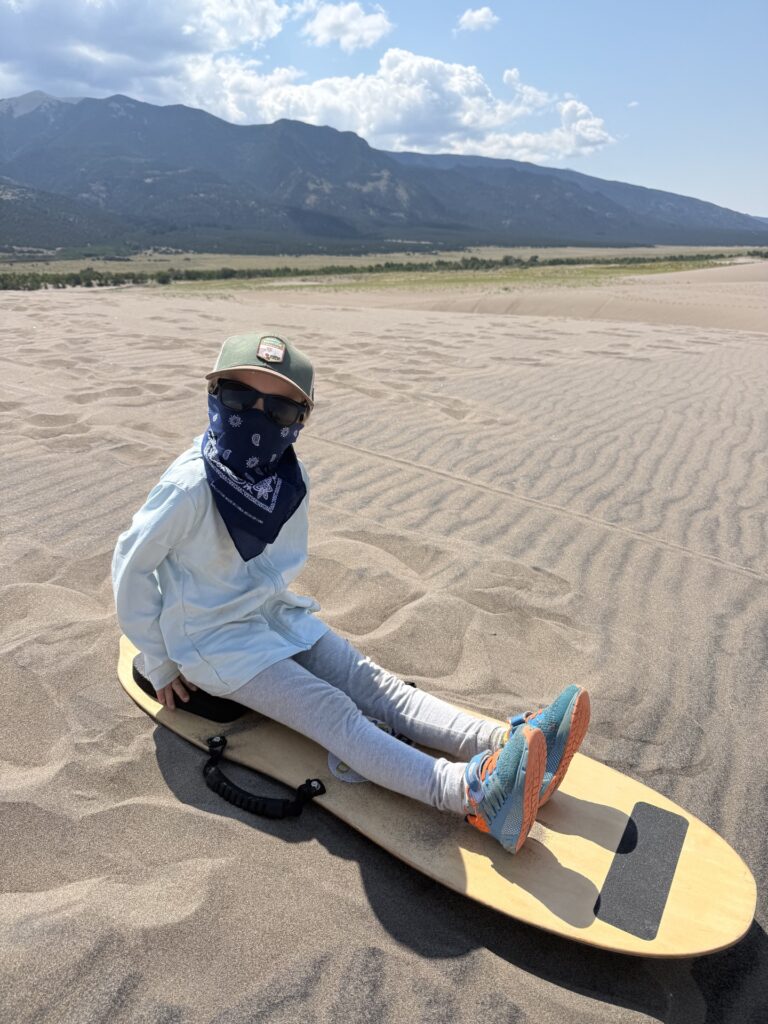
Sand sledding or boarding is one of those things that you have to at least try at the dunes. It’s a unique experience that you won’t get in may other places.
If you want honesty though, it was kind of more trouble than it was worth. Between carrying the sled all the way to the dunes (and beyond in our case) and climbing the slopes for each run, it was exhausting. Our 5-year-old also gave it an overall thumbs down review. They took several runs, but also several tumbles and one-too-many face-fulls of sand for their liking.
Hiking to the High Dune at Great Sand Dunes
You’d think that someone who complained this much about going up and down the small dunes would not venture off to the higher ones on purpose. If it were left solely up to me, I probably wouldn’t have — but this journey does in fact continue uphill.
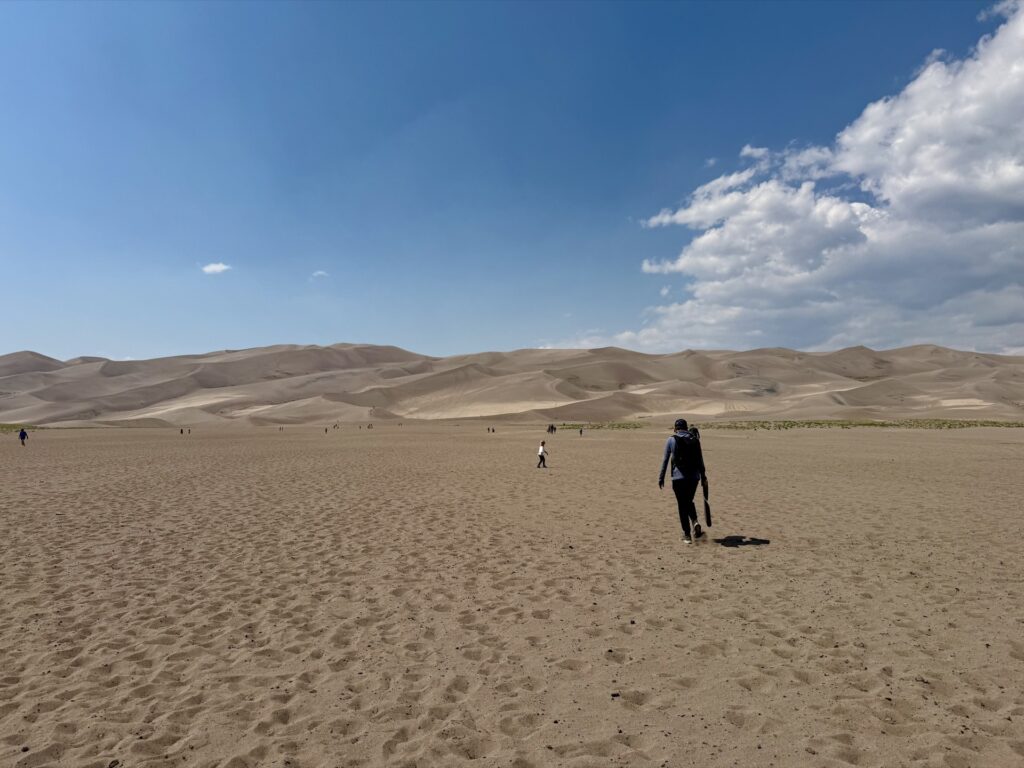
The High Dune is the highest dune you can see from the parking lot and the highest dune in the photo above. (It’s not the highest dune in the park though — that is Star Dune, which is further and usually follows a different trail. We didn’t make it that far.)
There is technically a “route” but the trail to the High Dune is not marked. And white there is a recommended path, there are several different ridges you could traverse and/or dunes to climb to reach it. Check out this post for a traveler’s best attempt to map her route. This post is also helpful and includes GPS coordinates and more detailed photos of each twist and turn.
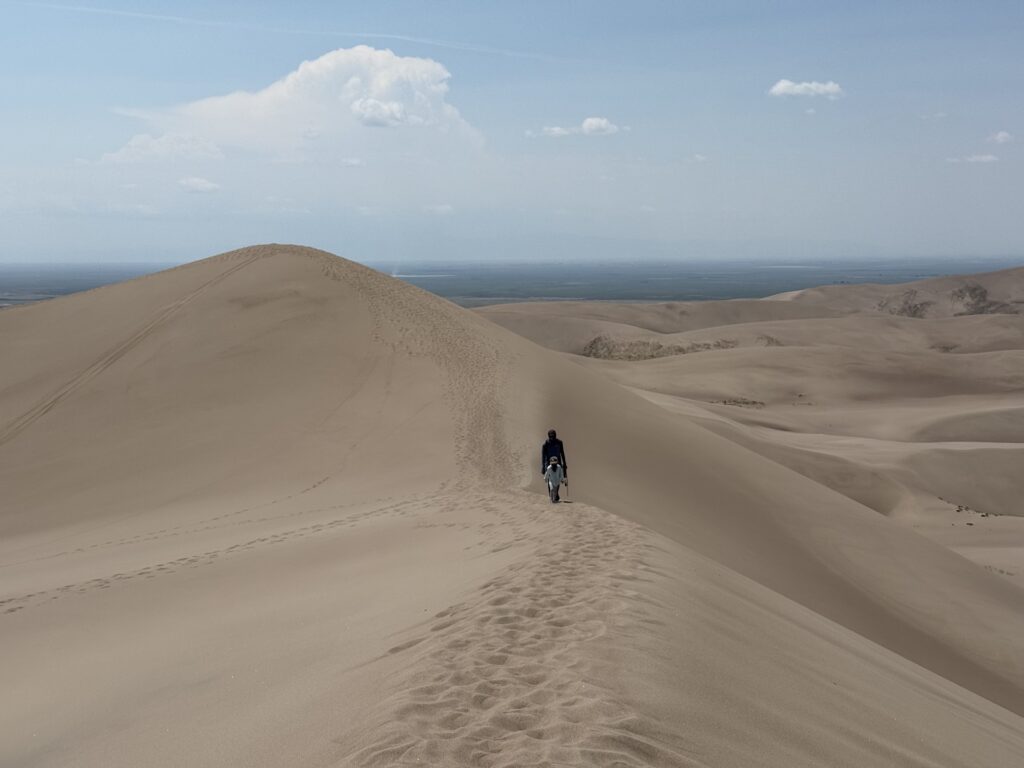
There were few things that helped us navigate to the High Dune. The first was following other hikers. Around noon, there were a handful of people on the ridges, and you could try to follow their general direction and path. (In same cases, we watched other hikers struggle and chose slightly modified routes.)
Another helpful thing is to download the High Dune trail in AllTrails or save the location offline on Google Maps. You might not be able to find and follow the exact trail, but it will help provide general direction on where the dune is compared to where you are.
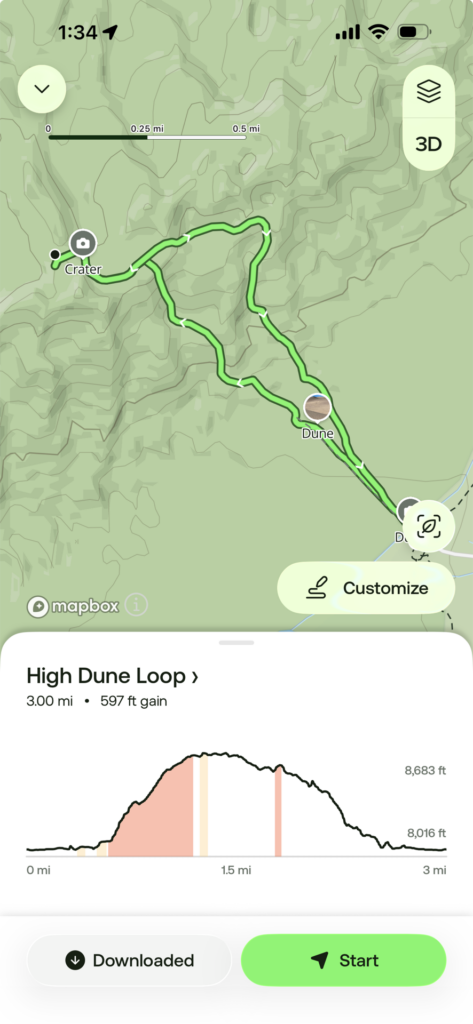
And one last tip — watch out for false summits! There were about three times when we thought we’d reached the summit for High Dune, only to look at the map and realize we had further to go.
Once we reached the High Dune, we decided it was worth it. The views were incredible, but we were also just really proud of making it all the way up there.
This hike was hard. It was one of the toughest hikes I’ve ever done. It was hard to track; it was hot; and it was so, so hard to hike on sand. Despite being “only” about .75 miles in the dunes, it felt much longer. Even a short distance climbing hills of sand will wear you down fast. It took us about 45 minutes to get from the small dunes to the peak of the High Dune.
Note: The total hike straight through from the visitor center is about 3 miles: 0.75 of flat sand + 0.75 in the dunes + the return.
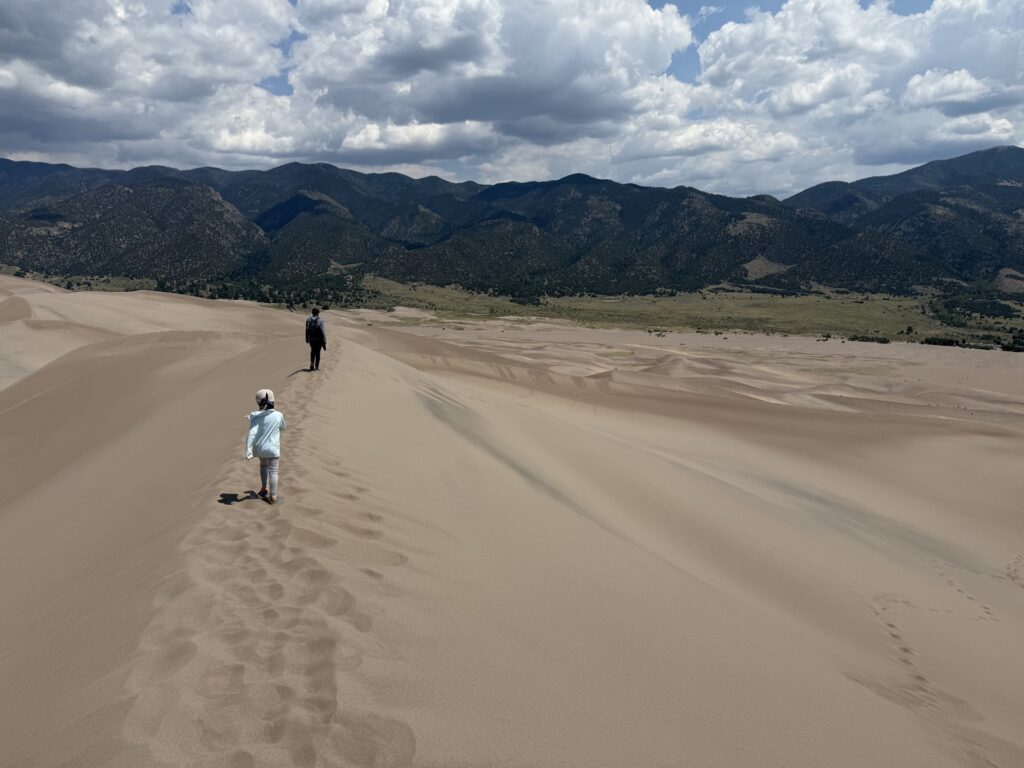
And yes — our 5-year-old made this hike on their own two little legs. Props to them and the fine folks at the Fruit-By-The-Foot company, for which my child would do just about anything for.
On our way down from the High Dune, we spotted a slope that looked steep but mostly straight in the direction we needed to go. We had drug our sled all the way up there, so we figured we’d offer our kid one epic downhill ride. To our surprise, they did it! This was a fun reward for a job well down.
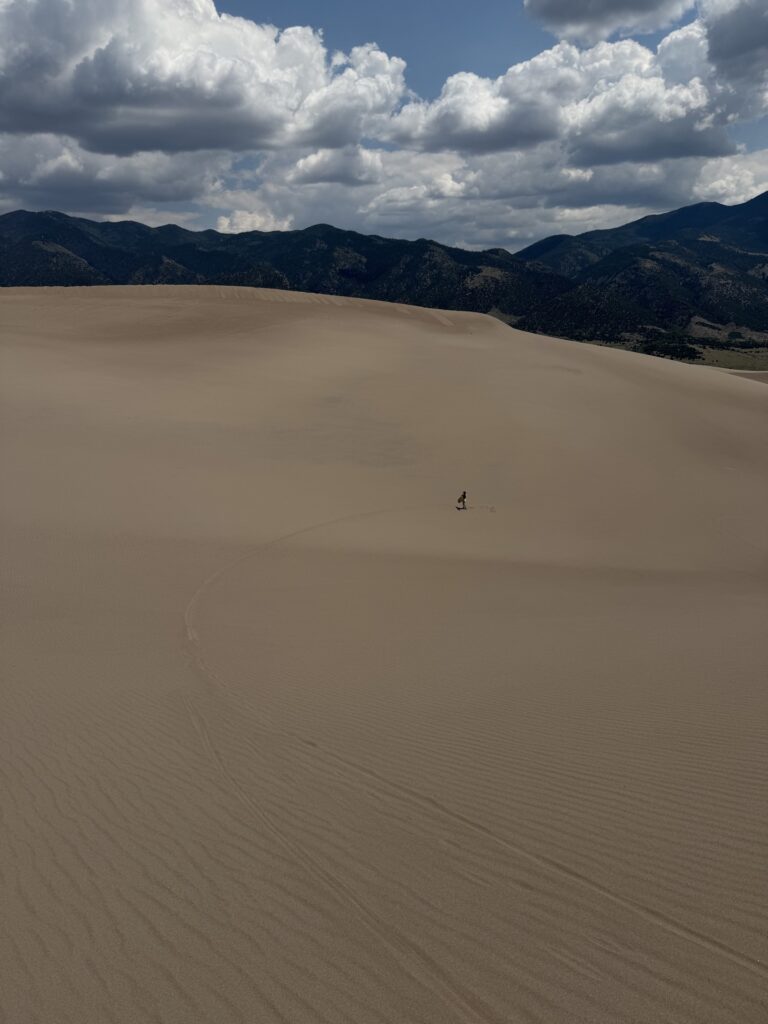
The hike back was easier navigationally, but still not exactly easy. It was one of those uphill-both-ways situations. Getting back still required traversing some ridges and climbing up and over the smaller dunes on our way back to flat sand.
But we made it!
Picnic Lunch
If we’re honest, we didn’t think we’d actually be able to do the hike to the High Dune. We decided to try it on a whim when we saw other people doing it, and we were surprised by our child’s sand endurance. Had we known we were going to do it, we would have started earlier. But as it was, we got back to the visitor center just after 2 PM and were starving.
After we brushed off as much sand as we could and changed our shoes, we walked over to the picnic tables near the visitor center.
We were in the middle of National Park hiking and camping trip, so we were prepared for a picnic. Our car was full of PBJ supplies, Pringles, fruit snacks, apple sauce pouches and more.
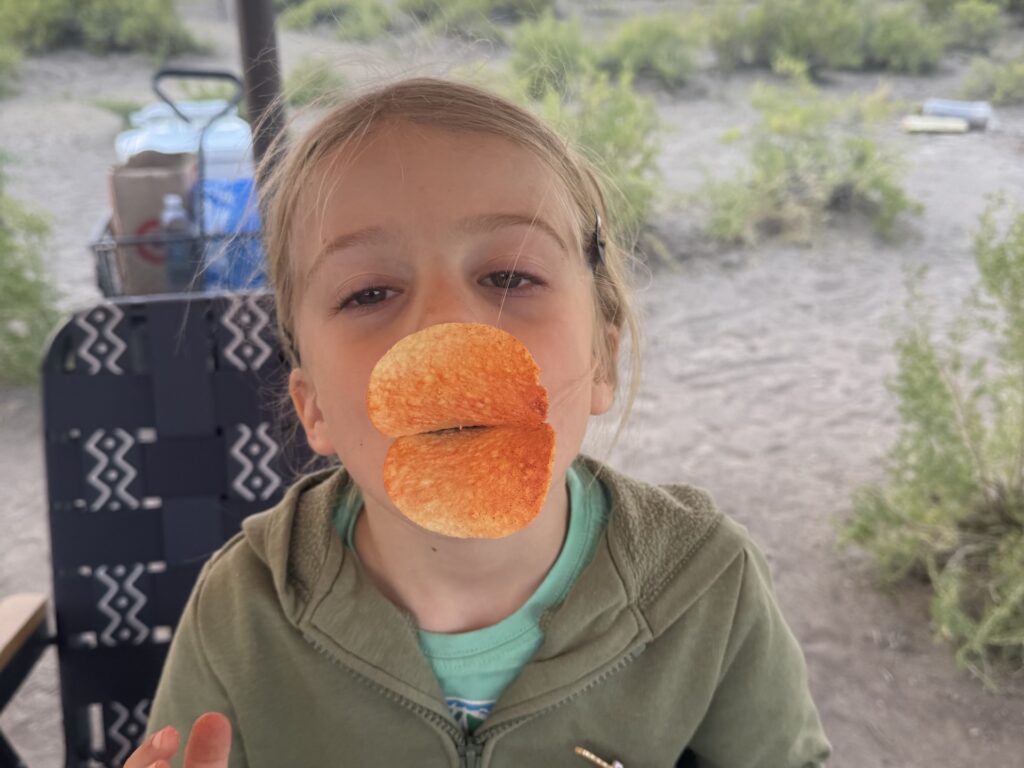
If you didn’t pack your own lunch, you would need to leave the National Park grounds. There are no food services inside the park. However, the Oasis just beyond the entrance has a (seasonal) restaurant and a shop full of snacks and drinks. (That’s the only food option within 20 miles of the park.)
Montville Nature Loop Trail
The main attraction at Great Sand Dunes National Park is of course the dunes, but that’s not the only thing the park has to offer. The most popular other attraction is Medano Creek. During our August visit, the creek bed near the visitor center was dry. We could have hiked to find the water, but that was a bit longer than we wanted.
Instead, we decided to take a quick lap around the Montville Nature Loop Trail. We wanted to see a bit more of the park, sure, but we also had some work to do. Despite spending most of our day out in the dunes, our little Junior Ranger had not yet finished all the tasks in their book. We needed this hike to check off the final few items.
By nature of having solid ground and a marked trail, this hike was significantly easier than the one to the High Dune. It was only about a half mile through a rocky, wooded area. The biggest stressor to this hike, though? Mountain lions.
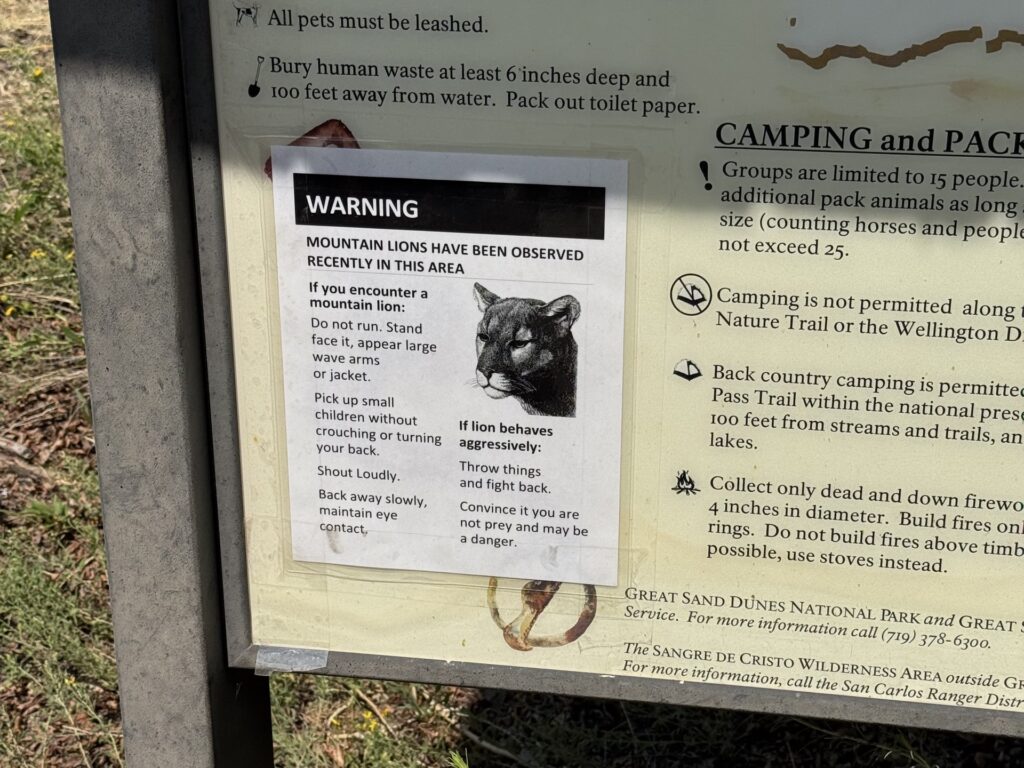
Fortunately, we did not see any. The sign posted at the trailhead, though, warned that they had been seen recently in area. That is enough to elevate a parent to high alert.
We chose to hike the short trail anyway, but exercised some caution. We made sure to keep our child between the two of us and encouraged them to be as loud as they wanted. (This is not something we’d typically encourage on hike, so this made it fun for them.)
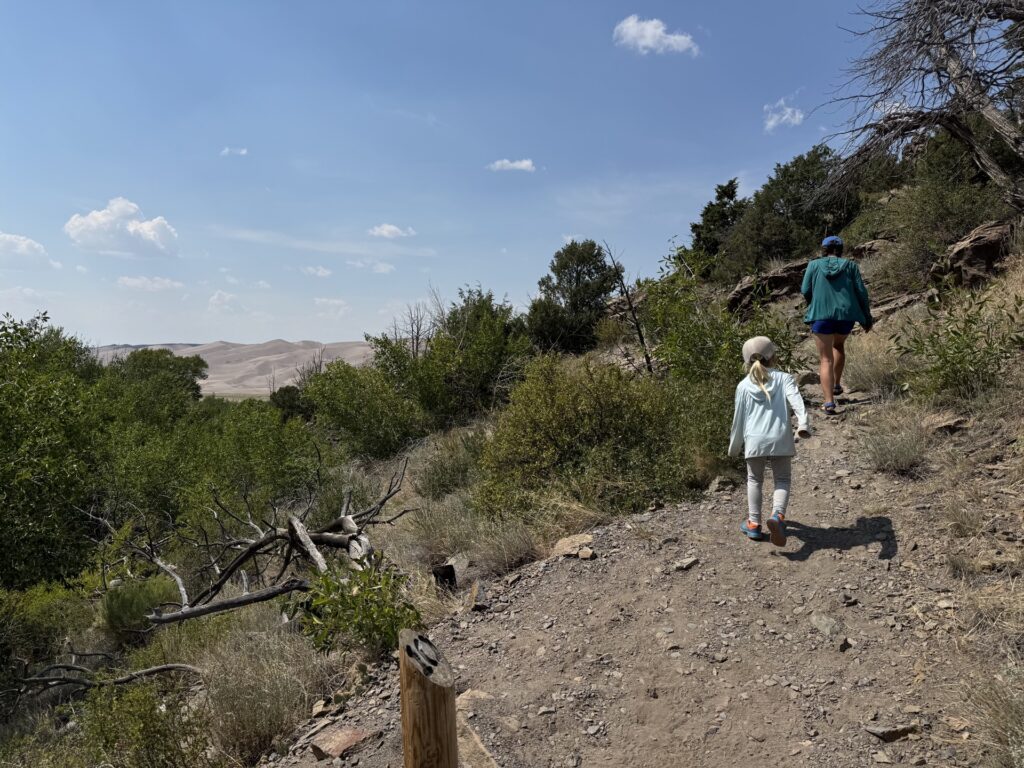
Again, we didn’t see any mountain lions, but the trail was fun. It was about half a mile and took us under a half hour. The trail was mostly in the woods, but it did have a small rocky climb toward the end with great views of the dunes in the distance.
Visitor Center: Part II
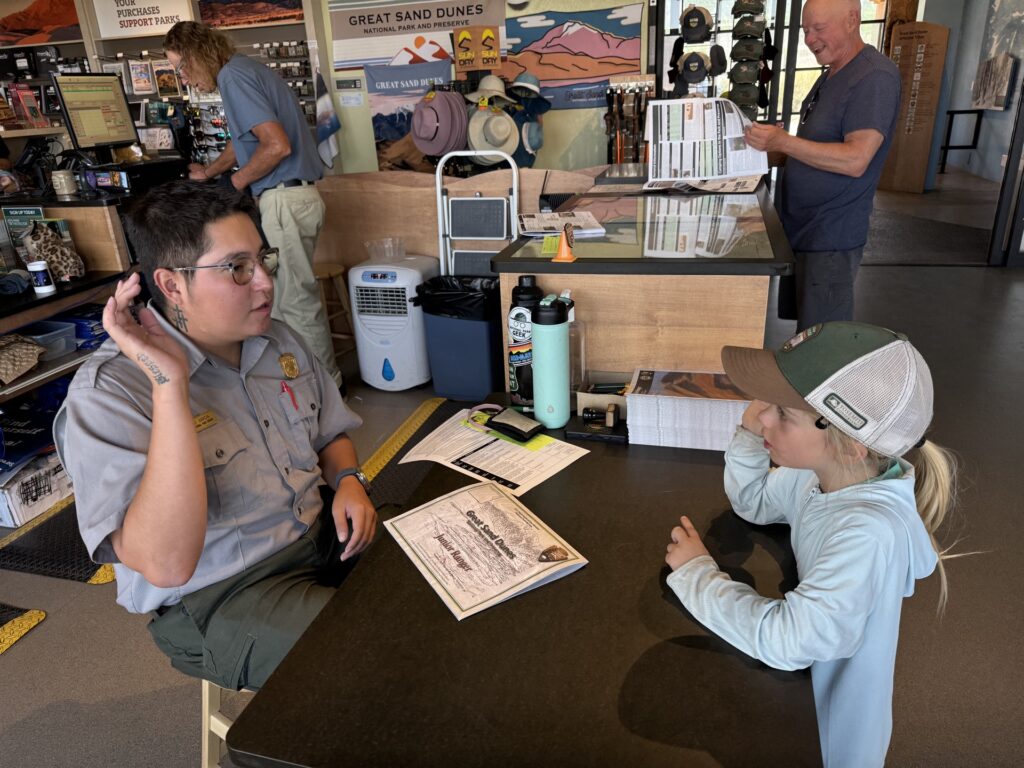
By the time we finished our mini hike, it was about 3:15 PM. We decided to wrap things up back at the visitor center for some very important business: our child’s swearing in.
All of the National Parks have some version of the Junior Ranger Program. Zoe has earned several badges. Some parks definitely take it more seriously than others and really check your work. Great Sand Dunes was pretty chill. The ranger quickly skimmed the book, recited the pledge and granted our child their badge.
Wrapping Up the Day
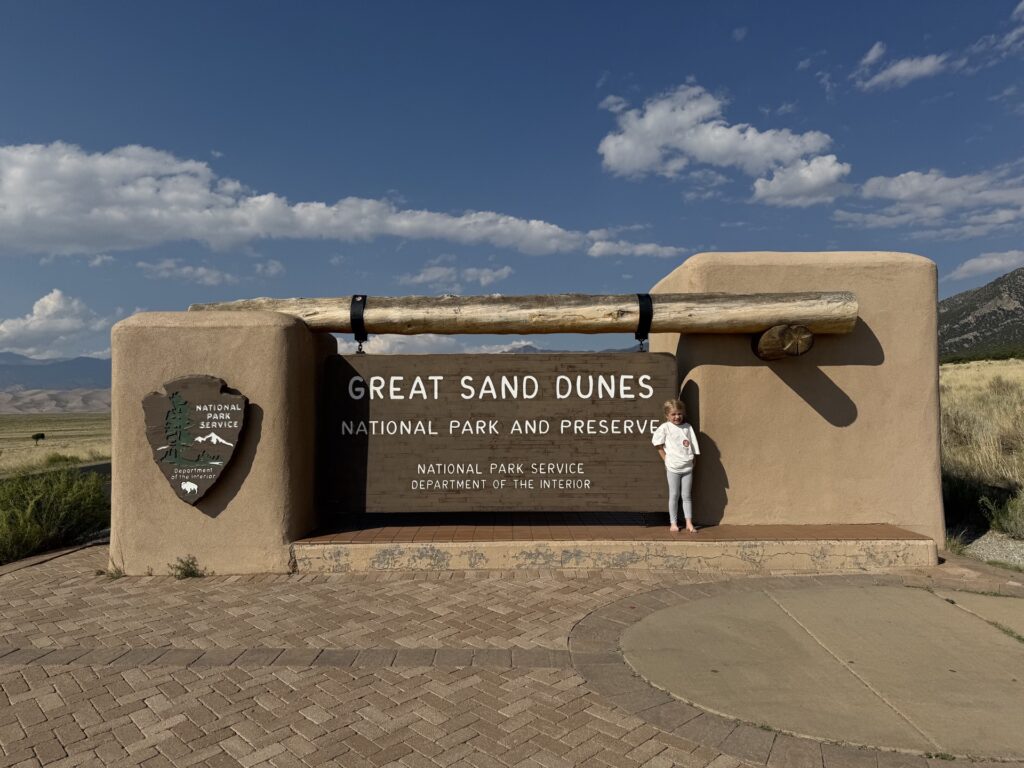
And that was pretty much it for our visit to Great Sand Dunes. After the visitor center, we stopped for an obligatory sign photo and headed back to camp.
Tip! I love to bring a small tripod on all hiking and national park trips, because you never know when other people are going to be around to snap a photo. I have and love this one, though I know there are cheaper options.
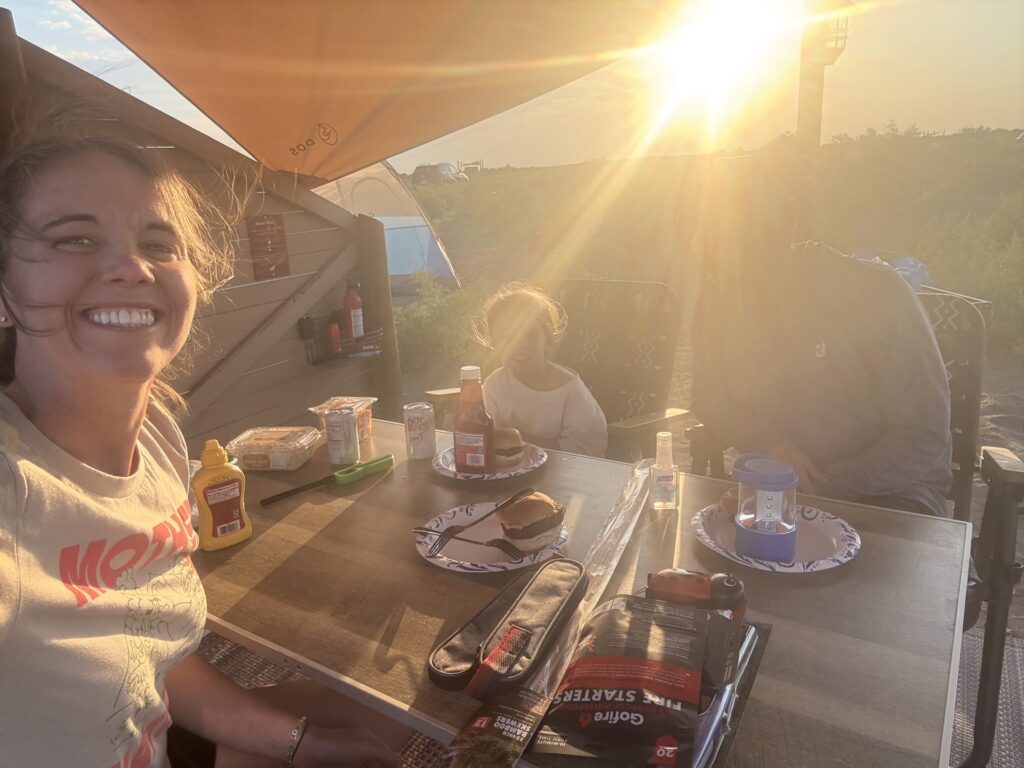
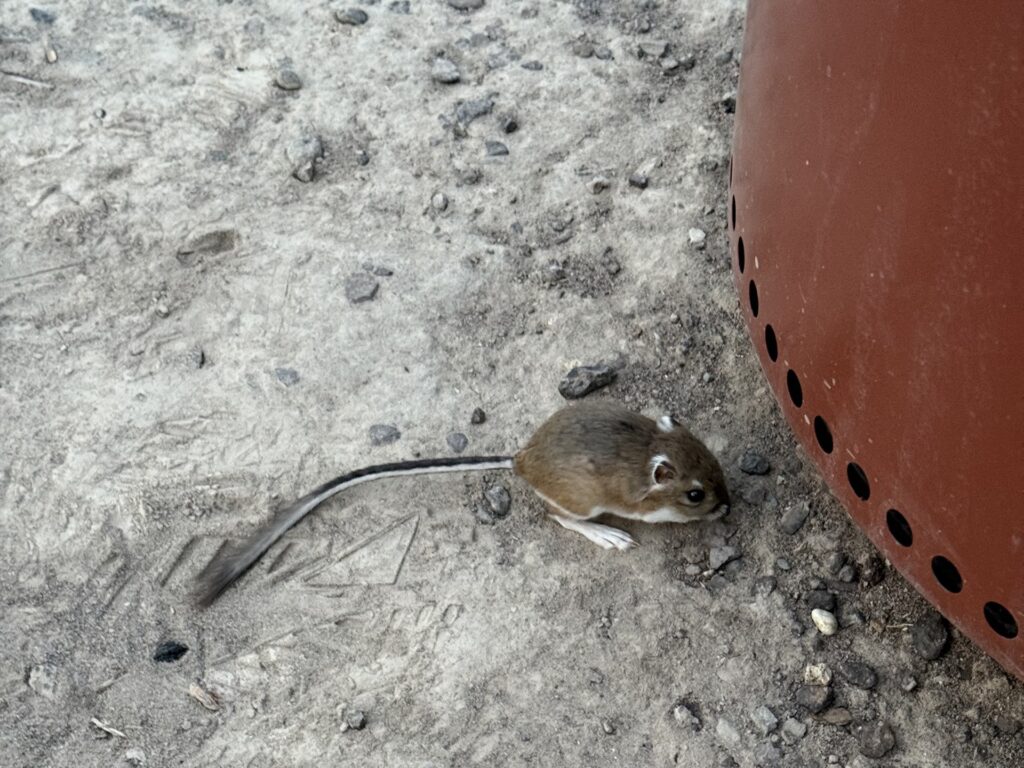
We took a nice hot shower to get the sand off of us, grilled burgers, and watched the cutest little kangaroo mouse try to scoop up our s’mores crumbs. To add to our perfect day, there happened to be a meteor shower that night! So we stayed up late and watched shooting stars before collapsing in our tent.
What to Wear to Great Sand Dunes — Summer
Proper attire can easily make or break your experience at Great Sand Dunes National Park. Specifically, we’re going to talk about what to wear in the summer.
The sun is hot, plus you’re at altitude (8,200 feet), so it hits you even harder. That hot sun creates hot sand. You cannot go barefoot in the sand at Great Sand Dunes National Park in the summer.
Here are a few things to be sure to wear during your visit to stay safe and comfortable.
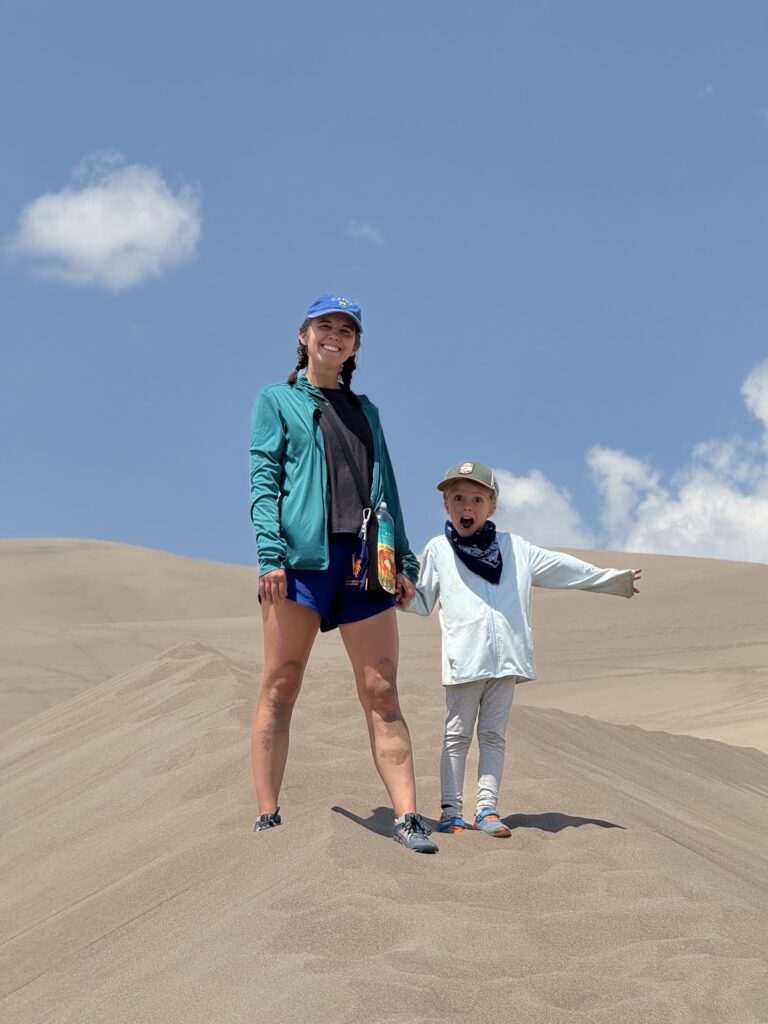
- Sun shirt. Even though it’s hot, it’s best to cover your skin if you can. It will protect you from burning, but can oddly actually keep you cool. Go for a lightweight, wicking UPF fabric. This one for kids is so lightweight and perfect. (I got mine last minute and didn’t love it, so I don’t have a personal recommendation worth linking.)
- Tennis shoes. You definitely want your feet and ankles covered and protected from the hot sand. Any sneaker and tall socks should do the trick. I personally wore Nike Gortex and would NOT recommend them. The waterproofing made them extremely hot. Plus, the sand worked its way inside the waterproofing barrier and filled up entirely with sand. I still can’t get it all out.
- Hat & Sunglass. Again, filed under sun protection. These items are both for comfort and safety.
- Shorts or pants are fine. My child and husband wore pants. I wore shorts. I think either is fine. If you wear shorts, just be sure to put on sunblock.
What to Bring to Great Sand Dunes
On top of dressing properly, you’ll also want to pack properly. Here are a few things to be sure to bring with you when you’re out in the dunes.
- Water. The National Park Service recommends 1 liter, per person, per hour. When you’re out in the dunes, you’ll definitely want at least that. I’d also up that and suggest you add a sugary or electrolyte beverage on top of that, like juice or Gatorade.
- Bandana. I would call this a must-have if you are planning on doing sand sledding or boarding. Tie it around your face to keep the sand out of your mouth. (The sun glasses mentioned in the section above are also helpful to keep the sand out of your eyes.) I have these basic ones, but any scrap of fabric will do.
- Sandals. These can actually stay in your car, but you’ll want them hand when you’re done. After you come out of the dunes, you’ll be covered in sand. If you wash off the sand, you’ll be all wet. Putting on a pair of all-weather sandals after that feels so good. These sandals became my entire personality on this entire National Parks trip.
- Sunblock. Ideally, you’re mostly physically covered, but you still want to be sure to put sunblock on anything that’s exposed. I really like this face sunblock as a base and use this powdered sunblock throughout the day.
- Bug Spray: If you’re visiting earlier in the summer, pay attention to the mosquito ‘forecast.’ In June & July, they can get really bad near the creek.
- Tubes & floaties. May and June is the best time to visit the creek. If you are visiting during these months, pack some pool floaties to enjoy the flow.
Is Great Sand Dunes Worth Visiting?
We had a great day and a half at Great Sand Dunes National Park. However, with it’s remote location and limited scope of activities, it is easy to wonder if it’s worth visiting.
This question has a lot of layers, but my short answer is that for most people, it is probably only “worth” it if you can pair it with a few other National Parks or attractions.
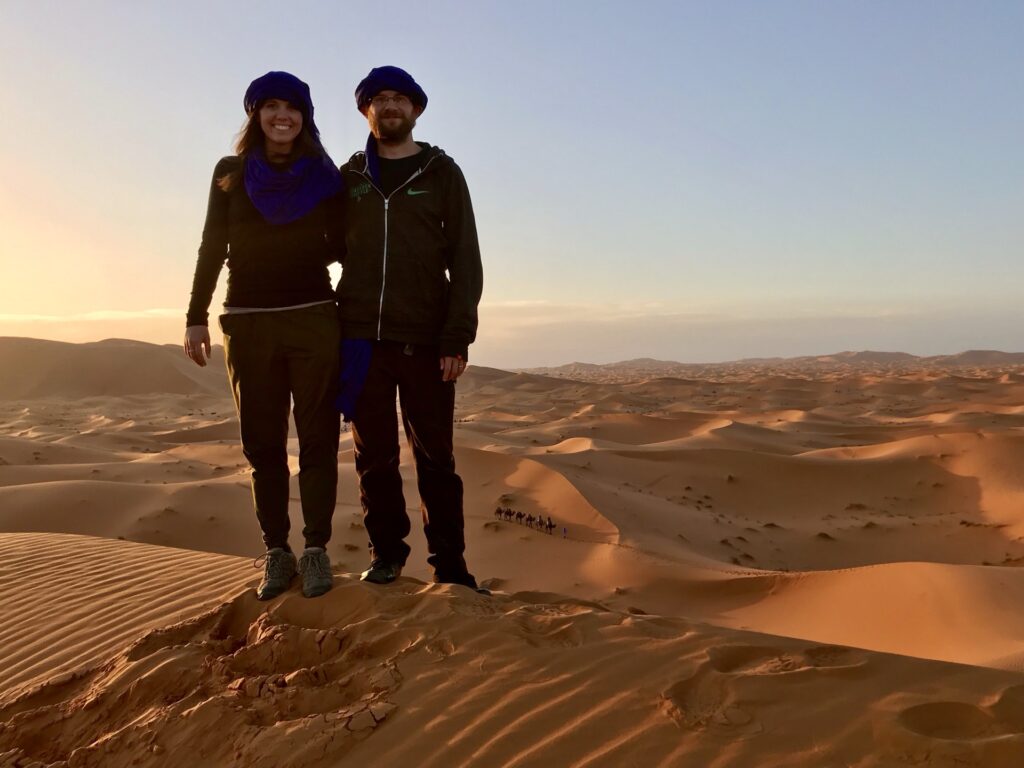
Great Sand Dunes National Park is unique and otherworldly. It offers a landscape that you won’t find many other places in the US. In fact, I’ve traveled to Morocco and Dubai to see sights like this, and those flights are much longer. It’s definitely impressive to see.
The limiting factor of Great Sand Dunes National Park is how much time you need to see it. Quite frankly, you can see and experience the park’s main attractions in just a few hours. Because of it’s isolated location, you risk spending 80% of your time on transit and 20% of your time at the actual site. (Is this what they call the 80/20 rule?)
So, in order to bulk up the value, combine it with other attractions or National Parks. Colorado has 3 other national parks: Rocky Mountains, Mesa Verde and Black Canyon of the Gunnison. Moab is also just across the boarder in Utah, and there you’ll find Arches & Canyonlands.
Beyond National Parks, you could simply pair it with a trip to Denver. For that leg of our trip, we added in a river rafting trip on the Arkansas River, ropes course outside of Denver, and even a Rockies game to wrap things up.
So yes, it’s worth planning a trip that includes Great Sand Dunes National Park, just maybe not only Great Sand Dunes National Park.
Interested in other National Parks?
Check out some of the other National Parks we’ve covered on Emjoyable Explores.
Leave a Reply