
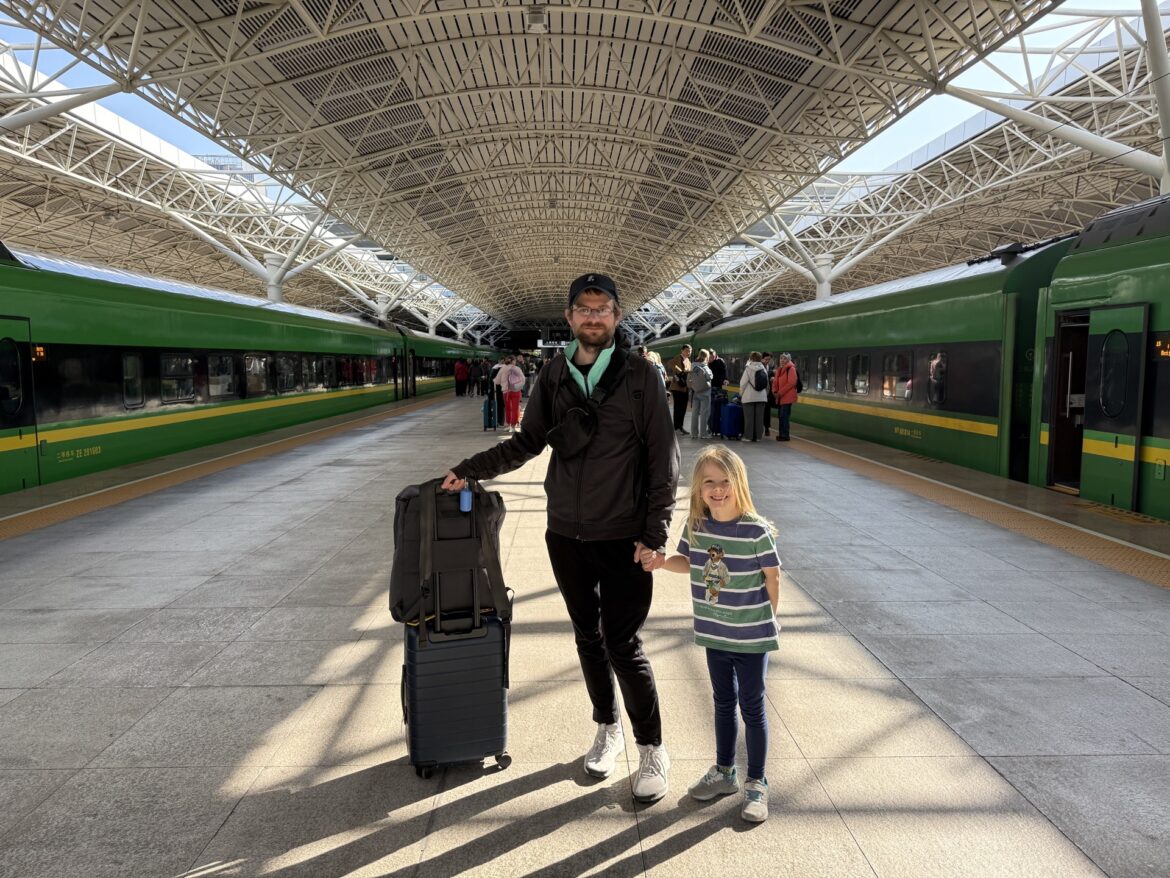
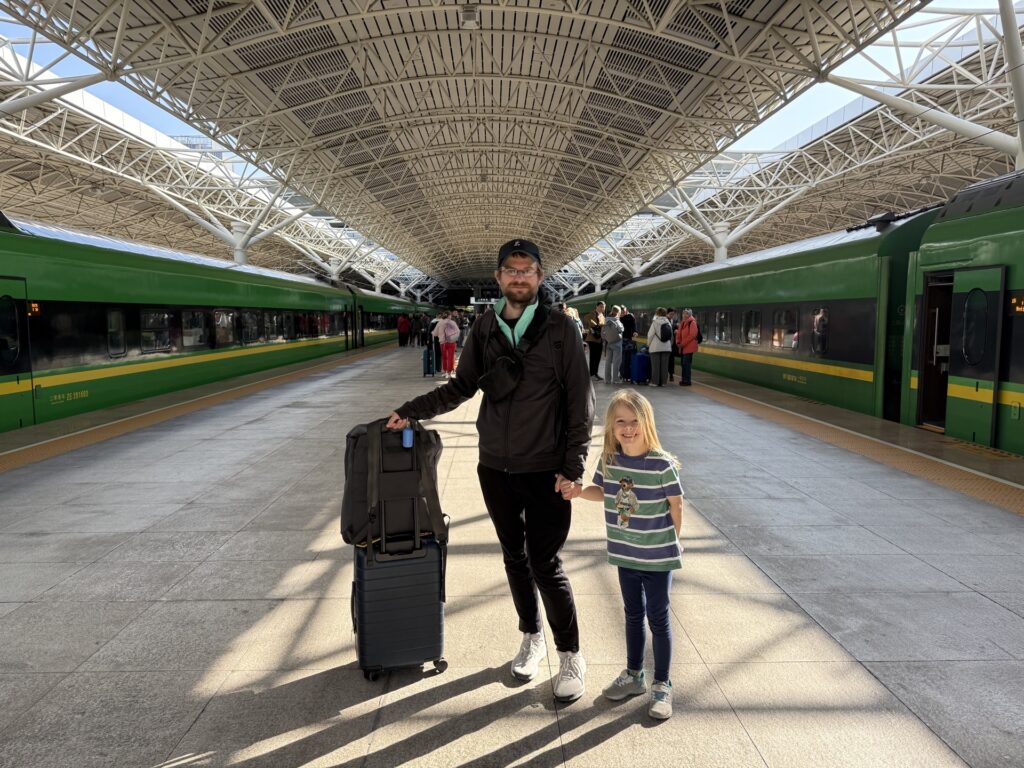
China Railway operates a high-speed train that travels from Beijing to Shanghai overnight in about 12.5 hours. While second class seats are available, most of the train is sleeper cars. In this post, we’re going to review our experience in the Soft Sleeper cabin including booking, station navigation on both ends, and the complete onboard experience.
Specifically, we rode the China Railway D9 Train that departs Beijing South Railway Station at 7:36 PM and arrives at Shanghai South Station at 8 AM.
For a first-hand account of the overnight train from Beijing to Shanghai in the Soft Sleeper cabin, keep reading.
Why take the Overnight Train from Beijing to Shanghai
There are several ways to get from Beijing to Shanghai, including daytime trains, overnight trains, and flights. The overnight the train is not the fastest, but it is usually the cheapest and ultimately the most efficient. This is what I mean by that.
Let’s start with cost. The flight from Beijing to Shanghai is typically about $200 USD. The daytime train is $100 to $150, depending on class. The overnight train — even at 3rd-party tourist prices — comes in at about $100 for the sleeper cabin. On top of that, by taking the overnight train you’re also saving on the cost of a hotel night.
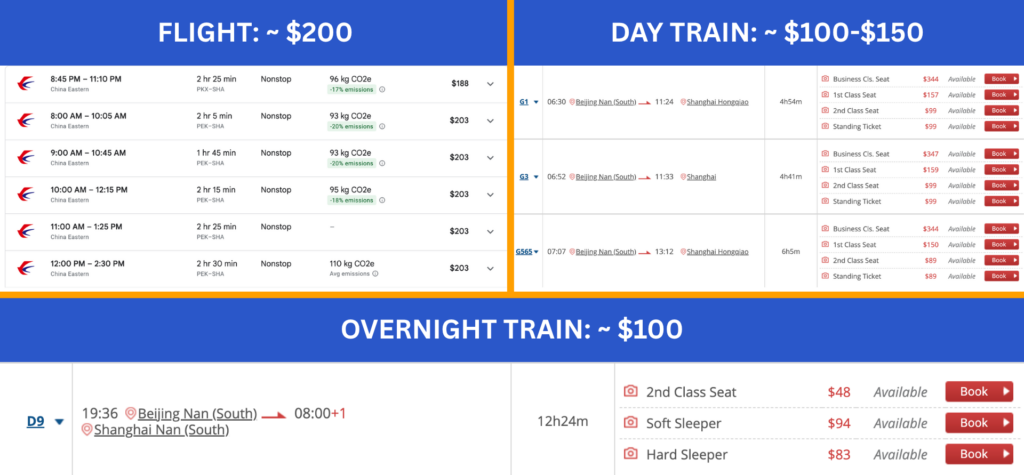
The overnight train is the longest option, no matter how you cut it. The flight is around 2 hours, and even factoring in transit time and airport time, it still takes half as long. The daytime bullet train is significantly faster than the overnight train, making the same journey in as little as 4.5 hours, plus station time.
However, the time on the overnight train is spent overnight. When you take the overnight train, you won’t waste any of your travel days on transportation. Spend the day in Beijing, hop on the train, wake up in Shanghai and hit the ground running. Efficient.
Most importantly though, it’s just fun. If you don’t think it’s at least little bit fun, you’re probably choosing a different option. But if a moving hotel room on rails makes you feel alive — as it does for my husband and 5-year-old-child — you’re probably making the right choice.
Read more! We also rode with China Railway on the overnight train Hong Kong to Beijing. That one is the fastest train in China, and features their new sleeper cabins, which were amazing.
Booking China Railway as Foreigners
Due to language barriers, firewalls, and credit card problems, booking things for China from outside of China is often a difficult or impossible task. China Railway bookings falls under this category. For that reason, we recommend booking through a third party. We used and recommend China Highlights. You’ll pay more, but they’ll handle the ticket purchase for you and you’ll get English support.
Here’s how that process worked for us.
We booked our China Railway tickets online through China Highlight’s train booking portal. The website is in English and is easy to navigate. We entered our route and date details and then selected the train and seat type.
There are several different options for overnight trains between Beijing and Shanghai. Different trains run at different times and have different seat types, bust most importantly there are multiple departure and arrival stations in each city. We chose the D9 train, because Beijing South station was the most convenient from our hotel in Beijing. (We stayed at The Kerry Hotel, which we’ve dubbed the best hotel for families in Beijing.)
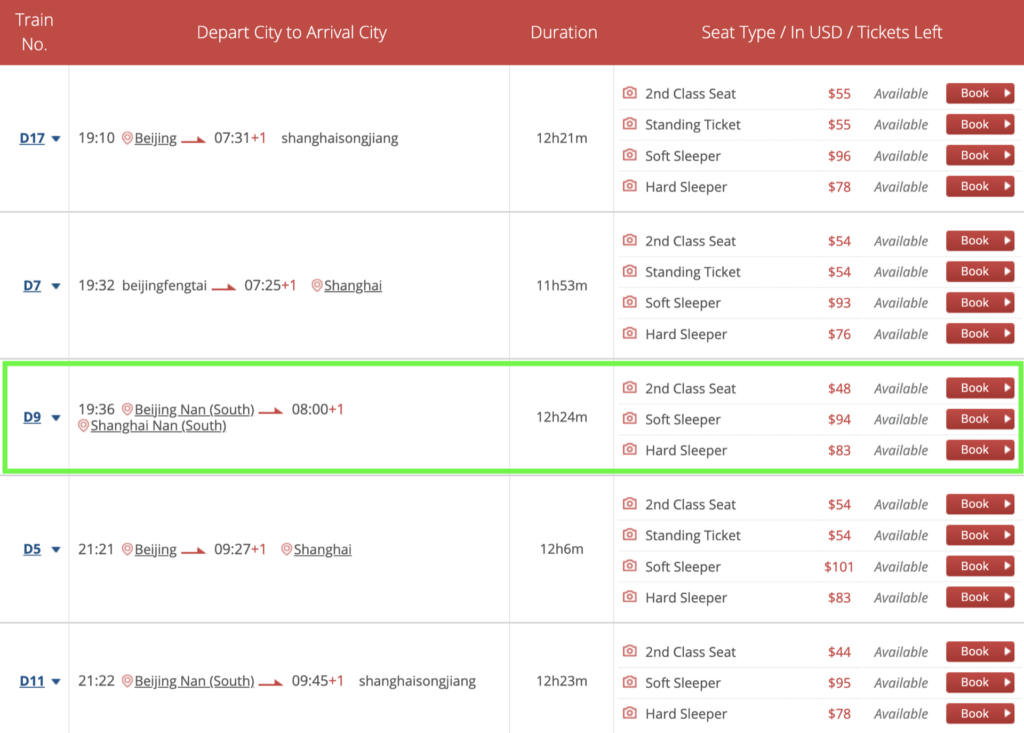
After we made our selection, we had to enter the traveler information for each ticket. This included name and passport number for international tourists. Make sure you enter this correctly! Your passport will be your ticket, so it’s essential the information matches.
We had to submit payment to complete our booking, which included the ticket fee and an extra service fee. Payment was processed through PayPal, so we didn’t have to worry about foreign transaction fees on our credit card.
We could “book” months in advance with China Highlights, which is basically submitting our ticket request. China Railway does not actually release tickets until 15 days before departure. Once tickets are released, China Highlights booked the tickets on our behalf.
Exactly 14 days prior to departure, we received our booking confirmation via email. This email included our eTicket number and our randomly assigned cabin and berth details. The eTicket is tied to our passport.
Technically, all we needed was our passport to board the train. However, it’s a good idea to also get a printed boarding pass at the station. We had ours printed previously in Hong Kong when checking in for our Hong Kong to Beijing train a few days prior, but you can have them printed at the desk in Beijing as well.
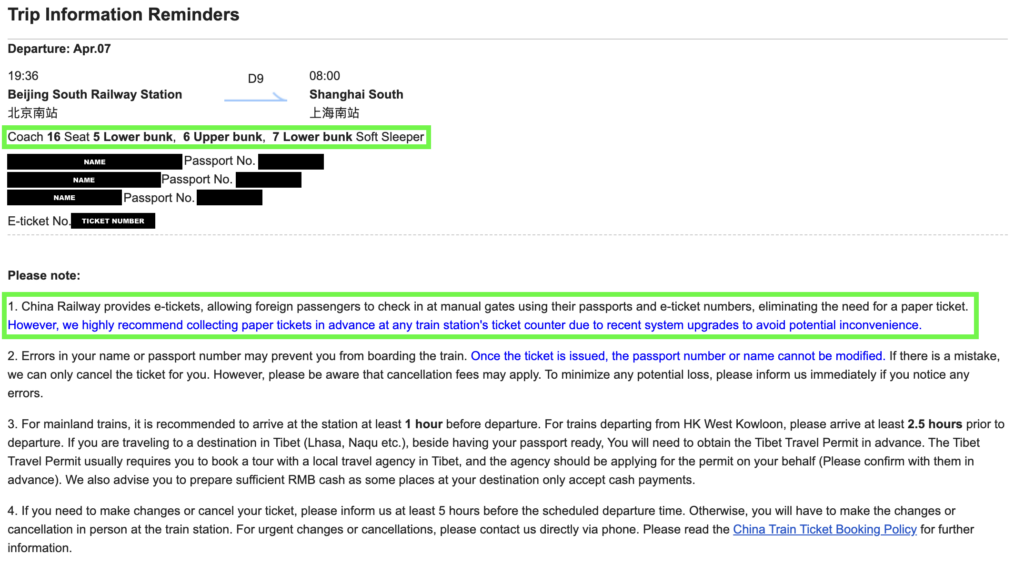
Overall, our experience booking tickets with China Highlights was incredibly smooth, and we’d highly recommend it for convenience and peace of mind to foreign tourists like ourselves.
Beijing Travel Day
We are huge fans of Beijing. We’ve visited once before for Chinese New Year, and it was a delightful disaster. Despite traveling professionally, we still find China — Beijing specifically — to be one of the more difficult places to travel. That’s one reason why we love it so much. It always leaves us wanting to come back and do just a little bit better.
This time, we arrived in Beijing only one day prior, and spent the first day exploring the Mutianyu section of the Great Wall. After one night at the Kerry Hotel, we woke up and packed our bags. We checked our bags with bell services and went off to explore the city.
Technically, my day started a few hours earlier with a run around Ritan Park. (I was training for the Boston Marathon.) If you have the chance to experience a Beijing park in the early morning, you should take it. Chinese park culture is such a vibe and Ritan Park specifically attracts a local crowd practicing Tai Chi, walking laps, and relaxing at the Temple of the Sun.
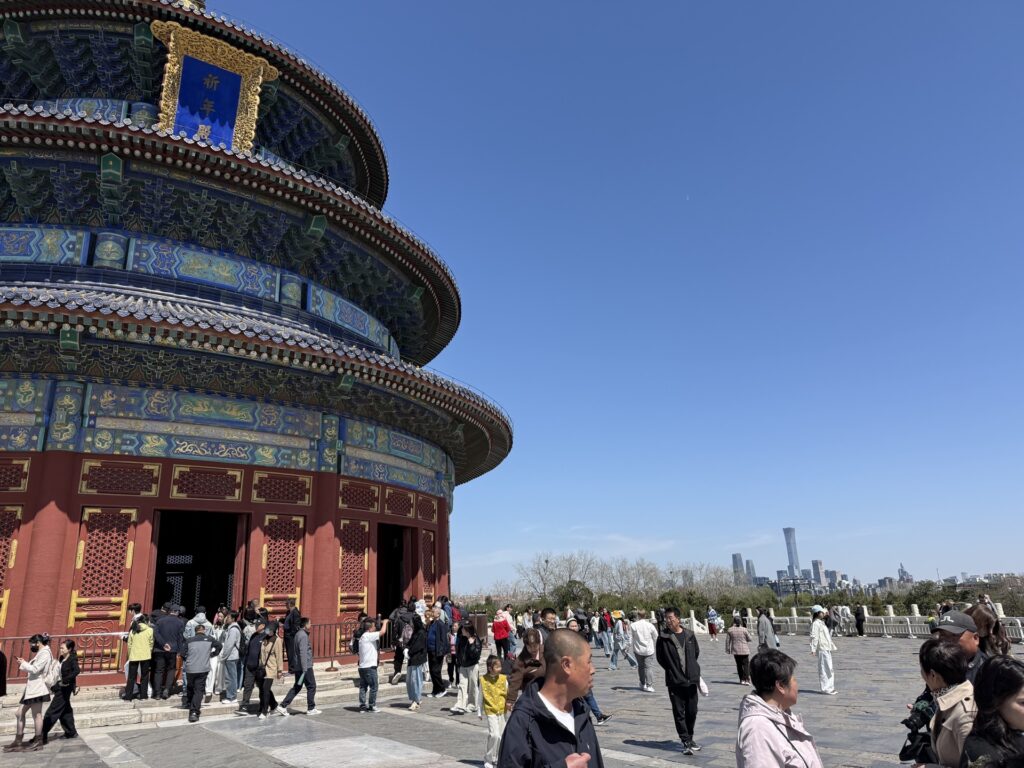
Our main activity for the day was the awe-inspiring Temple of Heaven. We actually went here once before, but visited on a Monday when all of the temples were closed. This time, we actually got to explore the temples from inside the gates. Next, we made our way to Qianmen walking street for coffee and snacks. Then, we hopped on the train and took a quick stroll through Wangfujing.
Read more! Our Beijing Subway Simple Guide explains exactly how to take the train in Beijing, including some tips that will save you a ton of time.
We managed to fit in an entire day of sightseeing before switching into transit mode. Around 4:30 PM, we returned to our hotel to collect our things. The hotel was a short walk from the Guomao subway station, so we decided to just take public transit to Beijing South Railway Station.
Beijing South Railway Station Experience
There are several different train stations in Beijing, so first be sure that you’re at the correct one. This specific train — the D9 overnight train — was out of Beijing South Railway Station. (Use Amaps for directions in China.) We arrived at Beijing South Railway Station at 6:04 PM.
It’s a huge station and serves a variety of train lines. The subway arrives on the lower level, above that is the main concourse level, and then above that is the main departure hall and boarding gates. There are signs around the station, but we found the layout and navigation to be confusing overall.
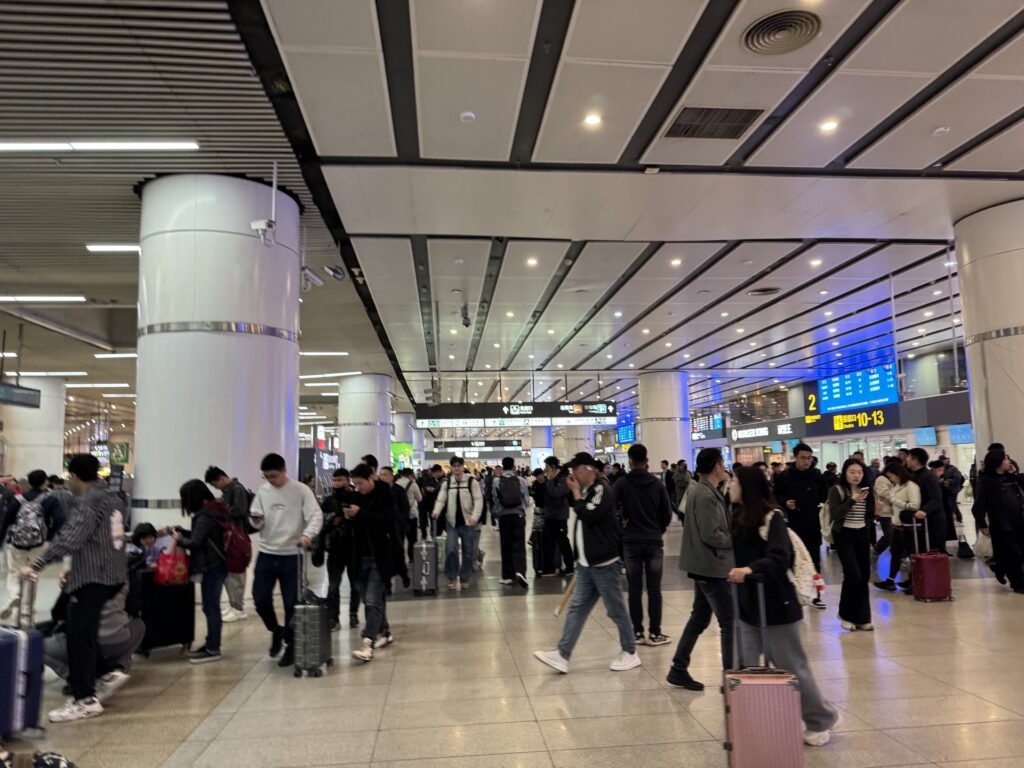
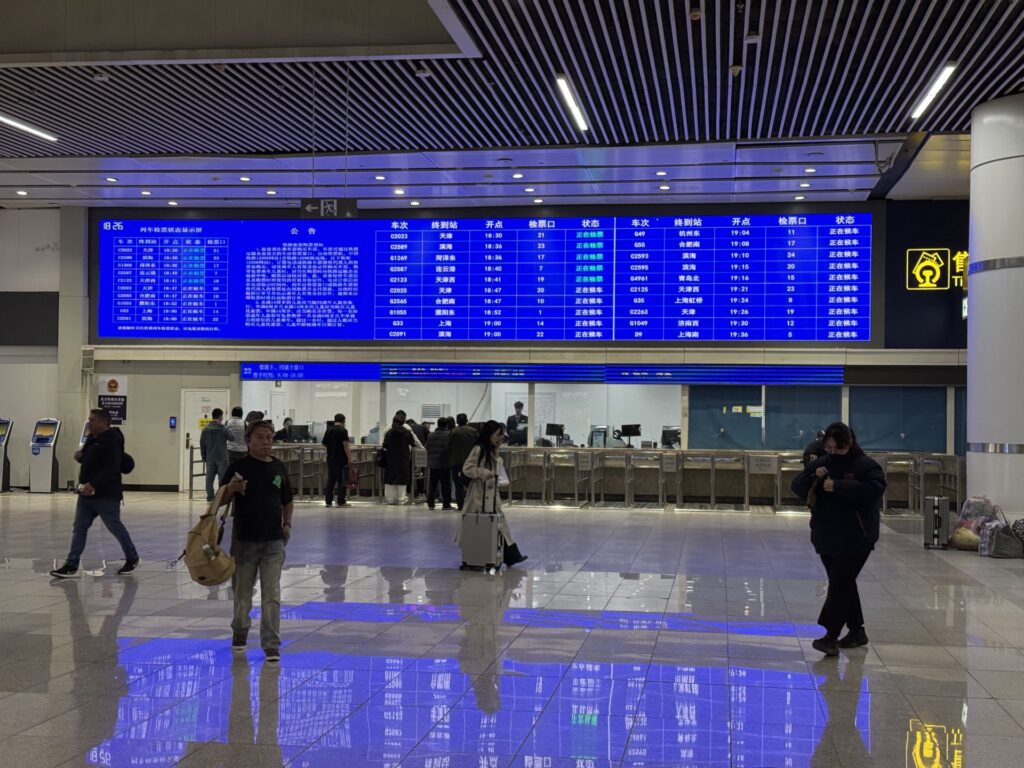
After exiting the subway, we rode up one level to main concourse. On the main level, there is a huge departure board and customer service desks. If you haven’t printed a copy of your ticket yet, you’ll want to do that here. (Your passport is technically your ticket, but having a printed ticket can be helpful should any problems arise.)
There are also several restaurants and convenience shops on the main concourse level. Most of these restaurants are fast-casual, but not primarily take away. There are more takeaway options after security in the departure hall.
We ate at the only restaurant we found on the main concourse that sold vegetarian noodles, and then walked over to the security checkpoint. The line was short and the screen was quick. It was the typical airport style security where your bags go through a scanner, and you go through a metal detector. It only took a few minutes.
After we cleared security, we took the escalators up to the 2nd floor. (It’s also called the 1st floor, but it’s one floor up from the main concourse.) This floor serves as the main waiting area with lots of seating and direct access to the departure gates. There are several quick-service restaurants here as well, including western classics like McDonalds, Pizza Hut and KFC. We grabbed some apple slices from McDonalds — the only fresh fruit we could find at the station — and shortly after that, our gate was posted.
Boarding the Train from Beijing South Railway Station
Once our gate number was posted, we quickly made our way to the gate. I don’t remember if they made verbal announcements as well — I’m sorry! The gates were all clearly numbered and easy to find.
The lines at the gate were a little chaotic. Most of the gates were eGates, but there was a shorter queue at the agent-assisted gate. However, this gate seemed to primarily be for tour groups. The seats are assigned, so it technically shouldn’t matter how quickly you get through the gate.
To use the eGate, you scan your passport as your ticket and your good to go. My husband and child went through the eGates with their passports and had no problem. However, when I scanned my passport, it didn’t go through. I ended up having to wait several minutes for the agent, who also scanned my passport and received the same error. After typing a few things into her screen and reviewing my printed ticket, she eventually waved me through.
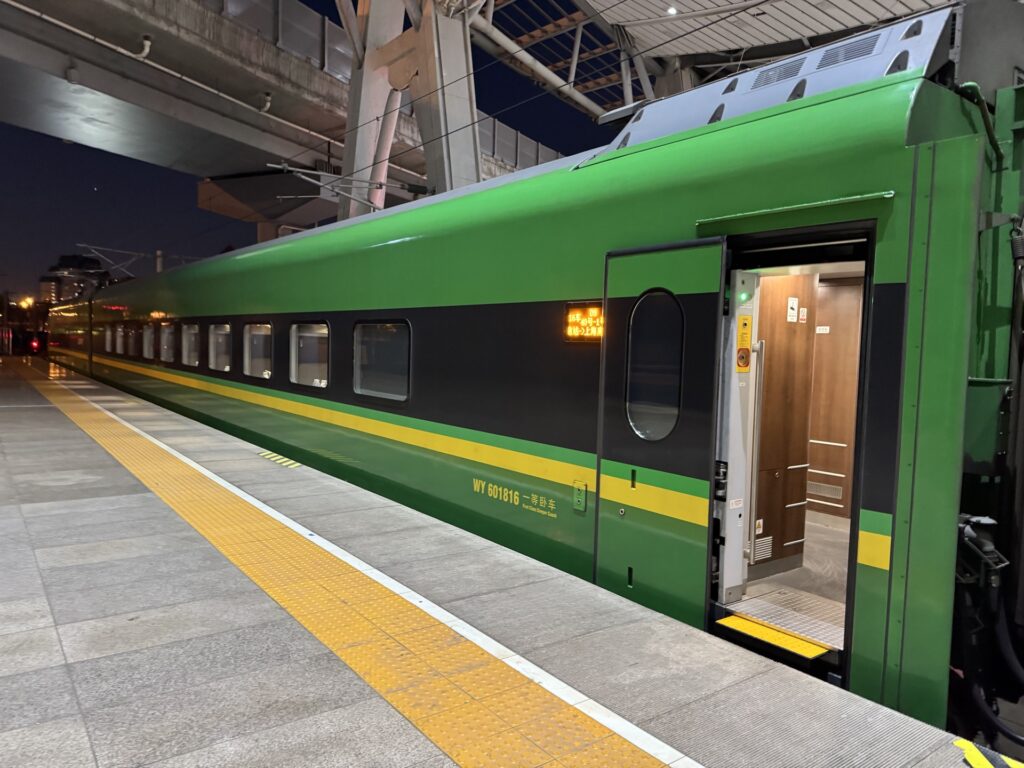
After the gates, we followed an escalator down to the tracks. Our tickets listed the specific coach and bed numbers. The coaches were all clearly numbered — ours happened to be at the very far end of the train of course. Once we boarded the coach, we looked at the signs on each cabin that listed the bed numbers.
Tickets are sold by bed, not by cabin. We had three beds in a four-bed cabin. When we arrived, our roommate was already settled. (I can’t recall anything notable about this particular cabin mate, so I’m sure he was perfectly reasonable.)
Soft Sleeper Cabin Review on the Overnight Train from Beijing to Shanghai
The Soft Sleeper Cabin on the D9 overnight train from Beijing to Shanghai is fairly standard, as far as overnight train cabins go. It isn’t China Railway’s newest product (which we’d just experienced a few days prior), but it’s still a very clean and comfortable experience.
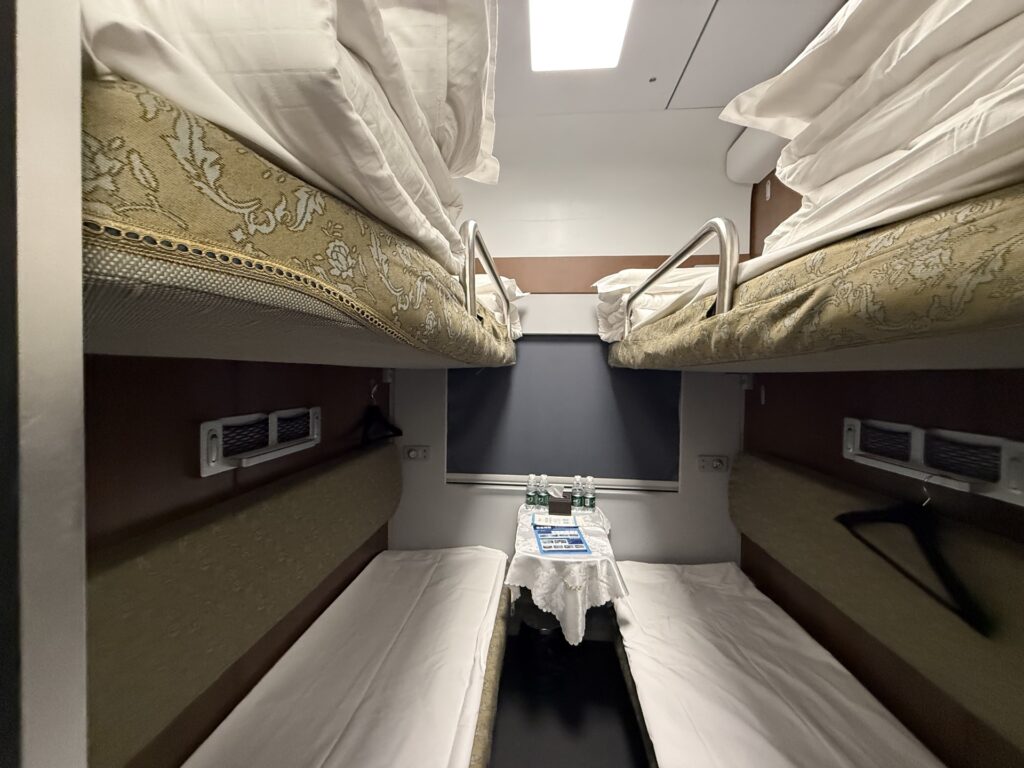
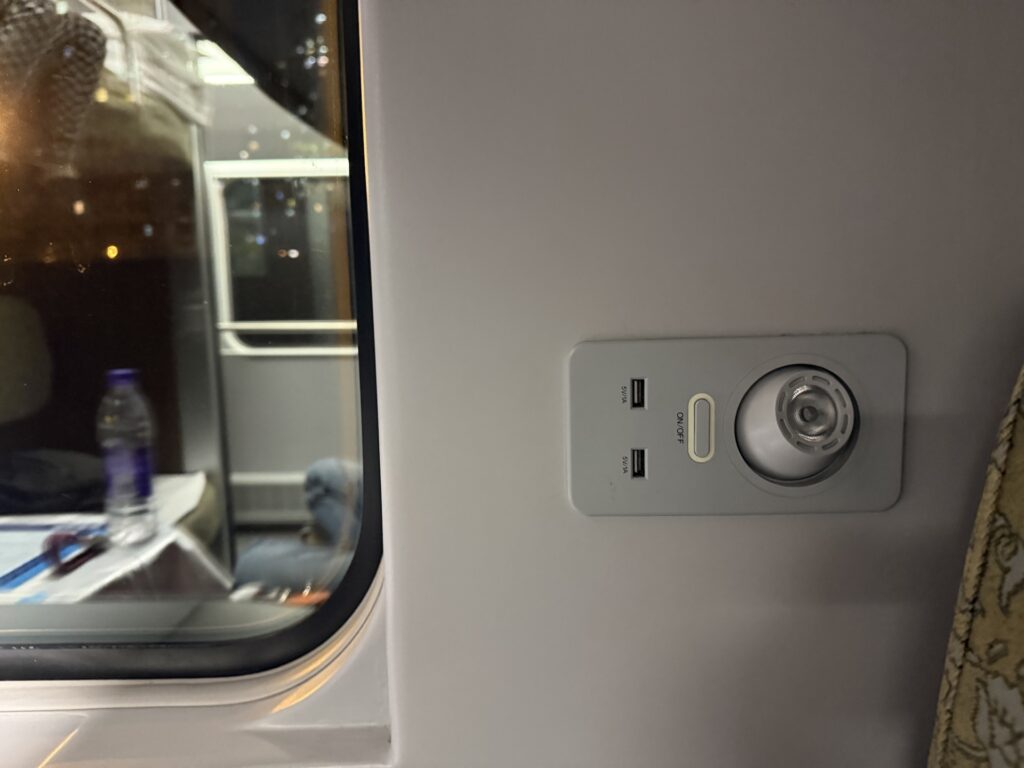
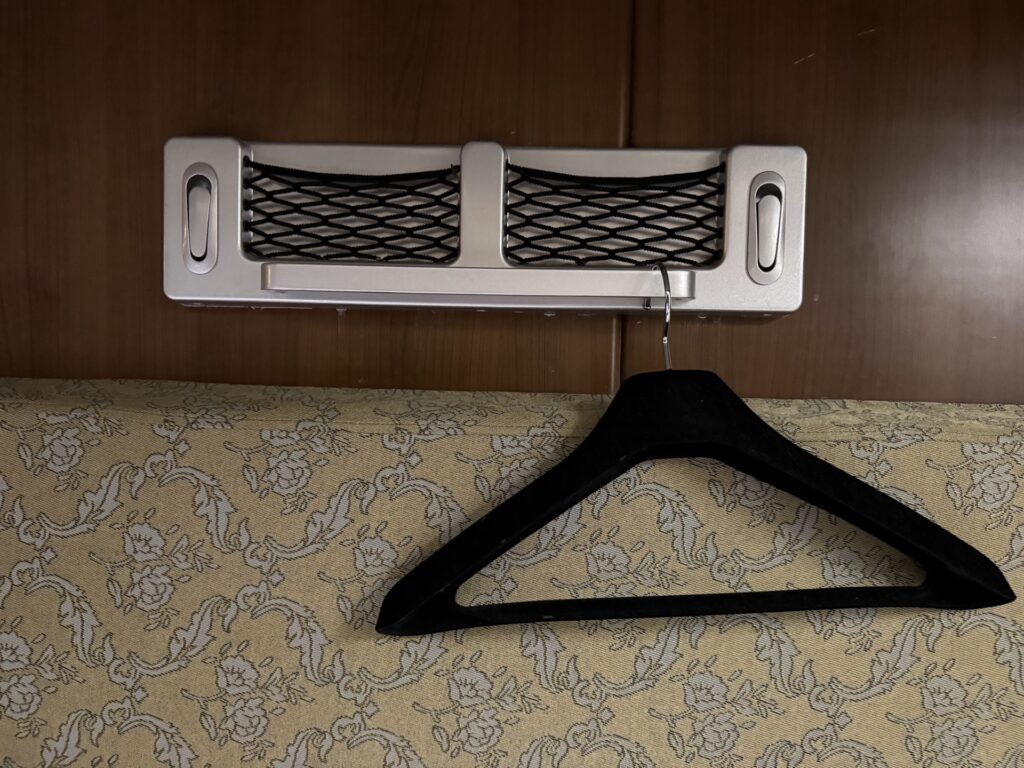
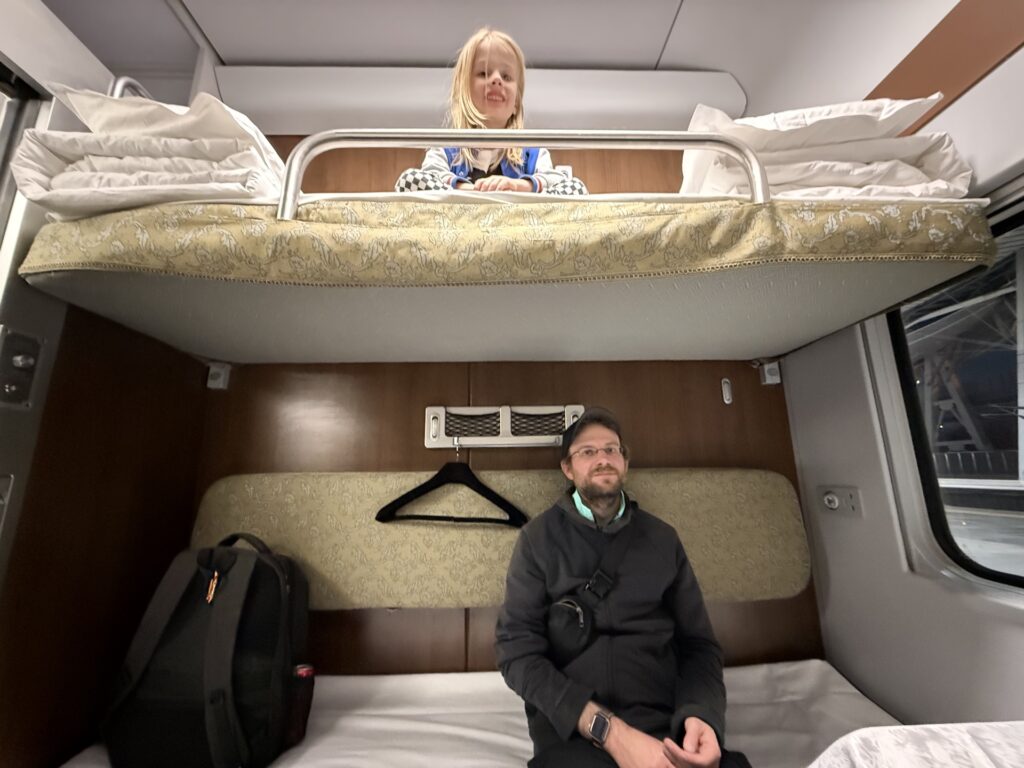
Each cabin has four bunks — two upper, two lower. Each bed had fresh sheets, and includes a pillow and duvet. Near each bed, there was a reading light and two USB ports. There was also a small shelf, hook, mesh storage space and hanger to organize your personal items.
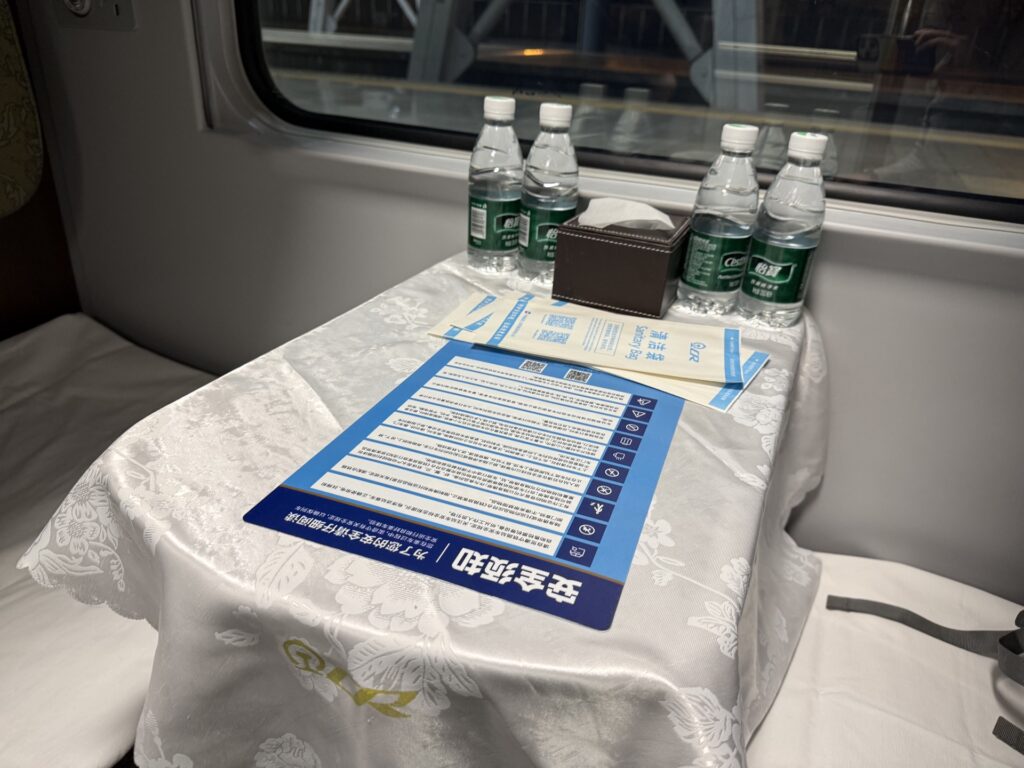
There was a small table in the middle of the cabin, which we stocked with four bottled waters. This table was smaller than the one on our other train and not quite as practical, but it was fine for storing small items.
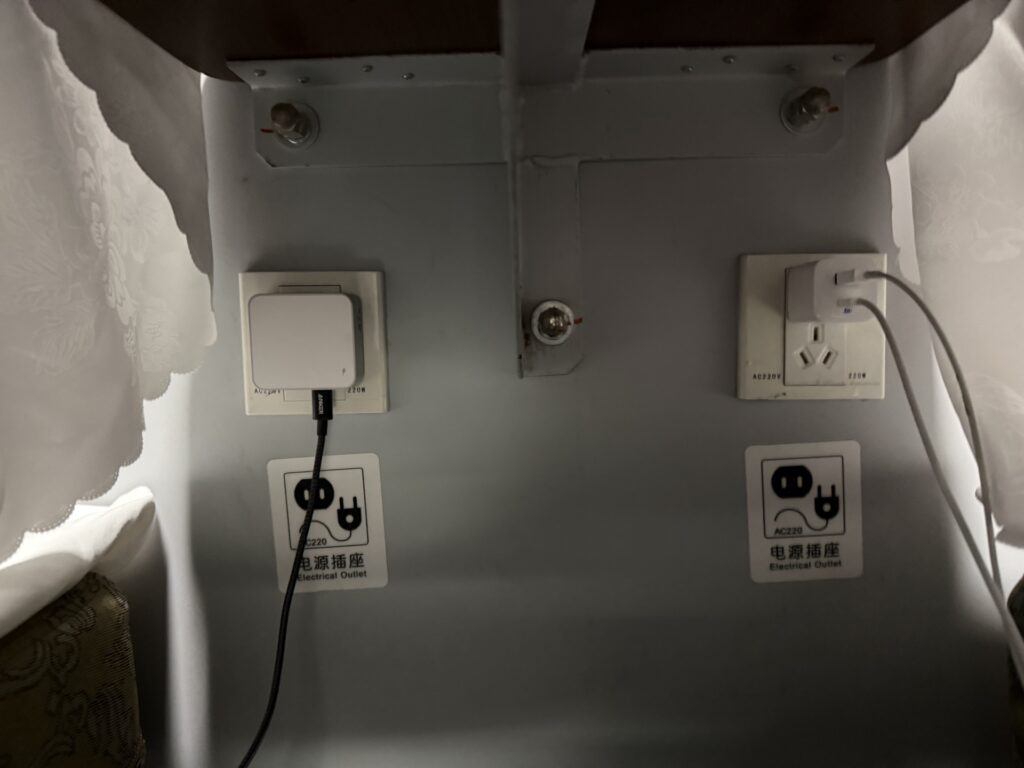
Below the center table, there was four more AC outlets. Two had standard US inputs (Type A) and two had standard China inputs (Type I).
The cabin had a sliding door for privacy and sound reduction, plus a window with black-out shades. The cabin stayed very dark when they were both closed. It was also pretty quiet, but the loud white noise of the train had a lot more to do with that than the door.
The cabins had AC, and stayed a comfortable temperature throughout the night. It’s still a small space though, so the air does start to feel a bit stale after a while. When I left the cabin in the morning, the burst of air of the hallway definitely felt refreshing.
You wouldn’t tell by looking at it, but the storage in the cabin was actually great. Luggage for all four cabin passengers easily slid under the lower bunks, leaving plenty of space on the beds for sleeping.
The cabin and beds were overall very comfortable and I slept great. Even though this cabin was older than their newer model, I didn’t feel like it was a downgrade in terms of comfort. The newer trains had a bigger train table, nicer table cloth, and slightly more substantial pillows, but I found both of these soft sleeper cabins to be a premium tier of overnight trains. (They are as nice as you can get before you enter ‘luxury’ train territory, I’d say.)
If I had any complaints about the setup of this cabin, it would be that the only AC outlets were under the table. If you were on the top bunk and didn’t have USB cord, charging a device and keeping it accessible would be annoying.
My other nit would be that there was no trash can in the cabin. There were small sanitary bags, but otherwise you had to cary your trash out to the bathroom area trashcans.
Other than that though, the cabins were clean, comfortable, and easily organized.
A Note On Riding With Kids
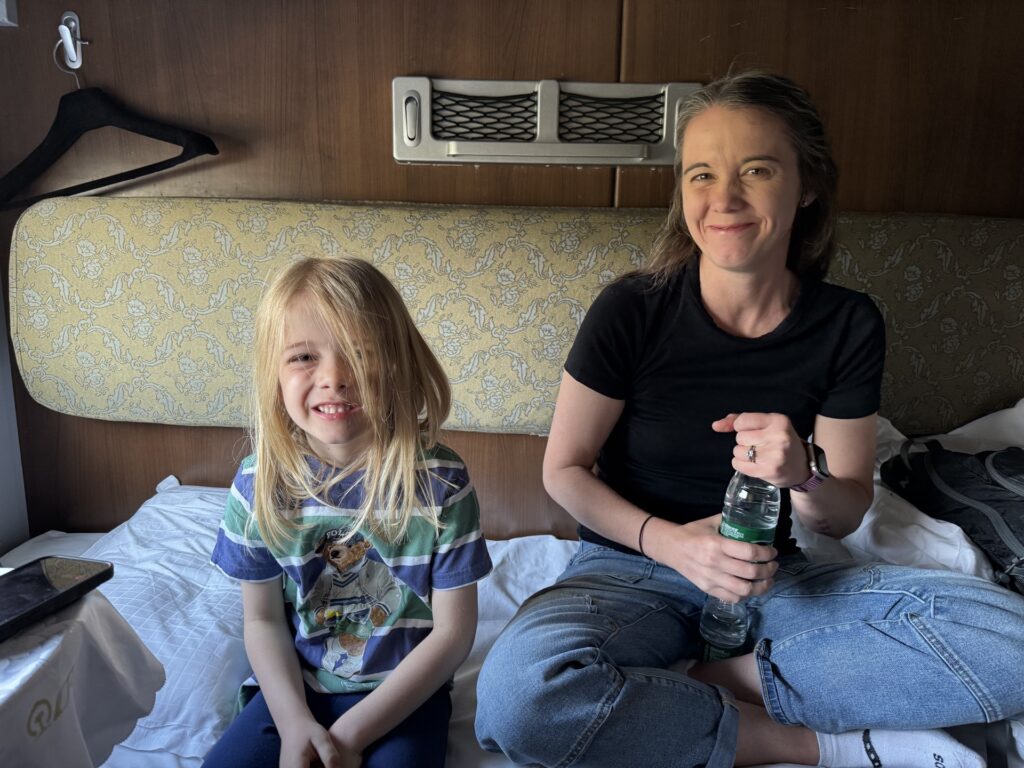
We rode this overnight train with our 5-year-old child. They have ridden on several overnight trains and have always loved them. Somehow, this kid sleeps like a rock and has slept through every disturbance we’ve ever faced, which works out well for everyone.
Only recently have we started to let them sleep on the top bunk — a promotion they are very excited about. We often worry about the bedrails, because they never seem substantial enough to keep a child from falling off. Our child tends to sleep against the wall, which helps us feel a little more comfortable.
On this particular train, you can see that there is a simple metal bed rail in the center of the bed. We reinforced this by rolling up half of the duvet to create a bigger barrier. This worked out for us, but I’d still be cautious in the top bunk with kids much younger or who are more chaotic sleepers.
Train Amenities & Features
The train itself is has plenty of other features outside of the cabin.
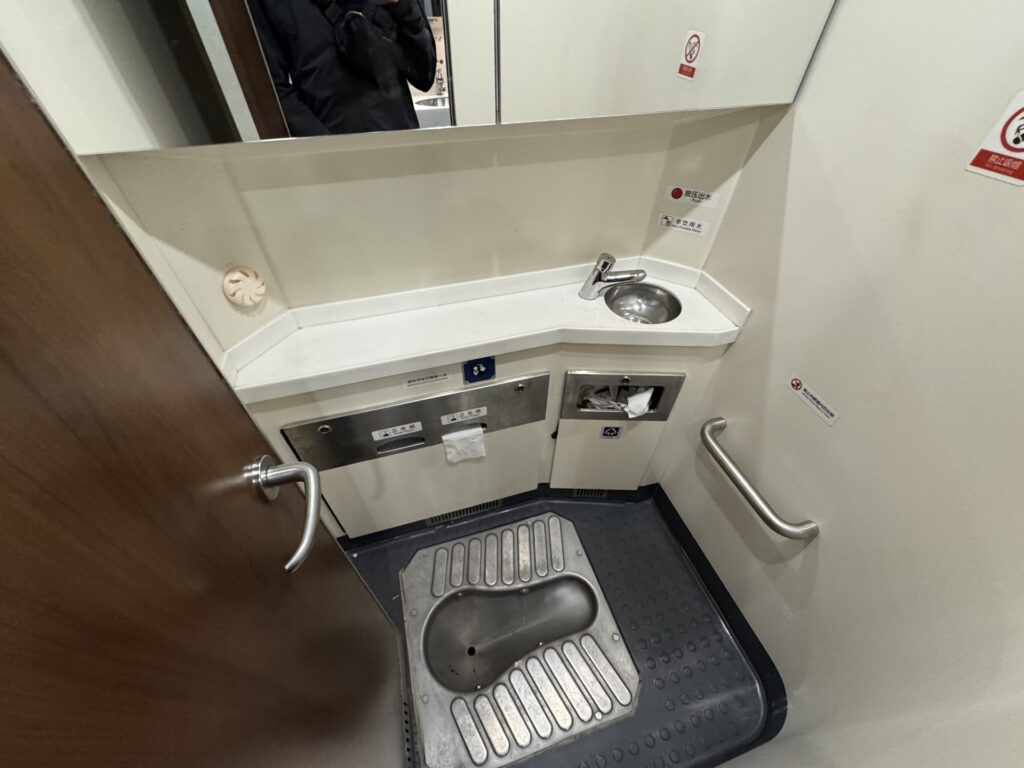
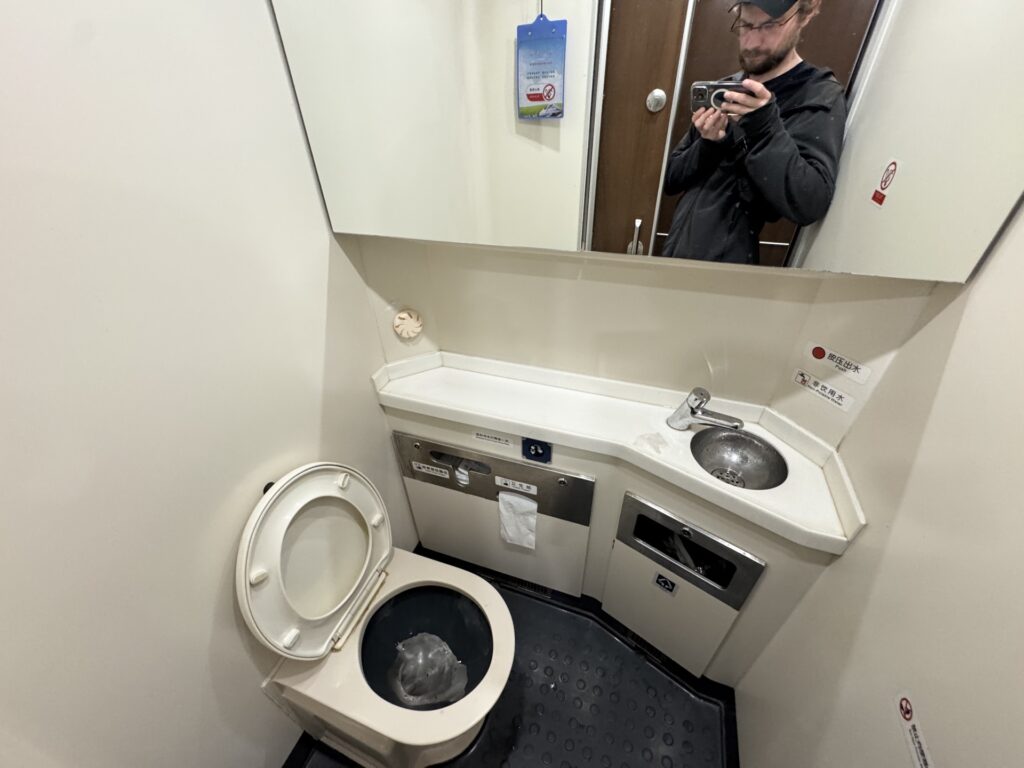
Let’s start with the essentials: bathroom and sinks. There were bathrooms between every car — including western toilets and “squatty potties.” Fortunately for us, most of the train was filled with Chinese travelers who prefer the later, so we never waited for our preferred toilet type.
On one end of each car, there was separate sinks outside of the bathroom stalls. These are so useful because people can brush their teeth, wash their face, and overall get ready for the night/day without taking up a bathroom stall. (As someone who needs to wash their face immediately upon waking up, I very much appreciate this.)
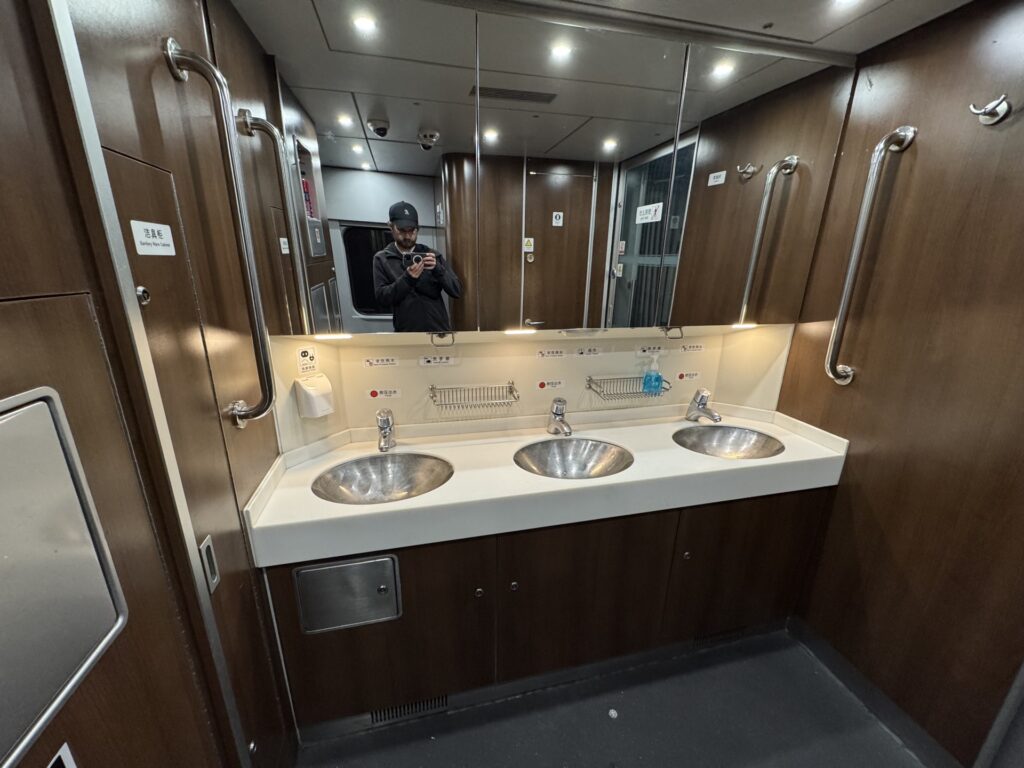
Near the sinks in every car, there was also a hot water dispenser. This was perfect for hot tea, instant coffee or cup of noodles. It’s worth noting that there was no cold water dispenser for drinking water. (But remember, there was water provided in the cabins.)
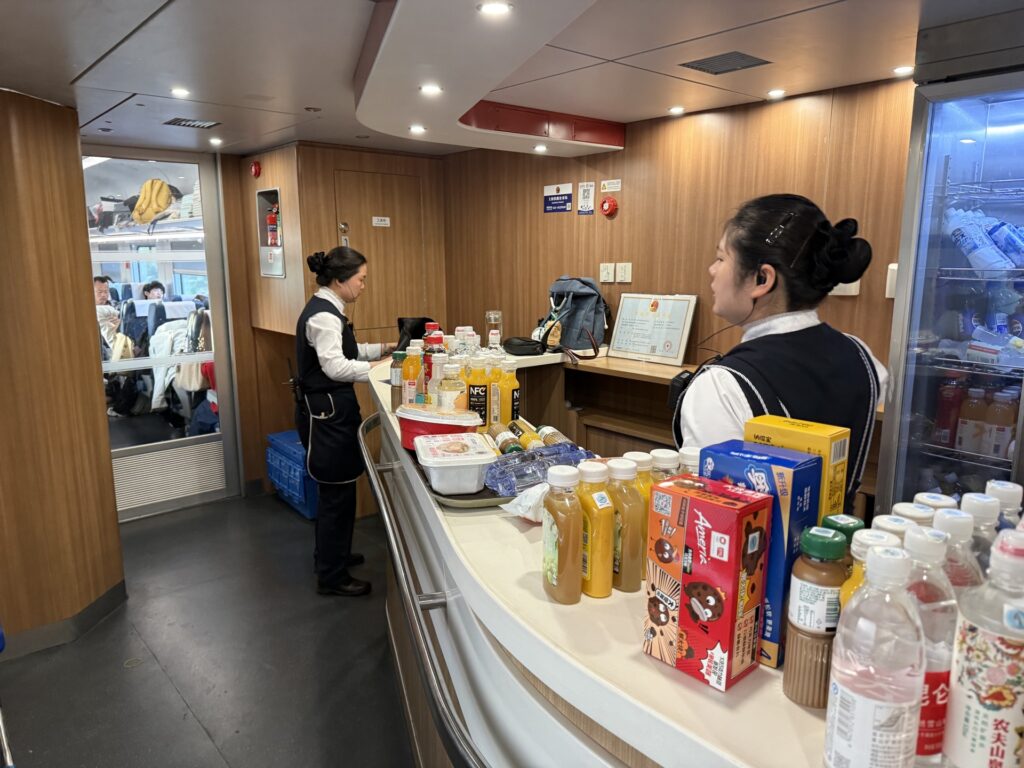
Didn’t bring your own tea or noodles? That brings us to the cafe car. The cafe car separates the sleeper cabin cars from the seat cars. It was stocked with a wide variety of hot and cold beverages and snacks. I couldn’t find any official hours, but they were open pretty late into the evening and were fully operational when I arrived at 6:30 AM. I snagged two bottled Starbucks Iced Coffees, which felt like an exciting find.
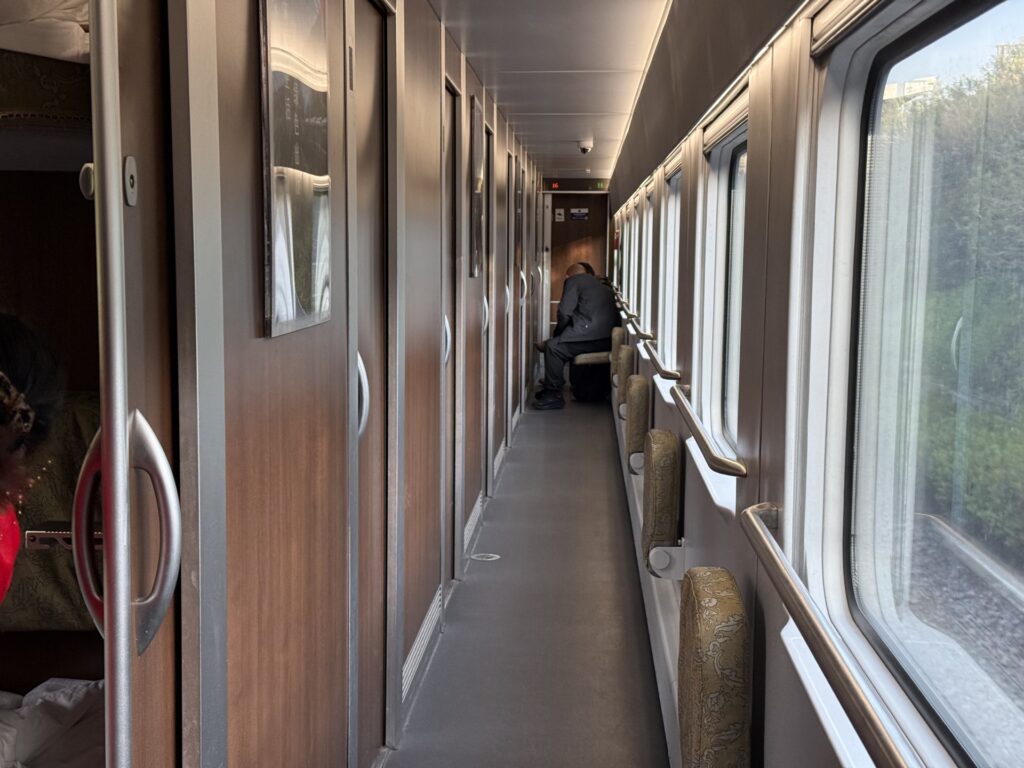
One final feature to note is the hallway seating. The cabins are one one side of the train, and the walkway is on the other. This hallway is along the windows, and there is a small folding seat outside each cabin. These seats were popular in the morning with early risers. It’s a great option if you want to enjoy the view but don’t want your cabin mates to hate you for opening the window and flooding the cabin with light.
The thing that stood out to me most about this experience with China Railway was how incredible the cleaning staff was. They kept all bathrooms and sink areas impeccably clean throughout the entire journey. I often worry about using the bathroom on trains in the morning, because they’re usually gross by that point, but that was not the case here. Everything was always freshly cleaned and kept incredibly tidy.
I threw “xièxiè” out as often as possible, but the staff usually looked confused why I was thanking them for doing their job. They must not have understood my Midwestern need to over-thank people.
Arrival at Shanghai South Station
In our experience, China’s super-fast trains are incredibly efficient and on time. We were scheduled to arrive in Shanghai at 8:00 AM and were off the train at 8:10. (That included some time to gather our bags and wait our turn to exit.)
Shanghai South Station is the final stop. This station serves both China Railway trains and the Shanghai Metro. It was very clearly marked, and we easily followed signs to the Metro side. We quickly found a Metro ticket kiosk, which had an English option, and purchased our tickets.
In case you missed it, Shanghai is a city of over 30 million people and we were arriving at at main station at 8:30 AM on a Wednesday. Rush hour. The station was wildly crowded.
But because it’s China and they’re living in the future, digital sign showed a precise countdown to the next train and upcoming trains. Contrary to stereotypes, people formed neat lines by each door and boarded the trains in order. No one held the doors open or blocked them from closing, which meant trains could leave quickly and arrive quickly. It was beautiful.
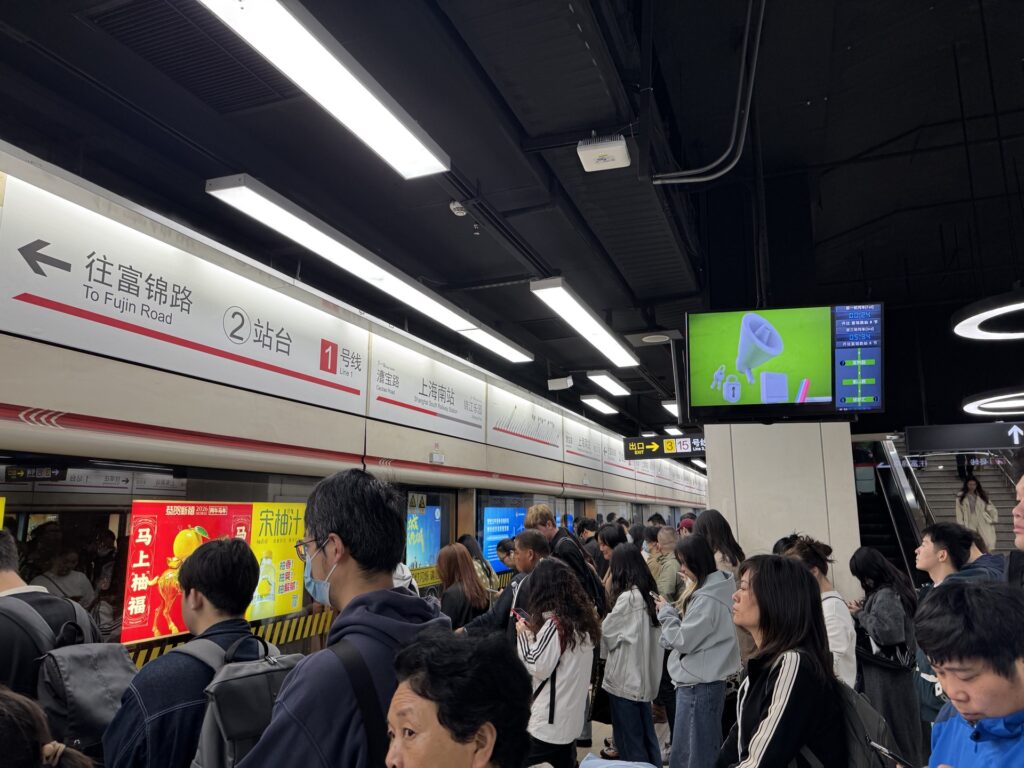
Despite the organization, each train was still packed full and we had luggage to deal with. A few trains filled up and went before we could finally board. We were prepared to split up, and my husband eventually boarded a train with most of the bags. My child and I couldn’t squeeze on, so we waited for the next train in three minutes. Much to our surprise, the next train that arrived was new to the line and completely empty! We snagged a seat and enjoyed a comfortable ride to our destination.
Shanghai Arrival Day
We arrived at our hotel — The Shanghai EDITION — at 9 AM. Our room wasn’t ready of course, but we could check in and store our bags. By 9:20 AM, we were out the door and ready to hit the ground running.
This was our only full day in Shanghai and we really packed it all in. Our highlights included the Bund, Old Town, Yu Garden, French Concession and Tianzifang neighborhoods, the Starbucks Roastery, and East Nanjing Road.
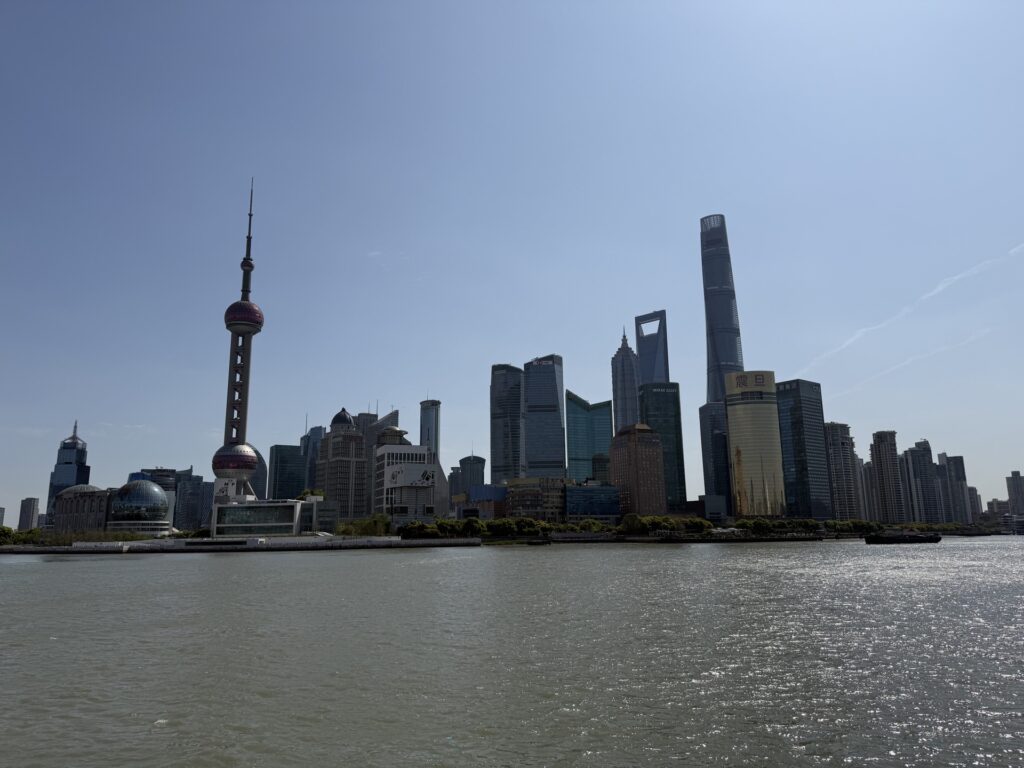
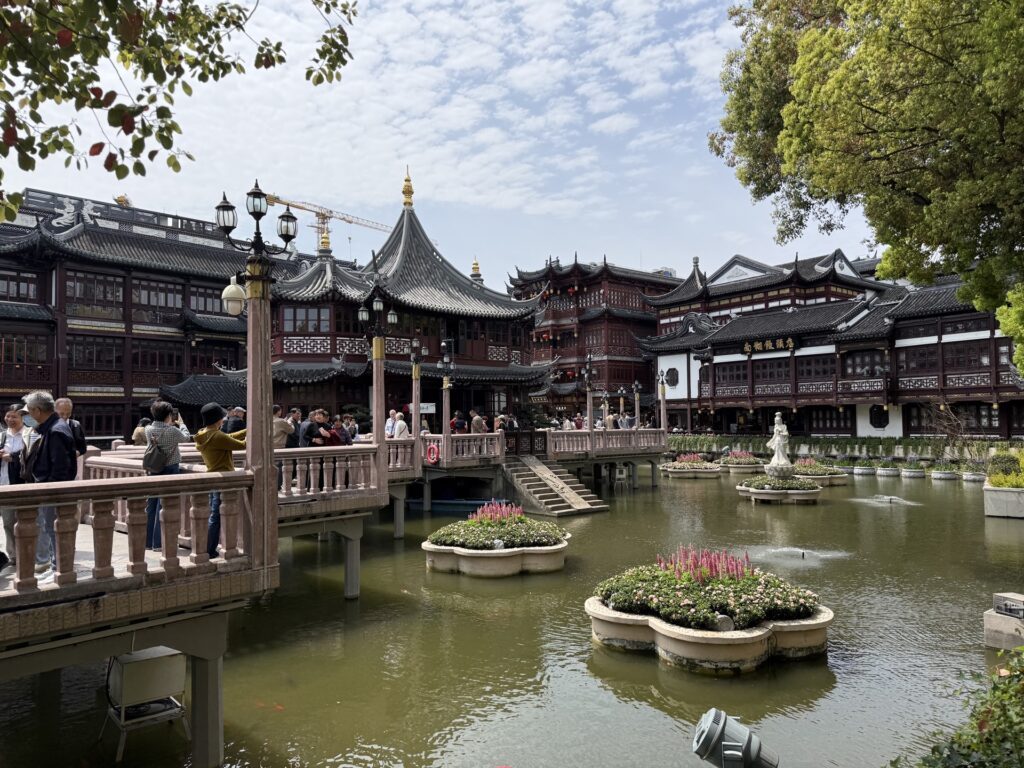
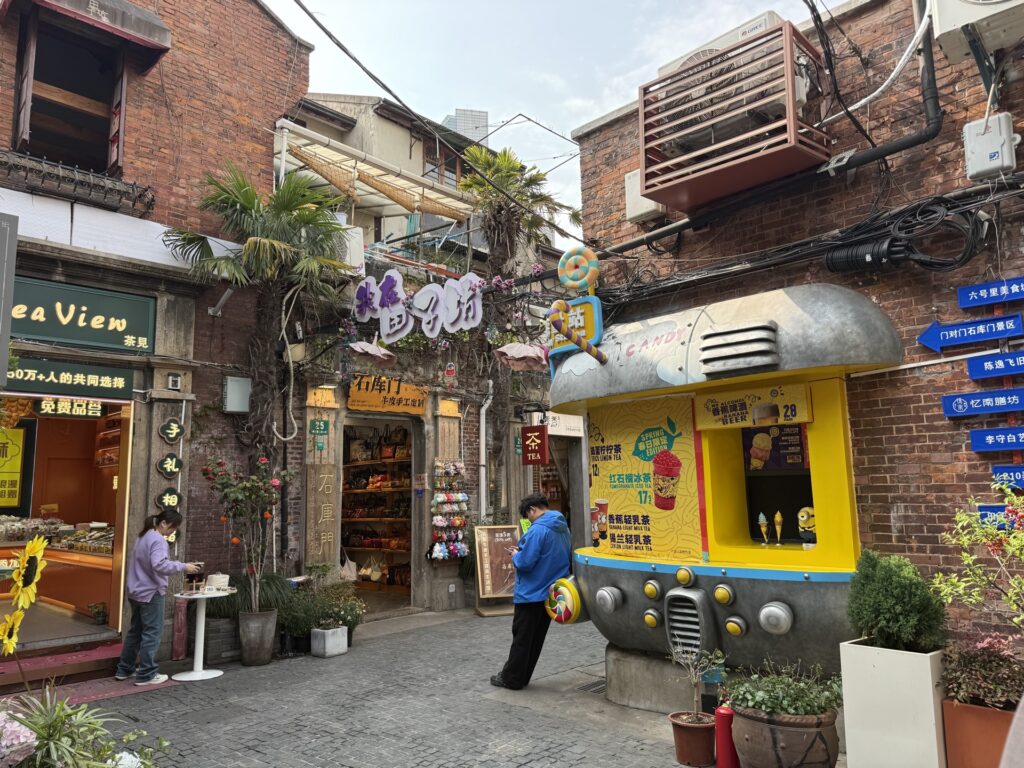
We were able to fit in this full day in Shanghai the day after a full day touring Beijing without losing a beat. The only reason that was possible was because we spent 12.5 hours on a train overnight. Any other transportation option would have cut into our limited daytime hours exploring these two incredible cities.
Was it worth it? 100%.
Read more! If this is your first time visiting China, be sure to check out our 10 Useful Tips for Foreigners Visiting China before you go.
Closing Thoughts
We’ve never met an overnight train we didn’t like. Maybe that means we’re not hard enough critics or maybe it means that we haven’t tried enough overnight trains. Whatever the reason, we left this train with nothing but positive feedback.
My biggest takeaway from my experience on two overnight trains in China is that we should be talking more about trains in China. Switzerland gets so much love for their on-time trains and Japan is famous for its bullet trains, but China can definitely hold its own when it comes to train transit.
China Railway has made massive improvements to their super-fast train infrastructure, slicing travel times by as much as half in recent years. The onboard experience is comfortable and the service is impeccable.
While traveling in China is still hard for us sometimes — given the language barrier, cultural differences, and planning difficulties — transportation within the country is not one of our problems. As long as China continues to offer efficient and comfortable overnight train options, we’ll keep booking them.
What about you?
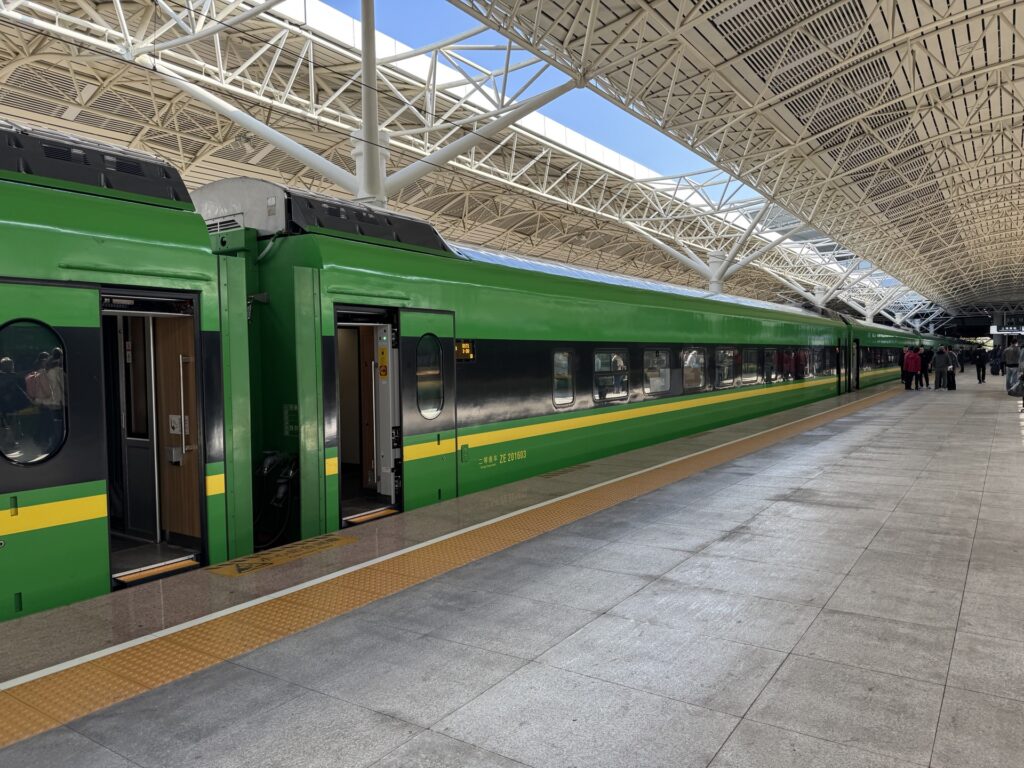
Read more! We’ve traveled on several overnight trains around the world. From the chaos on the overnight train to Agra, India to the whimsical luxury of the Santa Claus Express, we’ve yet to meet an overnight train we didn’t love.
Leave a Reply